The Toledo Loophole and the Weary Wisdom of Colonel Potter
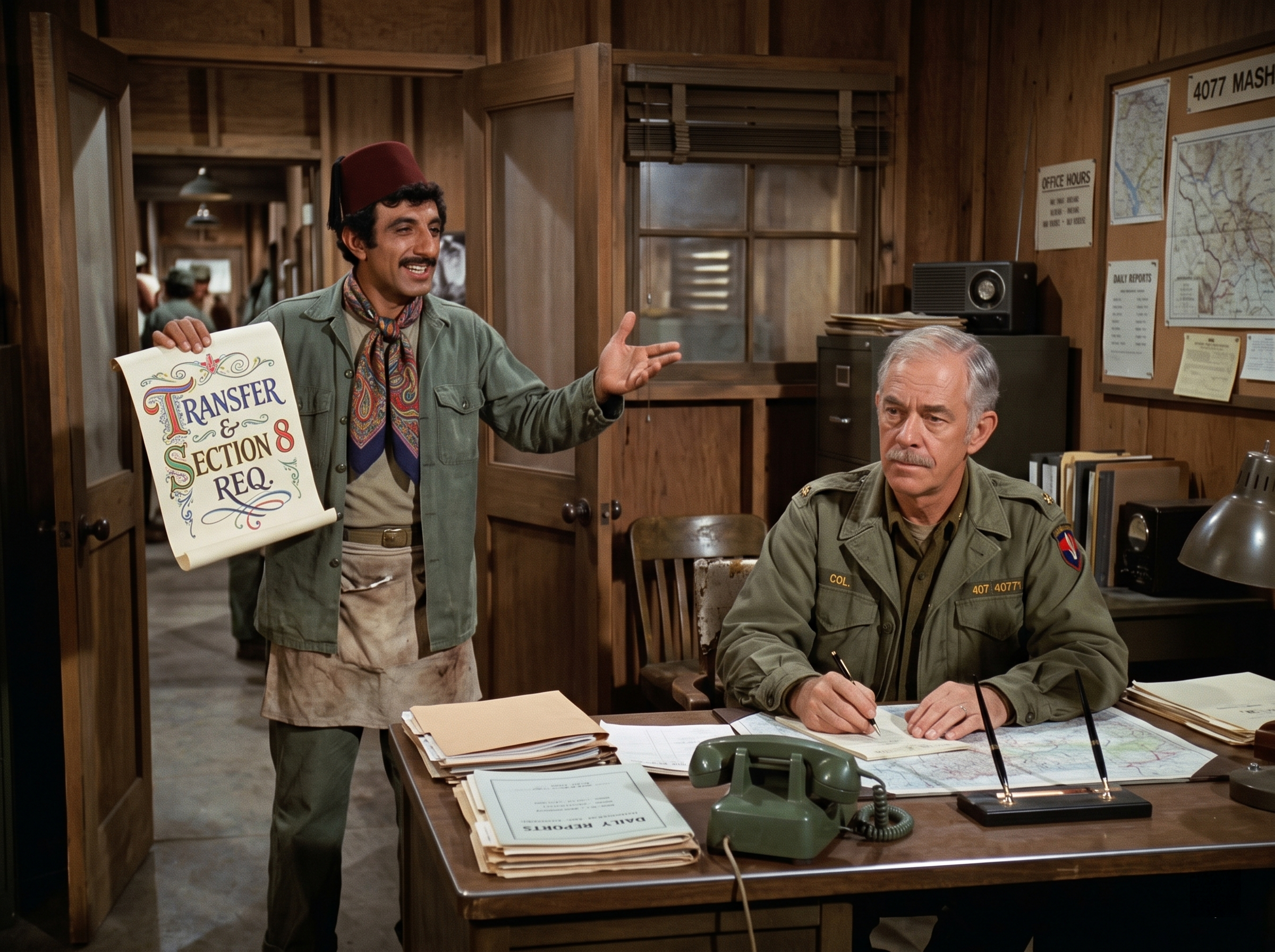
The afternoon sun was doing its level best to bake the 4077th into a single, olive-drab brick.
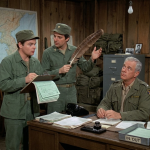
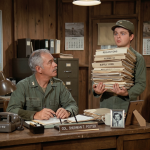
Inside the commanding officer’s tent, the heat was thick, smelling faintly of stale canvas, cigar ash, and mimeograph ink. Colonel Sherman T. Potter sat behind his wooden desk, rubbing the bridge of his nose with a thumb and forefinger.
The camp was experiencing a rare, precious lull. There were no choppers in the air, no frantic shouts for O-negative blood, and no muddy boots rushing across the compound.
There was only the endless, soul-crushing mountain of United States Army paperwork.
Potter stared at a requisition form for winter long johns. It was July. He let out a long, weary sigh, adjusting his wire-rimmed glasses. He reached for the heavy, black landline field phone, considering whether to call I Corps and yell at a supply clerk just for the sport of it.
Before his hand could even brush the receiver, the screen door flew open with the force of a theatrical curtain rising.
In the doorway stood Corporal Maxwell Q. Klinger.
He wasn’t wearing one of his extravagant dresses today. Instead, he was clad in perfectly pressed, albeit slightly oversized, standard-issue fatigues. But it wasn’t what Klinger was wearing that commanded the room; it was how he was standing.
His feet were planted in a wide, triumphant stance. One hand rested on his hip, while the other was thrust high into the air, holding a thick, bound ledger that looked older than the Republic itself.
His face was a portrait of pure, unadulterated comic pride.
“Colonel,” Klinger announced, his voice carrying the grand resonance of a Shakespearean actor delivering a final monologue. “Your worries are over. And so, thankfully, is my military career.”
Potter didn’t flinch. He didn’t even look up from his desk right away. He simply leaned back in his creaky wooden chair, steepling his fingers over his stomach.
“Is that so, Klinger?” Potter asked, his voice a dry, gravelly drawl that carried years of weary wisdom.
“It is, sir,” Klinger beamed, stepping fully into the office. He marched to the desk with the confidence of a man who had just struck oil in his own backyard.
Klinger slammed the dusty, heavy ledger onto Potter’s desk, sending a small cloud of Korean dust floating into the warm afternoon light. He flipped it open, the yellowed pages crackling, and pointed a triumphant, trembling finger at a dense paragraph of tiny print.
“I present to you, Colonel, the Army Regulations Manual of 1904. Volume Three. Specifically, Section 8, Paragraph 4, Clause B.”
Potter peered over his glasses at the book. “1904, you say?”
“Yes, sir!” Klinger’s eyes were wide, shining with the brilliant light of salvation. “It took me three weeks to trade a jeep carburetor to a supply sergeant in Seoul just to get my hands on it.”
Klinger cleared his throat, adjusting his posture, and began to read with dramatic flair.
“According to this clause, any enlisted man who can definitively prove he is suffering from ‘spontaneous and uncontrollable fits of acute Victorian melancholy’ is to be immediately deemed unfit for service and transported to the nearest civilian port.”
Klinger snapped the book shut with a loud clap. He produced a freshly typed discharge paper from his pocket and laid it gently, almost reverently, in front of the Colonel.
“As you know, sir,” Klinger said, placing his hand over his heart, “I have been profoundly melancholic since we crossed the 38th parallel. I weep at sunsets. I sigh at oatmeal. I am practically a Brontë sister in dog tags.”
Potter looked at the typed form. He looked at the 1904 manual. Then, he slowly looked up at Klinger, his face entirely unreadable.
The room was painfully quiet. The heavy wooden desk anchored the space between them, a barrier between Klinger’s wild hopes and cold military reality.
Potter reached into his breast pocket. He pulled out his fountain pen.
He unscrewed the cap with slow, deliberate precision. He moved the pen toward the signature line at the bottom of Klinger’s discharge paper.
Klinger held his breath, his eyes tracking the silver nib of the pen as if it were a falling star. He leaned forward, his hands gripping the edge of the desk, victory finally within his grasp.
The pen hovered just a fraction of an inch above the crisp white paper. Klinger’s chest was puffed out, a smile breaking across his face. He was already packing his duffel bag in his mind, already smelling the chili dogs at Tony Packo’s.
Potter paused. He didn’t look at the paper. He looked Klinger right in the eye, his expression totally flat.
“Son,” Potter said softly. “Are you aware of the addendum to this particular clause?”
Klinger’s smile faltered, just a fraction. “Addendum, sir?”
Potter set the pen down on the desk. He leaned forward, folding his arms over the paperwork.
“The addendum of 1908,” Potter said, his tone as casual as if he were discussing the weather. “Which clearly states that any soldier claiming acute Victorian melancholy must, by law, be treated with twice-daily applications of live leeches and a strict diet of boiled cabbage until the melancholy passes.”
Klinger stared at him. The grand, theatrical pride melted from his face, replaced by a look of sheer, horrified calculation.
“Leeches, sir?” Klinger squeaked.
“Big ones,” Potter nodded sagely. “Usually imported from the swamps of Louisiana. They attach ’em right behind the ears. Army medical doctrine from the turn of the century swore by it. Sucks the sadness right out of you.”
Klinger swallowed hard, his Adam’s apple bobbing in his throat. He looked at the discharge paper. He looked at the 1904 manual. Then he looked back at Potter.
Potter’s face was a mask of solemn command, but deep in his eyes, there was the faintest, warmest glimmer of amusement.
“Now,” Potter continued, picking up his pen again. “I am more than happy to sign this discharge, Corporal. I will personally ring up Major Winchester right now and have him start requisitioning the leeches. We might have to use local river slugs until the official supply arrives, but I’m sure they’ll do the trick.”
Klinger’s hands slowly slipped off the edge of the desk. The magnificent bureaucratic scheme, crafted with such care and desperation, crumbled into dust before his eyes.
“You know, Colonel,” Klinger said, his voice returning to its normal, slightly nasal pitch. “Now that I think about it, the oatmeal this morning was actually quite uplifting.”
“Is that a fact?” Potter asked dryly.
“Oh, absolutely, sir. A real spirit-raiser. I think my melancholy is in full remission.”
Klinger quickly reached out and snatched the discharge paper off the desk, folding it rapidly and shoving it deep into his pocket.
Potter let out a soft chuckle, the weary tension leaving his shoulders. He leaned back in his chair again, looking up at the young man standing before him.
The comedy of the moment began to fade, leaving behind a quiet, tender humanity in the small office.
Potter knew Klinger wasn’t crazy. He knew Klinger wasn’t really a Brontë sister, or a Spanish dancer, or an Egyptian princess. He knew Klinger was just a kid from Toledo who was terrified, exhausted, and desperately homesick.
They all were. Every single one of them.
“You miss Toledo today, son?” Potter asked, his voice dropping the dry sarcasm, replacing it with a gentle, fatherly warmth.
Klinger stopped shuffling his feet. He looked down at the wooden floorboards. The theatrical flair vanished completely, leaving only the tired soldier underneath.
“Yes, sir,” Klinger said quietly. “It’s my mother’s birthday tomorrow. We always had a big dinner. The whole neighborhood came over. The noise, the food… it just feels very quiet here today, Colonel.”
Potter nodded slowly. He understood that kind of quiet. It was the kind of quiet that made the distance between Korea and home feel like a million miles.
“It’s Mildred’s anniversary next week,” Potter said softly, looking over at a small, framed photograph on the corner of his desk. “Thirty-four years. I was supposed to take her to a fancy steakhouse in Hannibal.”
He looked back at Klinger. The space between the regular army commander and the drafted corporal vanished, replaced by the shared, unspoken bond of two men stranded at the edge of the world, missing the people they loved.
“I know it hurts, Klinger,” Potter said, his voice thick with compassion. “And I know you’d do just about anything to get back to that dinner table. But we’ve got a job to do here. And we can’t do it without you.”
Klinger looked up, meeting the Colonel’s eyes. He saw the fatigue in the older man’s face, but he also saw the steady, anchoring strength that kept the entire 4077th from falling apart.
Klinger stood up a little straighter. Not a theatrical pose, but a genuine, dignified posture.
“I know, Colonel,” Klinger said softly. “I just… I figured the 1904 loophole was worth a shot.”
“It was a valiant effort, Corporal,” Potter smiled, reaching out and sliding the heavy ledger back toward Klinger. “One of your finest. The presentation alone was worth a commendation.”
Klinger managed a small, genuine smile. He tucked the heavy book under his arm.
“Thank you, sir. I’ll just… I’ll go see if the mess tent needs help peeling potatoes. Potatoes always ground me.”
“Good man,” Potter said. “And Klinger?”
Klinger paused in the doorway, turning back. “Yes, sir?”
Potter opened his bottom desk drawer and pulled out a small, slightly squashed box of salt water taffy. He tossed it across the room. Klinger caught it with one hand.
“Happy birthday to your mother,” Potter said warmly. “Have a piece of candy on me. And keep your chin up. We’ll all get home eventually.”
Klinger looked at the small box of candy, his eyes growing just a little bit bright. He looked back at Potter, giving him a crisp, respectful, and entirely serious salute.
“Thank you, Colonel.”
Klinger stepped out of the office, the screen door clicking shut behind him.
Potter sat alone in the quiet again. He looked at the closed door for a long moment, a fond smile lingering on his face. He shook his head slowly, marveling at the resilience, the humor, and the sheer human spirit of the people he commanded.
He picked up his fountain pen, pulled the requisition form for winter long johns back toward him, and got back to work.
Even in the middle of a war, the truest medicine was a gentle reminder that none of them were carrying the burden alone.