The Plumage of the 4077th
The afternoon sun was baking the 4077th under a thick, miserable blanket of Korean dust.
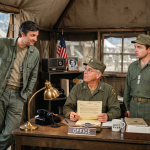
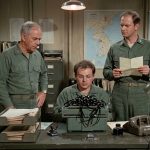
Inside the commanding officer’s office, the air was hot, still, and heavy with the exhaustion of a unit that had just survived thirty-six straight hours of meatball surgery.
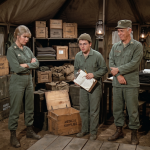
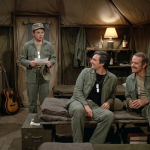
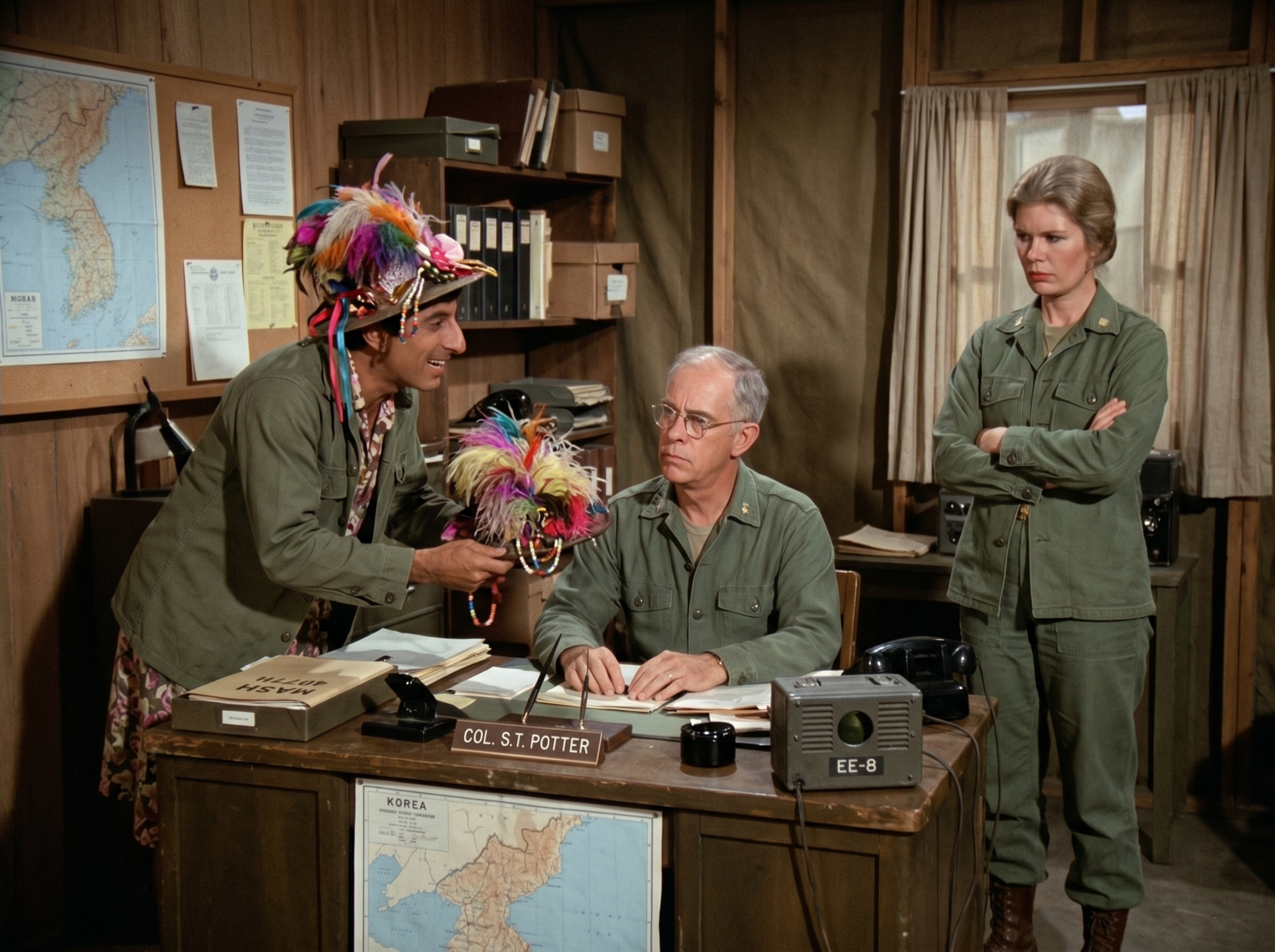
The small, lightly cluttered space was a sanctuary of muted olive canvas, warm brown wood, and faded paperwork.
It was a quiet place. Or at least, it was supposed to be.
“Look at it, Colonel! Just look at it!”
Corporal Maxwell Klinger was leaning so far over the wooden desk he was practically horizontal.
His eyes were wide with theatrical desperation, his hands proudly presenting what could only be described as a crime against millinery.
It was a hat. But not just any hat.
It was an enormous, utterly ridiculous concoction of velvet and towering, brightly dyed ostrich feathers that looked like it had been violently evicted from a French cabaret.
“I ask you, sir,” Klinger pleaded, his voice cracking with rehearsed emotion. “Would a sane man, a man of sound mind and military bearing, wear a flamingo-pink plumage to a war?”
Standing rigidly to the side of the desk, Major Margaret Houlihan looked as though she might spontaneously combust.
Her arms were crossed so tightly against her chest that her knuckles were white.
Her sharp posture and tight, professional scowl were holding back a tidal wave of sheer, unadulterated exasperation.
“Colonel, this is an outrage,” Margaret hissed, her voice vibrating with suppressed fury. “It is a mockery of the uniform. It is a mockery of this camp. And it is shedding everywhere!”
She wasn’t entirely wrong. A small, neon-pink feather floated gently down to land on a tactical map of the Uijeongbu sector.
Behind the desk, Colonel Sherman T. Potter did not move.
He sat perfectly grounded, a rock of Midwestern sanity in a sea of swirling madness.
He didn’t shout. He didn’t sigh.
He simply lowered his head an inch, staring dryly over the gold rims of his reading glasses.
His eyes, framed by the deep, weary lines of a man who had seen too many wars, locked onto the trembling corporal.
The silence in the office stretched out, broken only by the distant hum of a generator and the ticking of Potter’s pocket watch.
Klinger held his breath, leaning closer, the ridiculous feathers trembling just inches from the Colonel’s nose.
Margaret’s jaw clenched so hard it popped, waiting for the commanding officer to finally bring the hammer down on this carnival act.
Potter slowly reached up, took his glasses off, and folded them with deliberate, agonizing slowness.
He leaned forward, resting his elbows on the desk, his face inches from the feathered monstrosity.
The tension in the small canvas room pulled tight as a snare drum, ready to snap.
“Klinger,” Potter said softly, his voice a slow, gravelly rumble that seemed to vibrate right out of the wooden desk.
“Sir?” Klinger squeaked, his theatrical bravado suddenly faltering under the Old Man’s unblinking stare.
“That,” Potter said, pointing a thick, calloused finger at the towering arrangement, “is without a doubt the ugliest piece of headgear I have seen since my Aunt Purity wore a stuffed pheasant to a Sunday social in nineteen-ought-six.”
Klinger’s face instantly lit up. “Exactly, Colonel! It’s insane! I’m insane! You have to sign my Section 8 papers right now before I start nesting in the supply tent!”
Margaret threw her hands in the air. “Colonel, please! He’s malingering! He is a hairy, cigar-smoking man from Toledo trying to parade around like a showgirl!”
Potter raised a single hand, silencing the room.
He didn’t look angry. If anything, there was a profound, fatherly weariness in his eyes, softened by a glimmer of quiet affection.
He leaned back in his chair, rubbing his tired temples.
The truth was, they were all hanging by a thread.
The last batch of wounded had pushed the entire camp to the absolute limits of human endurance.
Hawkeye and B.J. were currently passed out in the Swamp, still in their blood-stained boots.
Margaret had been awake for two days, managing a recovery ward overflowing with crying kids.
Even Potter’s bones ached with a deep, inescapable cold, despite the stifling summer heat.
And then there was Klinger.
Klinger, who had carried litters until his hands blistered.
Klinger, who had stayed up all night feeding soup to a blinded soldier, telling him terrible jokes just to keep the boy from giving up into the dark.
This ridiculous hat wasn’t just a ticket out of the army. It was Klinger’s way of fighting back against the grim reality outside the tent flaps.
It was a burst of absurd, colorful life in a place completely drained of it.
“Major,” Potter said gently, turning his gaze to Margaret. “The boy is tired. We’re all tired.”
Margaret stiffened, ready to argue the Army manual, but she stopped.
She looked at Potter, really looked at him, and saw the deep exhaustion etched into his features.
Then she looked at Klinger. Beneath the desperate, comedic pleading, she saw the dark circles under his eyes and the slight tremble in his hands that had nothing to do with acting.
Margaret’s rigid posture slowly began to thaw.
The tight, professional scowl softened, just a fraction.
She would never admit it aloud, not in a million years, but she felt a sudden, fierce rush of protective warmth for the foolish corporal.
He was an idiot, but he was their idiot.
“I suppose…” Margaret started, her voice losing its sharp edge, “I suppose the glare from the sun has been exceptionally bright today. Perhaps the… plumage… offers some tactical shade.”
Klinger blinked, completely thrown off guard. He looked at Margaret, his mouth slightly open. “Uh… yes, Major. Tactical shade. Very strategic.”
Potter let out a short, dry chuckle, shaking his head.
“Alright, son. Here is my official medical opinion,” Potter said, picking his glasses back up.
Klinger held his breath, clutching the hat to his chest like a baby.
“You are as crazy as a bedbug,” Potter stated calmly. “But you’re not getting a Section 8. Because if I send you home, who’s going to provide the tactical shade for this miserable outfit?”
Klinger’s shoulders slumped in theatrical defeat, but the corners of his mouth twitched upward.
“So, I’m stuck here, sir?”
“You’re stuck here, Klinger,” Potter replied warmly, pulling a file toward him. “But I’ll tell you what. The color does bring out your eyes. You have my permission to wear it while taking inventory of the motor pool. Dismissed.”
“Thank you, sir,” Klinger sighed heavily, putting the massive feathered hat squarely on his head. “I’ll try to bear the burden of my own fabulousness.”
He turned to leave, adjusting the brim with tragic dignity.
As he passed Margaret, she didn’t scold him.
Instead, she reached out and quickly, almost invisibly, straightened one of the bent pink feathers that was drooping over his left eye.
“Make sure you count the spark plugs, Corporal,” she said softly.
“Yes, Major,” Klinger smiled, the absurdity of the hat bobbing as he walked out the door into the harsh Korean sun.
Potter watched him go, then glanced over at Margaret. They shared a brief, quiet look of mutual understanding.
They were thousands of miles from home, surrounded by chaos, fighting a war they didn’t want to be in.
But in this dusty little office, surrounded by canvas and faded maps, they had something that made it all bearable.
They had each other.
Potter picked up his fountain pen, shook his head with a small, fond smile, and went back to work.
In a place where tomorrow was never promised, the greatest medicine they had was the foolish, beautiful humanity they shared today.