The Mess Tent Map of Dreams
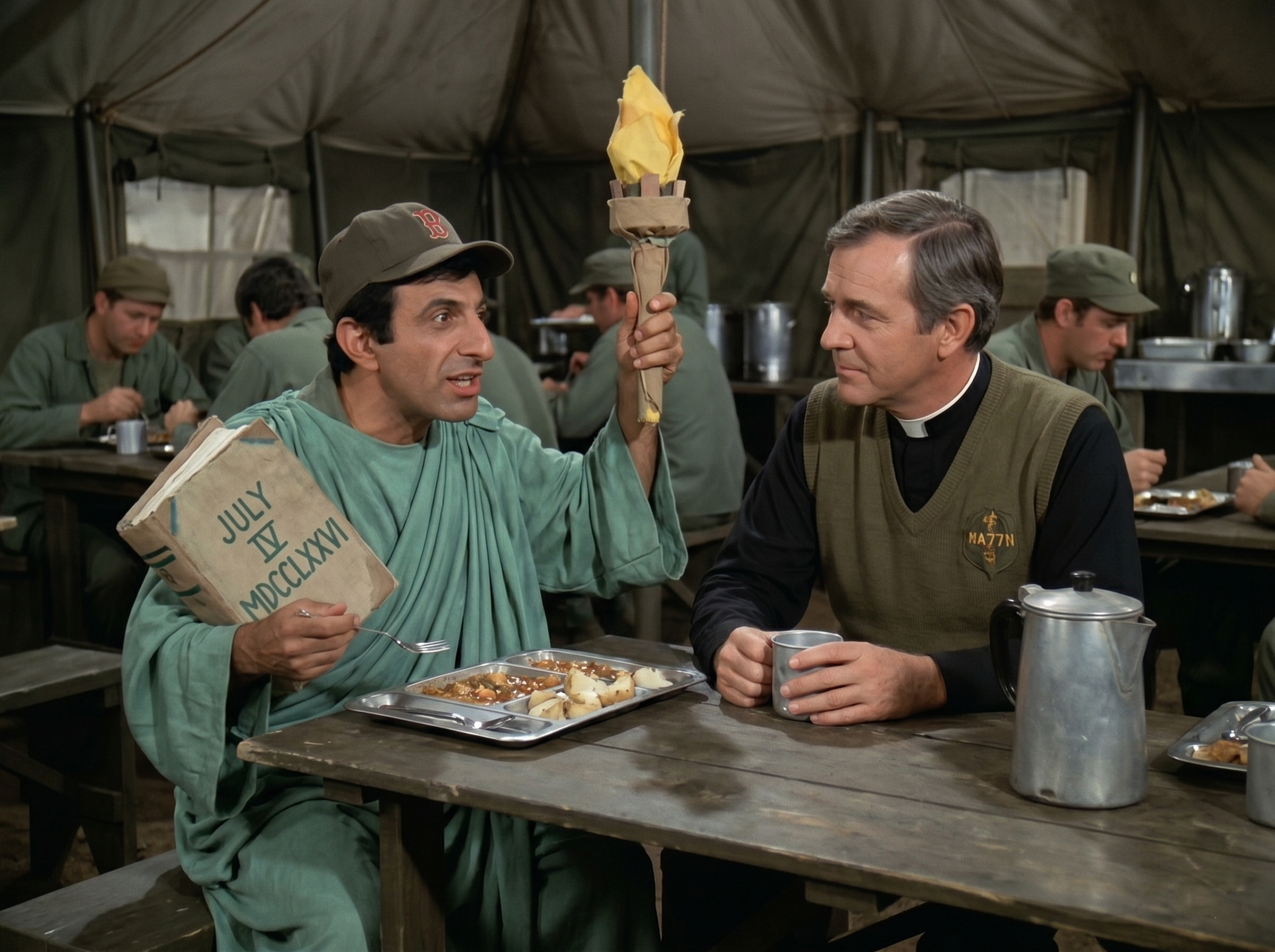
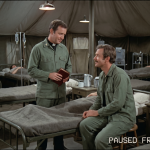
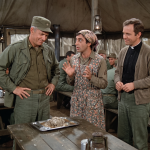
The afternoon light inside the Mess Tent was soft and even, filtering through the heavy canvas walls. It wasn’t a harsh glare, just a quiet illumination that highlighted the dust motes and the weariness. This was the paused frame of their day, a small stillness in the middle of it all. In the background, other figures in standard-issue fatigue jackets moved with slow purpose, seated at long wooden tables, heads bowed over metal food trays. The air smelled faintly of boiled potatoes and something meant to be beef, a scent that never quite left the tent.
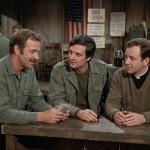
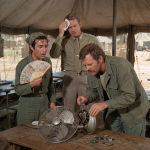
Maxwell Klinger sat across from Father Mulcahy, and he was, for the moment, entirely on stage. He wore his standard-issue fatigue gear, the utilitarian olive drab shirt and jacket, practical and worn, with a simple red ‘B’ on his green baseball cap—nothing tactical, nothing modern, just the modest clothes of the 4077th. He was not wearing a dress, but he was performing. With grand, sweeping gestures, both hands animated and eyes wide with a dramatic conviction that was part comic pride and part emotional sincerity, he held a hand-drawn map. It was a complex web of lines and strange symbols on a piece of paper, a map to a place far away from the Korean war.
He pointed a finger at a particular point on the document with such intent, declaring, “And that, Father, is the key to my whole exit!” Father Mulcahy, in his clerical collar and green sweater vest with a ‘MA-4077’ patch, sat patient and listening. He held his metal coffee cup, worn but clean, with both hands on the table. He was watching Klinger with a warm, soft smile and an expression that blended gentle concern with a sincere, polite misunderstanding. His face was a quiet anchor in the face of Klinger’s performance, holding all the weight of the war and Klinger’s impossible dreams. They were just two tired men over a meal, but Klinger reached a crescendo in his explanation, gesturing wildly and staring into Mulcahy’s eyes, declaring with a flourish, “And this map is the final, undeniable proof! They’ll have to send me home, won’t they, Father?“
Klinger’s statement hung in the air, a final, passionate plea that seemed to silence the surrounding chatter of the Mess Tent. His eyes were intensely locked onto the priest, waiting for validation, for an echo of his conviction. His dramatic pride was on display, even in fatigue clothes. Father Mulcahy didn’t look away. He just took a slow, thoughtful sip from his metal cup, the warmth of the coffee a stark contrast to the chaotic map and the even wilder idea it represented. The soft light of the tent held the moment, a little pocket of human complexity.
He put the cup down with a deliberate, gentle clink. “It is certainly…” Mulcahy paused, choosing his words with care, “a highly imaginative… and incredibly thorough map, Maxwell.” He managed a gentle smile, one that didn’t diminish Klinger’s effort but didn’t entirely believe it, either. His voice was quiet and humble, full of the quiet bravery that often defines the human condition. “The attention to detail in your… geographical inventions… is truly remarkable.“
Klinger, momentarily deflated by the subtle lack of full endorsement, let his hands drop to the table. His animated expression softened into a look of quiet resignation, a weariness that showed through his performative nature. The paper, with its wild map, lay between them. He took a forkful of stew, the simple action a возвращение to the reality of their surroundings. “It’s not just an invention, Father,” Klinger said with a quieter sincerity, “it’s a plan. I’ve thought of everything.“
Mulcahy reached across the worn wooden table, briefly touching Klinger’s fatigue-clad arm. “I know, Maxwell. And I admire your resilience. Your ability to dream is… what keeps so many people going, I think.” His voice held that tender concern. “Even if the… details of this particular dream… are a bit more complex than the army might be willing to understand.“
The humor was dry and quiet. “And safe? Do you think it’s safe?” Mulcahy added, a touch of gentle concern returning to his eyes.
“Safe? Safe isn’t the point, Father,” Klinger retorted with a flash of his usual spirit, a small spark of defiant pride returning. “Home is the point.“
Their conversation faded back into the ambient noise of the Mess Tent. Other soldiers in olive drab ate, metal trays clattered, and a dull metal coffee pot sat on a distant table, as it always did. The map remained on the table, a reminder of impossible escapes and human resilience, even as Klinger continued his meal. There was a quiet tenderness in their friendship, a found-family feeling that allowed for these small dramas to play out over metal trays of mediocre food. As the image faded in memory, it left behind the bittersweet warmth of classic MAS*H, a feeling of shared humanity and simple connection in the middle of a conflict that tested them all.
The map stayed on the table, a quiet dream of home, even as the stew got cold.