The Patchwork of Peace in the Swamp
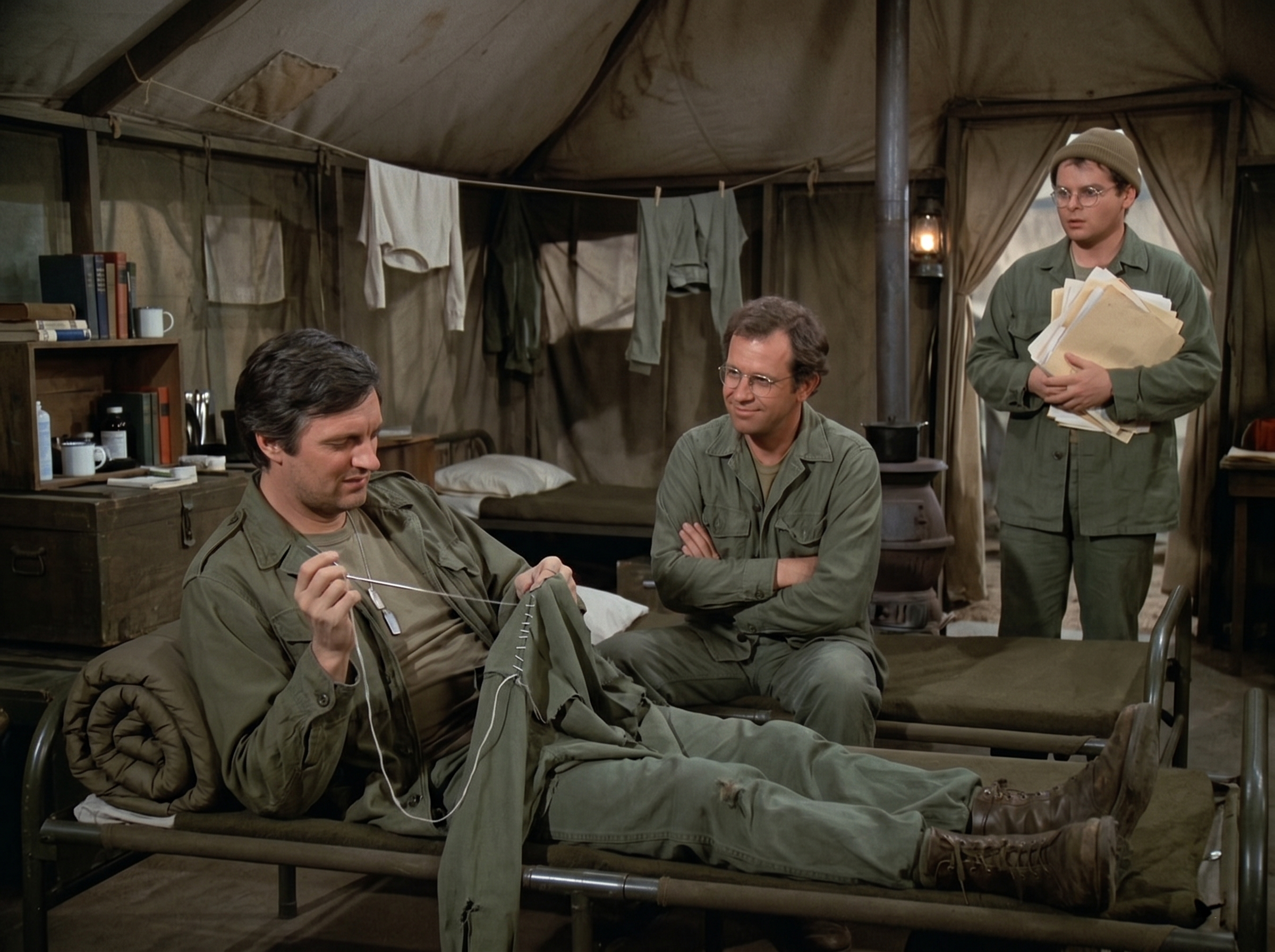
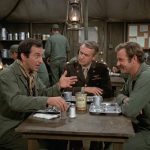
The war was a relentless, grinding machine, but inside the Swamp, the gears occasionally slipped. It was that quiet, heavy hour of the afternoon when the mud outside seemed to hold its breath, and the only sounds were the soft, rhythmic rasp of a needle through olive-drab fabric and the rustle of papers.
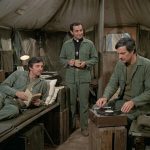
Hawkeye Pierce lay sprawled across his cot, looking less like a surgeon and more like a weary tailor who had seen better days. He held a pair of pants up to the dim light, the fabric shredded in a way that spoke of a frantic crawl through a ditch. With the focused intensity of a man closing a major thoracic cavity, he was attempting to stitch the jagged tear back together.
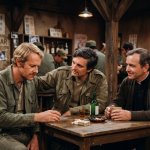
B.J. Hunnicutt sat on his own bunk, watching his best friend with an expression that hovered somewhere between amusement and genuine concern. He had his arms crossed over his chest, leaning back against the wooden support of the tent. He was the anchor, the steady heartbeat that kept the room from drifting into chaos, even when the absurdity of their situation threatened to pull them under.
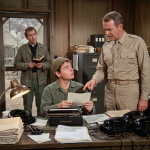
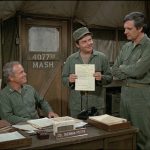
Radar O’Reilly stood in the doorway, clutching a small mountain of requisition forms to his chest like a holy relic. He looked frazzled, his beanie pushed back slightly, his eyes wide behind his glasses. He was clearly trying to deliver bad news, or perhaps a mountain of bureaucracy that had arrived on the morning helicopter, but the scene in the tent made him hesitate.
Hawkeye’s hands shook—just a fraction—and he missed the mark, pulling the thread into a tangled knot. He let out a sharp, frustrated sigh, tossing the pants onto his lap. The silence stretched, filled only by the distant, mournful whistle of the camp’s boiler.
“If I don’t get these fixed by dinner,” Hawkeye muttered, his voice cracking, “I’m going to have to walk into the mess tent in my shorts, and frankly, Winchester has already complained enough about my lack of decorum.”
B.J. didn’t smile. Instead, he leaned forward, his gaze fixed on Hawkeye’s hands, which were now trembling visibly. The humor in the room evaporated instantly, replaced by a sudden, sharp realization of just how much they were all holding together with nothing but hope and thread.
B.J. stood up slowly, crossing the few feet between the bunks. He didn’t offer a joke. He didn’t offer a witty retort. He simply reached out and took the pants and the needle from Hawkeye’s hands.
“Let me,” B.J. said quietly.
He sat down on the edge of Hawkeye’s cot. His hands were steady, practiced from years of life back in Mill Valley, and he moved with a deliberate, calming rhythm. He began to pick out the knot Hawkeye had made, his movements gentle.
Radar stepped further into the tent, the papers still clutched to his chest. He saw the shift in the atmosphere—the way Hawkeye slumped back against his pillow, closing his eyes, his face looking older than his years. Radar shifted his weight, his own shoulders dropping. The urgency of the forms seemed to vanish, rendered meaningless by the simple, profound act of one friend repairing the clothes of another.
“I can come back later, Hawkeye,” Radar whispered, his voice soft. “It’s just… it’s just more stuff about the generator parts. It can wait.”
Hawkeye opened one eye and looked at the corporal. He gave a small, lopsided smile that didn’t quite reach his eyes, but it was enough. “No, Radar, keep them. If I don’t sign them, they’ll probably send us more bedpans instead of sutures. Just… pull up a crate. Tell us a story. Something that doesn’t involve the Army.”
Radar exhaled, a sound of profound relief, and shuffled over to a stack of crates. He sat down, setting the papers aside, and began to talk about a stray dog he’d seen near the supply tent that morning—a scruffy little thing that reminded him of home.
As B.J. stitched the tear with surgical precision, the tension that had been coiled tight in the room began to unravel. The sound of the needle hitting the fabric became a metronome for their survival. It was a mundane, ridiculous scene—three men in the middle of a war zone, worrying about a pair of torn pants—but in that moment, it was the most important thing in the world.
It was a reminder that even when the world outside was falling apart, the sanctuary they had built for each other was real. They were broken, they were exhausted, and they were a long way from the lives they were meant to be living. But they were together.
The laughter eventually returned, quiet and tentative at first, then growing as B.J. poked fun at the quality of the military-issue thread. The war was still out there, waiting just beyond the canvas, but for this brief, stolen hour, the only thing that mattered was the stitch, the story, and the company.
In the heart of the 4077th, the strongest thread was always the one that tied us to each other.