The Weight of a Silk Scarf
Some days in the mud of Korea, the only thing keeping the sanity from leaking out of the 4077th was a sheer, desperate act of beautiful nonsense.
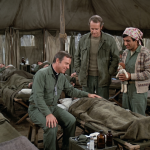
The sound of the artillery had finally faded into the distant hills, leaving behind a heavy, exhausting silence that settled deep into the marrow of everyone in the camp. Inside the administrative tent, the air smelled of stale coffee, damp canvas, and the sharp, metallic tang of old typewriter ribbon.
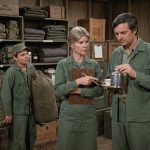
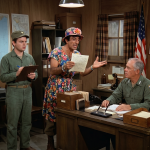
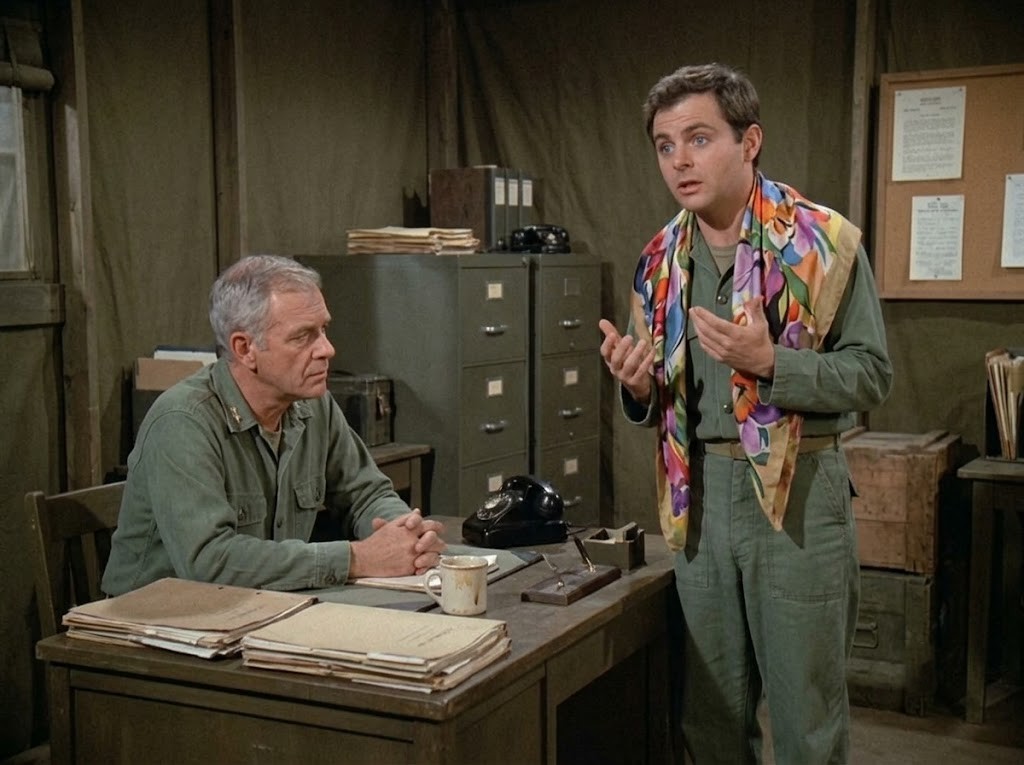
Colonel Potter sat behind his desk, his hands clasped tightly together, staring down at a mountain of supply requisitions that never seemed to end. His shoulders were slightly hunched under his olive-drab fatigue shirt, the silver eagles on his collar catching the dim morning light. Beside him, an old rotary telephone sat like a silent, threatening sentinel, while a stained ceramic mug of lukewarm coffee offered his only comfort.
The door to the office didn’t just open; it was swept back with a flourish as Corporal Maxwell Klinger stepped inside, bringing a sudden, jarring burst of impossible color into the dreary room.
He wasn’t wearing a dress today, but draped extravagantly over his shoulders was a large, vibrant silk scarf, bursting with brilliant purples, bright oranges, and lush greens. It looked entirely ridiculous against the backdrop of the drab, olive filing cabinets, yet Klinger carried himself with the poise of a high-fashion model walking a Parisian runway.
Potter didn’t look up immediately; he simply closed his eyes for a long three seconds, letting out a slow, tired breath that rattled in his chest.
“Klinger,” the Colonel said, his voice a low, gravelly rumble that could have ground glass. “I am currently trying to explain to Seoul why we received three hundred cases of tongue depressors and not a single bottle of penicillin. If that scarf doesn’t contain an airtight, legal discharge from the United States Army, I suggest you take it and your theatrical disposition out of my office.”
Klinger didn’t back down; instead, he took a step closer to the desk, his hands raised in an open, imploring gesture, his dark eyes wide with a mixture of desperate sincerity and deep, underlying anxiety.
“Colonel, please, you have to look at the bigger picture here,” Klinger pleaded, his voice rising with dramatic earnestness. “This isn’t just a protest against the systemic cruelty of the military industrial complex, though it certainly serves that purpose beautifully. This is a matter of absolute survival. It’s an SOS wrapped in pure, unadulterated silk.”
Potter finally raised his eyes, his gaze locking onto the younger man with a mixture of stern discipline and profound, paternal exhaustion. “It looks like a visual assault on the eyes, Corporal. Now, what is the meaning of this circus?”
Klinger took a deep breath, his hands trembling slightly as he held them out, desperately trying to find the words to bridge the gap between his colorful performance and the raw, fragile truth hidden underneath.
“It came in the mail this morning, Colonel,” Klinger said, his voice dropping its theatrical volume, replaced by a quiet, shaky vulnerability. “From Toledo. My Aunt Alberta sent it.”
Potter leaned back in his chair, the wood groaning under his weight, his eyes softening just a fraction as he watched the young corporal. “Your Aunt Alberta has a colorful eye, Klinger. But I doubt the brass in Seoul will consider it grounds for a Section Eight.”
“You don’t understand, sir,” Klinger said, his fingers gently clutching the edge of the bright silk fabric around his neck. “She didn’t buy it. She made it out of the silk from a parachute. A parachute that belonged to my cousin, Tony. He… he didn’t make it back from Normandy, Colonel. She saved the silk all these years. She dyed it herself, using whatever she could find in the kitchen, just so she could send a piece of home to her boy in Korea.”
The silence returned to the tent, but it was no longer heavy and suffocating; it was respectful, filled with the sudden, profound weight of a family’s shared grief and enduring love.
Potter looked at the scarf again, no longer seeing a ridiculous prop in a bid for a discharge, but a holy relic of survival, hand-painted with the colors of a mother’s hope. He thought of his own home, of Mildred, and of the quiet, agonizing worry that lived in the hearts of everyone waiting on the other side of the ocean.
“She told me to wear it whenever the mud got too deep,” Klinger whispered, his eyes looking past the Colonel, out the window toward the bleak, gray horizon of the compound. “She said the colors would remind me that there’s still a world out there where things are bright. Where things are beautiful.”
Potter stood up slowly, his old bones popping in the quiet room. He walked around the desk, his boots clicking softly against the floorboards, until he was standing directly in front of the young corporal. He reached out, his rough, weathered hand gently touching the edge of the vibrant purple silk.
“Your Aunt Alberta is a very wise woman, Klinger,” Potter said softly, his voice thick with a father’s warmth. “And she’s right. The mud around here can swallow a man whole if he isn’t careful.”
Klinger blinked back a sudden rush of tears, completely dropping the act, standing before his commander not as a visual spectacle, but as a tired, homesick kid from Ohio who just needed to know he was safe. “You mean… I can keep it on, sir?”
Potter walked back to his desk, picking up his stained coffee mug and taking a slow sip before looking back up with a familiar, dry glint in his eye.
“You can wear it inside the compound, Corporal. But if a General rolls in, you tuck it inside your shirt so fast the friction starts a fire. And Klinger?”
“Yes, Colonel?”
“Tell your Aunt Alberta that the 4077th appreciates her handiwork. It’s the first decent thing we’ve seen look good in olive drab all year. Now, go see if Radar found that penicillin.”
Klinger gave a crisp, proud salute, the bright silk scarf fluttering slightly as he turned and walked out into the compound, leaving Colonel Potter alone with his paperwork, a little less tired, and a little closer to home.
In a world painted entirely in olive drab, sometimes it took a little piece of home-dyed silk to remind us all what we were fighting to get back to.