A Spoonful of Survival at the 4077th
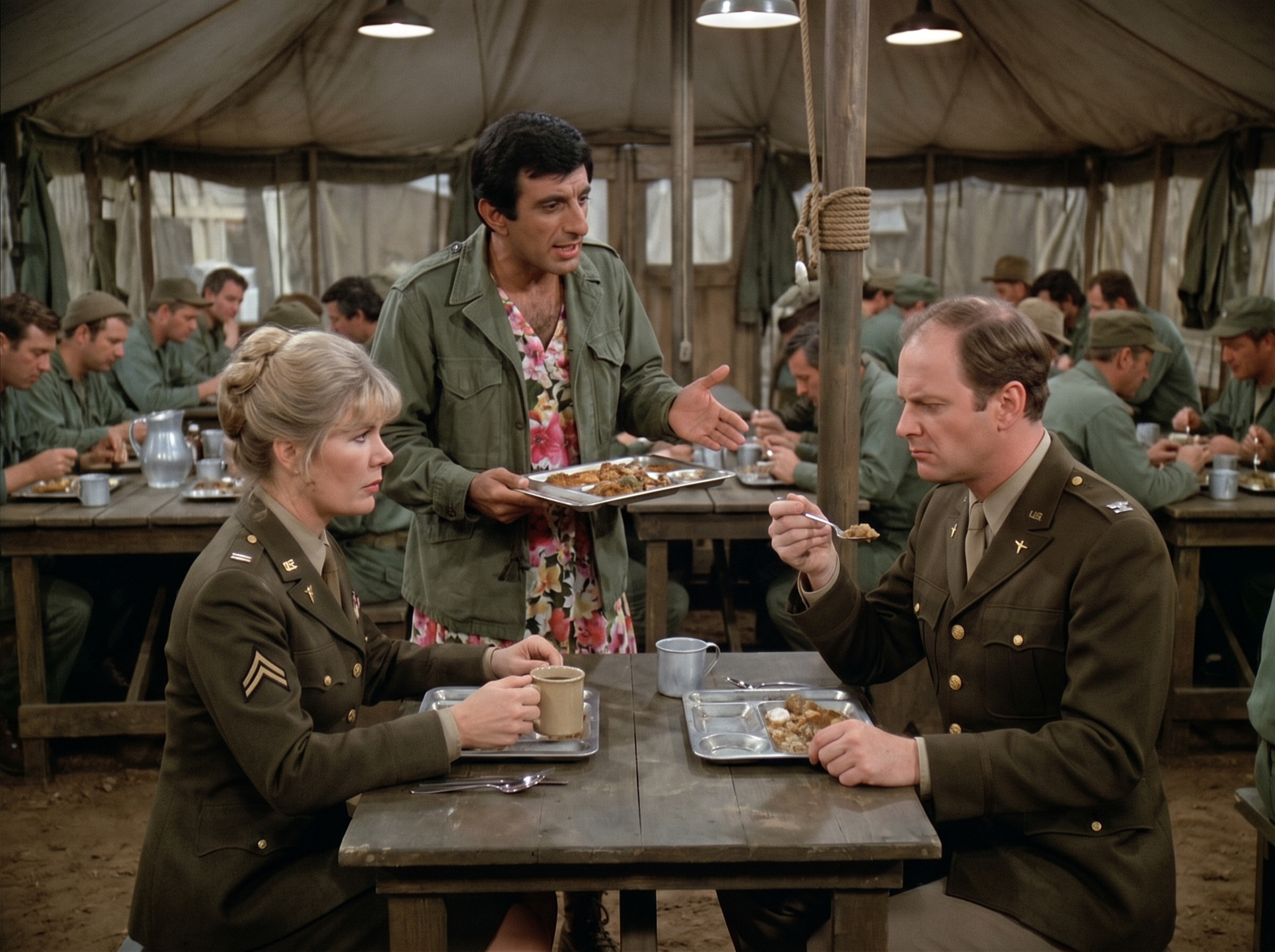
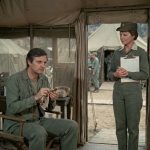
The mess tent of the 4077th Mobile Army Surgical Hospital was a place of many things, but culinary delight was rarely one of them. It was a canvas cavern of dull olive drab, filled with the endless clatter of metal trays and the low, exhausted hum of doctors and nurses trying to remember what civilian life felt like. On this particular Tuesday, the air was thick with the smell of strong, burnt coffee and whatever mystery stew Igor had managed to conjure from powdered rations and despair.
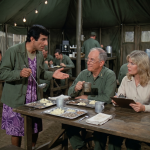
At a long, worn wooden table near the center, Major Margaret Houlihan sat perfectly upright. She gripped a chipped, dull metal coffee mug in both hands, drawing whatever meager warmth she could from the bitter brew. Her posture was, as always, strictly military, but her eyes held the heavy, weary sharpness of a woman who had spent the last fourteen hours patching up broken boys in the operating room. She stared straight ahead, a disciplined professional refusing to let the sheer exhaustion of the war pull her under.
Sitting directly across from her was Major Charles Emerson Winchester III. He looked entirely out of place, a Boston aristocrat marooned on a dirt floor in South Korea. Even in his standard issue wool uniform, Charles managed to exude an aura of a man waiting for the valet to bring his car around.
At this exact moment, Charles was engaged in a tense, silent standoff with his lunch. He held his spoon suspended halfway between his metal tray and his mouth. His face was a mask of restrained irritation and dry superiority.
On the spoon sat a lump of something brown, gelatinous, and entirely unidentifiable. Charles tilted his head slightly, examining the substance as if it were a fascinating, highly dangerous biological specimen rather than his afternoon meal.
“I submit to you, Margaret,” Charles said, his voice a low, cultured drawl that somehow cut through the noise of the tent. “That this is not food. This is an act of hostility. A clear violation of the Geneva Conventions, perpetrated upon us by our own mess tent.”
Margaret didn’t even blink. She just took a slow, agonizing sip from her mug. “Just eat it, Charles. It’s calories. You need it to stand up during the next shift.”
“I would rather photosynthesize,” Charles replied, his nose wrinkling slightly as he continued to stare down the spoon. “I have eaten better things by accident at the yacht club.”
Before he could drop the offending spoonful back onto his tray, a shadow fell over their table. It was Corporal Maxwell Klinger.
Klinger stood there in his standard-issue olive drab fatigue jacket, unbuttoned just enough to reveal a brightly patterned floral dress underneath. It was a bold fashion choice for a combat zone, but entirely normal for the 4077th.
However, it wasn’t the dress that caught their attention. It was the fact that Klinger was holding a fresh metal tray, offering it toward Charles with a dramatic, sweeping placement of his hands. On the tray sat what looked remarkably like actual, recognizable pieces of pan-fried fish.
Klinger’s face, however, was a picture of comic tragedy. His dark eyebrows were drawn together in an expression of deeply wounded pride. He looked like an artist whose masterpiece had just been used to clean a muddy boot.
“I heard you complaining from the serving line, Major,” Klinger said, his voice trembling with theatrical indignation. “So, I present to you an alternative. Freshly acquired from a local village, pan-fried with genuine care, and procured at great personal risk to my best pair of nylons.”
Charles slowly shifted his gaze from his spoon to Klinger’s tray, and then up to Klinger’s face. He let out a soft, dismissive scoff.
“Corporal,” Charles sighed, his tone dripping with aristocratic exhaustion. “While I applaud your terrifying resourcefulness, I would not trust a piece of fish that has been negotiated for in your wardrobe. Take it away.”
Klinger didn’t move. His dramatic stance faltered just a fraction, and the theatrical hurt in his eyes shifted into something a little more real. He had actually tried. He had scrounged, bargained, and cooked, hoping to bring a tiny sliver of decency to the miserable table, and Winchester had dismissed it without a second thought. The air around the table suddenly grew heavy, the quiet tension threatening to snap the delicate, tired peace of the afternoon.
Margaret lowered her coffee mug. The soft clink of the metal against the wooden table sounded surprisingly loud.
She turned her sharp, weary gaze away from the middle distance and focused directly on Winchester. The exhaustion in her eyes hardened into something formidable. Margaret was a stickler for the rules, but she was also fiercely protective of the fragile morale of this camp. She understood, perhaps better than anyone, what holding this unit together actually cost.
“Put the spoon down, Major,” Margaret said. Her voice wasn’t loud, but it carried the unmistakable authority of a head nurse who had run out of patience.
Charles blinked, genuinely surprised by the command. He looked at Margaret, his aristocratic mask slipping for a brief second. “I beg your pardon?”
“I said put it down,” Margaret repeated, her tone flat and unwavering. “Look at him, Charles. Really look at him.”
Charles reluctantly turned his eyes back to Klinger. The corporal was still holding the tray, but his arms were beginning to sag. The comic, dramatic energy had drained out of him. Beneath the floral dress and the unshaven face, Klinger just looked incredibly young, incredibly far from Toledo, and deeply, bone-achingly tired.
“Do you have any idea what it takes to find fresh food within fifty miles of this mud hole?” Margaret asked quietly. “He didn’t have to bring that to you. He could have eaten it himself. He could have sold it to Hawkeye for three days’ worth of poker stakes.”
Klinger shifted on his feet, looking suddenly uncomfortable with the defense. “Ah, it’s no big deal, Major Houlihan. If the man wants to eat paste, let him eat paste. More for me.”
But he didn’t pull the tray back. He just stood there, a strange, loyal sentinel in a flower-print dress.
Charles sat in silence. The dry superiority faded from his face, replaced by a quiet, reluctant understanding. He was an arrogant man, a proud man, but he was not a cruel one. He lived in the same mud, breathed the same cold air, and washed the same blood off his hands as the rest of them. He knew, deep down, that in this terrible place, these absurd people were the only family he had.
Slowly, carefully, Charles lowered his spoon, letting the unidentifiable brown mush drop back onto his own tray with a dull thud.
He reached out and, with precise, deliberate movements, took the fresh tray from Klinger’s hands. He placed it squarely in front of himself on the rough wooden table.
Klinger watched him closely, his dark eyes wide and cautious, waiting for the inevitable aristocratic insult to drop.
Charles picked up a clean fork. He carefully separated a small flake of the pan-fried fish. He brought it to his mouth, chewed slowly, and swallowed. Margaret watched him over the rim of her coffee mug, a silent dare hanging in the air.
Charles reached for his napkin, dabbing the corners of his mouth with practiced elegance. He looked up at Klinger, his face perfectly neutral.
“It is… slightly over-seasoned, Corporal,” Charles said, his voice calm and measured. “And the presentation leaves much to be desired.”
Klinger’s shoulders slumped. He let out a long, disappointed sigh and started to turn away.
“However,” Charles added, his voice catching Klinger just before he took a step.
Klinger paused, looking back over his shoulder.
“However,” Charles repeated, looking directly into Klinger’s eyes. “It is entirely edible. And given our current geographical and logistical nightmare… it is perhaps the finest piece of fish I have had all week.”
A slow, brilliant smile broke across Klinger’s face. It was a smile of pure, unadulterated relief and pride. He snapped a crisp, entirely un-regulation salute, the floral fabric of his sleeve fluttering.
“Compliments to the chef, Major!” Klinger beamed. “I’ll be sure to tell the village elder you loved it. He drives a hard bargain, but the man respects a palate!”
Klinger spun on his heel and marched away, his head held high, looking more dignified in a dress and combat boots than most generals looked in full dress uniform.
Charles watched him go, a faint, almost invisible smile touching the corners of his mouth. He looked down at the fish on his tray, then across the table at Margaret.
Margaret offered him a very small, very tired nod of approval. She took another sip of her awful coffee, and for the first time all afternoon, her shoulders dropped an inch, the tight, defensive posture relaxing just a fraction.
Charles picked up his fork again. They didn’t speak. They didn’t need to. In the noisy, steaming, chaotic mess tent of the 4077th, surrounded by a war that seemed like it would never end, they sat together in a pocket of quiet humanity. They ate their scrounged meals, drank their bitter coffee, and carried on, bound together by the strange, enduring grace of simply looking out for one another.
In the heart of the madness, the greatest comfort wasn’t found in a silver spoon, but in the hands of the friends who sat across the table.