The Symphony of the Swamp
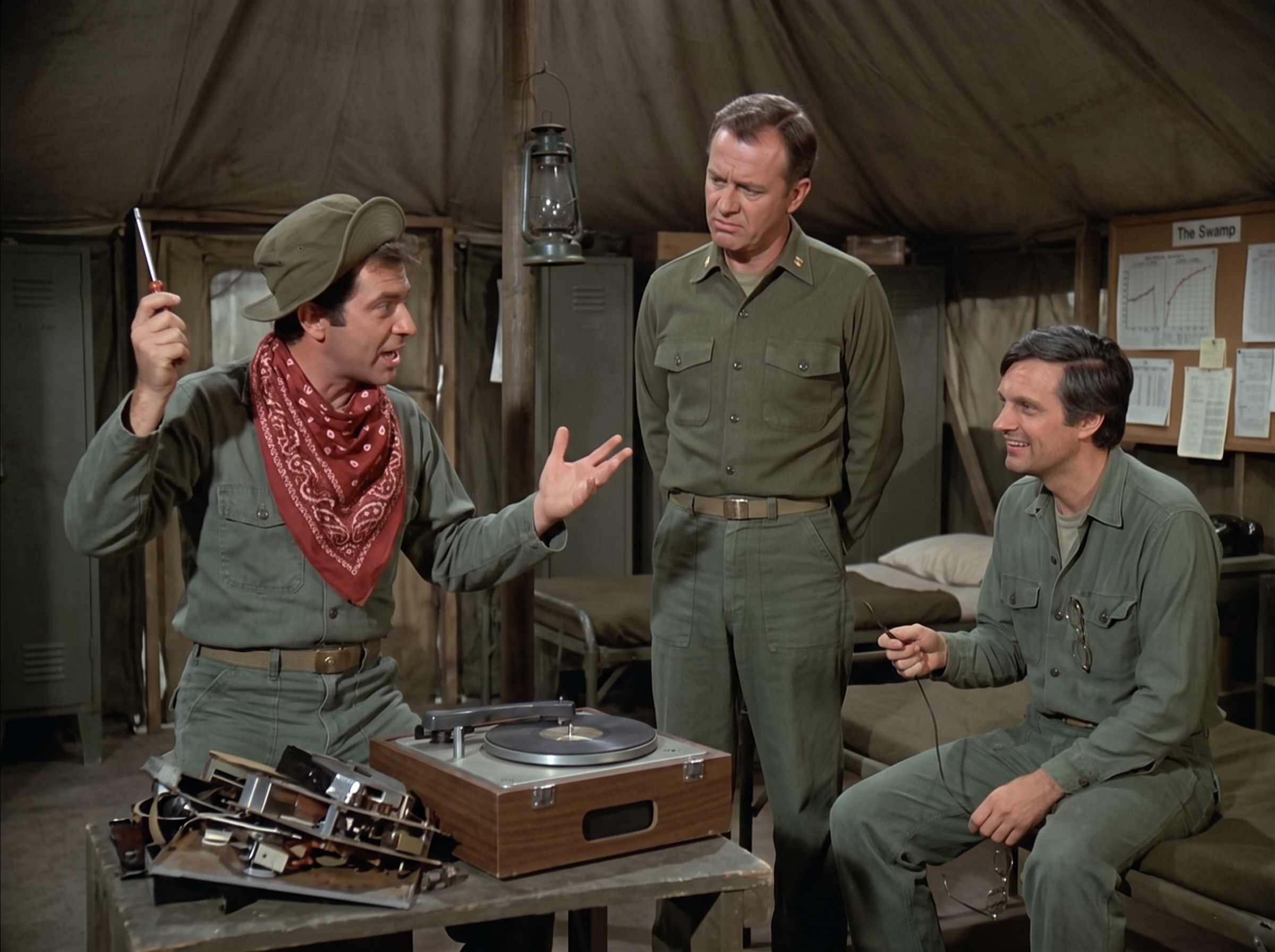
The Swamp was less a room and more a sanctuary built on mud, held together by sheer stubbornness and the smell of stale gin. Outside, the Korean night was heavy and still, pressing against the canvas walls as if waiting for permission to enter. Inside, however, the atmosphere was thick with a different kind of tension: the delicate, surgical dismantling of a broken record player.
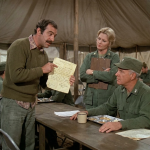
Hawkeye stood over the table, his face a masterpiece of exaggerated concentration. He held a tiny screwdriver aloft, brandishing it like a scalpel as he gestured toward the scattered guts of the turntable. He was in the middle of a frantic, one-man lecture on the mechanical failures of Western civilization, his signature red bandana knotted rakishly around his neck.
“It’s a matter of integrity, gentlemen!” Hawkeye declared, his voice pitching up with mock-dramatic flair. “This machine was built to play Gershwin, yet here it lies, choked on its own ambitions and a generous helping of Korean dust. If I can’t restore the music, what hope is there for the rest of us?”
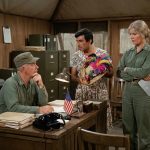
Colonel Potter stood in the corner, his hands clasped behind his back, watching the performance with a look that teetered between fatherly exasperation and genuine curiosity. He shifted his weight, his uniform sharp and clean against the rumpled, lived-in chaos of the tent. He had come looking for a report, but he had found something far more volatile: a trio of surgeons trying to perform an organ transplant on a piece of consumer electronics.
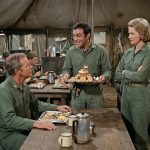
B.J. sat on the edge of a cot, a single wire gripped between his fingers like a lifeline. He was smiling—that quiet, steady smile that always anchored the madness. He watched Hawkeye with the amused patience of a man who knew exactly how the story would end, but enjoyed the journey anyway.
“Hawk,” B.J. said, his voice a low, steady contrast to the frantic energy in the room. “You’re not saving civilization. You’re just making it harder for us to get to sleep.”
Hawkeye spun around, the screwdriver catching the light of the lantern. “Sleep is for the uninspired, Beej! Tonight, we bring the magic back!”
He leaned down to jam a spring back into place, his hand slipping just enough to send a small, critical metal piece skittering across the floorboards. The room went silent. The high-strung energy shifted in an instant, the playful banter dying as they all stared at the dark, cluttered floor. The high point of the night had arrived: the realization that if they couldn’t find that piece, the music—the only thing separating them from the unending monotony of the war—was gone for good.
The silence that followed was heavy, the kind of silence that usually preceded a mortar blast or a particularly difficult surgery. Hawkeye froze, his arm still suspended in the air. Colonel Potter let out a slow, deliberate sigh, his eyes scanning the floorboards.
“Well,” the Colonel muttered, his voice dry as parchment. “That sounded expensive.”
B.J. was already on his knees, his face inches from the dirt, searching for the glint of metal. Hawkeye knelt beside him, his earlier theatrics replaced by a genuine, frantic concern. It was just a machine, a hunk of plastic and wire in a world that dealt in human fragile, but in that moment, it felt like the most important thing in the universe. It was the sound of home. It was the only thing that could drown out the hum of the generators and the ghosts of the day.
“I see it,” B.J. whispered, reaching beneath a crate. His fingers emerged, clutching the tiny, twisted piece of silver.
He handed it to Hawkeye, their eyes meeting for a brief, wordless moment. There was no need for thanks; in the 4077th, you didn’t have to say you were grateful for someone having your back. You just took the wire, you finished the job, and you made sure they were okay the next time they hit a wall.
Hawkeye took the piece with a surgeon’s precision. He worked in silence now, the manic energy settling into a focused, rhythmic grace. Potter stepped closer, no longer the commander, just a man who liked a good tune. He leaned down, squinting at the machinery, his gruff demeanor softening as the parts clicked back into their proper alignment.
“Careful there, Pierce,” Potter murmured. “Don’t rush it. You’ve got it this time.”
With a final, delicate turn of the screwdriver, Hawkeye stepped back. He looked at the turntable, then at his friends. He placed the needle on the disc. For a tense heartbeat, there was nothing but the crackle of static, and then—the clear, swelling notes of a jazz melody filled the tent.
It wasn’t perfect. The audio wobbled, thick with the imperfections of a war-torn world, but it was music. The tension in the room snapped, replaced by a sudden, profound exhaustion and the warm, quiet glow of shared success. Hawkeye slumped onto the edge of the table, his shoulders dropping, the frantic edge of his humor replaced by a weary grin.
B.J. leaned back against the cot, closing his eyes, letting the melody wash over him. Colonel Potter took a long, slow breath, looking around the tent—at the messy lockers, the worn cots, and the men who, despite the madness, had found a way to keep the rhythm going.
Nobody said a word about the war. Nobody mentioned the wounded waiting in Pre-Op or the endless, grinding fatigue that lived in their marrow. For a few minutes, the Swamp wasn’t a place of desperate survival. It was just a room, filled with the impossible, beautiful sound of home.
Even in the middle of a storm, a little bit of music is enough to remind us who we really are.