A Morning Measure of Grace
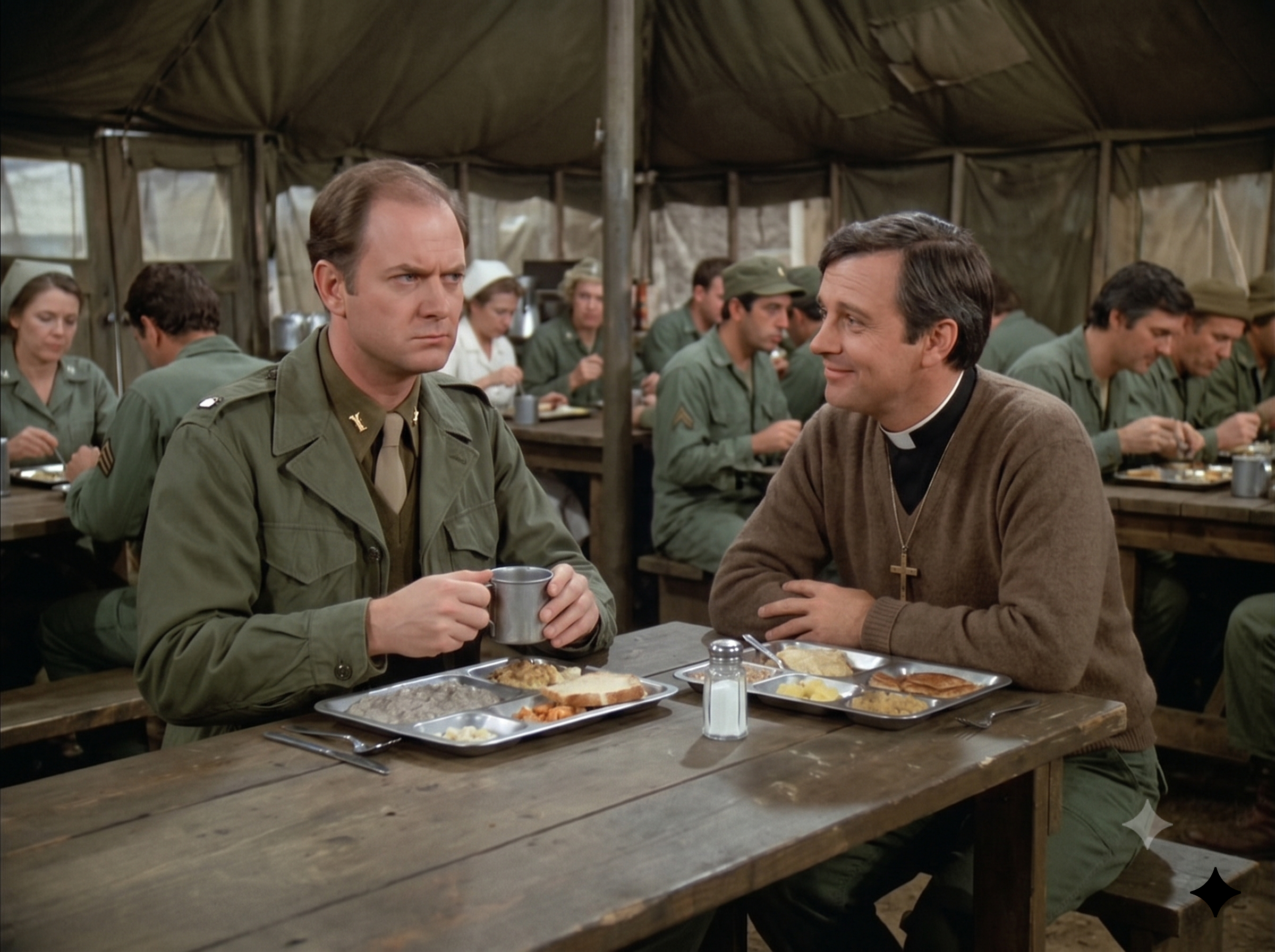
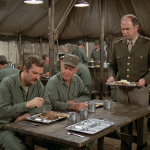
It was Tuesday, though in the Mess Tent of the 4077th, days were measured not by the calendar, but by the varying shades of gray served on the metal trays.
The morning air was thick with the smell of boiling canvas, stale coffee, and whatever culinary tragedy Corporal Igor was claiming as breakfast.
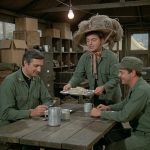
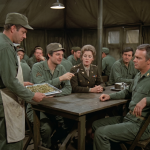
At a long, simple wooden table near the center of the room, Major Charles Emerson Winchester III sat with the rigid, upright posture of a man attending a formal state dinner under duress.
His military clothing was impeccably neat, a stark contrast to the exhausted, rumpled state of the camp around him.
In his right hand, he gripped his metal coffee cup like a lifeline, his knuckles slightly white.
Before him sat a metal tray holding a landscape of despair: a pale, lumpy grayish mound, some suspicious yellow squares, and a piece of bread that looked as though it had already surrendered.
Charles stared at the tray. His lips were pressed into a tight, thin line of aristocratic suffering, his left eyebrow slowly rising in a silent, magnificent display of restrained irritation.
Across the table sat Father Francis Mulcahy.
The chaplain wore his modest brown sweater over his clerical collar, the silver cross resting quietly against his chest.
Unlike the other doctors who usually met Charles’s complaints with sharp sarcasm, Father Mulcahy simply leaned forward, resting his arms on the table.
He looked at the weary surgeon with a soft, compassionate smile of hopeful warmth and sincere, practiced misunderstanding.
“It really isn’t so bad once you get past the visual presentation, Major,” Mulcahy offered gently, his voice barely rising above the clatter of tin forks and tired voices.
“I believe the powdered eggs have a rather… robust texture this morning. A true test of fortitude.”
Charles did not blink. He did not look up from the tray.
He simply tightened his grip on his coffee cup, the metal warm against his palm, as the weight of an eighteen-hour surgical shift pressed down on his shoulders.
The sounds of the mess tent seemed to fade as a dangerous, eloquent storm brewed behind Winchester’s eyes.
Slowly, deliberately, Charles lowered the cup to the table with a dull clink.
He took a slow, deep breath, lifting his gaze to meet the priest’s kind eyes, preparing to unleash a torrent of Bostonian fury that would undoubtedly question not only the culinary skills of the United States Army, but the very existence of a benevolent Creator.
“Father,” Charles began, his voice a low, cultured purr wrapped in velvet sandpaper.
“To call this substance ‘eggs’ is an insult to poultry everywhere. To call it ‘robust’ is a crime against the English language.”
He gestured vaguely over the tray with a refined flick of his wrist.
“I am reasonably certain that this gray paste was scraped directly from the undercarriage of a passing jeep, and the yellow matter beside it has achieved sentience. I am waiting for it to ask me for a light.”
Father Mulcahy’s smile did not waver. In fact, it seemed to grow just a fraction warmer, his eyes crinkling at the corners.
He had sat across from hundreds of angry, frightened, and exhausted men in this very tent.
He knew the difference between a man angry at his God, and a man who simply missed the comforting certainty of a proper dining room.
“The Lord provides in mysterious ways, Charles,” Mulcahy said softly, his tone completely devoid of irony.
“Perhaps it is meant to teach us humility. Or, at the very least, gratitude for the times we are not eating it.”
Charles opened his mouth to deliver a scathing rebuttal regarding the theological implications of army slop, but the words died in his throat.
He looked closely at the gentle chaplain.
Mulcahy looked just as exhausted as the rest of them. There were dark circles under his eyes, a testament to the long night he had spent holding hands in the post-op ward, offering quiet prayers over boys who were far too young to need them.
Yet, here the priest sat, finding the strength to offer a weary surgeon a smile of absolute, unwavering kindness.
The starch slowly left Charles’s spine. The aristocratic shield, so carefully maintained to survive the absurdity of the war, lowered just an inch.
He was cold, his feet ached, and his hands still felt the ghost of the retractors from the operating room.
He realized, with a sudden, quiet pang of clarity, that he was not angry at the food. He was angry at the war, at the dirt, at the miles between himself and everything he knew.
And taking it out on the gentlest soul in the camp would not make the miles any shorter.
Charles exhaled, a long, tired sigh that seemed to carry the weight of the entire 4077th.
The rigid lines of his face softened into an expression of profound, quiet fatigue.
“Humility,” Charles muttered, the sharp edge completely gone from his voice. “Yes. Well. The United States Army is certainly providing an advanced seminar in the subject.”
“They do have a rather intensive curriculum,” Mulcahy agreed softly, his smile turning sympathetic.
The priest gently pushed a small, untouched packet of sugar across the rough wooden table, sliding it near Charles’s coffee cup.
It was a tiny gesture, but in the bleak landscape of the mess tent, it was an offering of immense grace.
Charles looked down at the sugar packet, then back up at the priest.
The dry sarcasm remained, but the moral warmth of the moment had thoroughly disarmed him.
“Thank you, Father,” Charles said softly, his voice finally matching the quiet intimacy of the chaplain’s.
“You’re very welcome, Major,” Mulcahy replied, leaning back slightly, content that the storm had passed. “Eat what you can. The body needs fuel, even if the spirit objects.”
Charles picked up his metal cup, his posture still naturally upright, but no longer rigid.
He tore open the sugar, poured it into the bitter, chicory-laced coffee, and stirred it slowly.
For a long moment, the two men simply sat together in the noisy, crowded tent.
They were worlds apart in background, belief, and temperament, yet perfectly united in the shared, absurd endurance of their daily lives.
Charles lifted the cup, giving the priest a very subtle, respectful nod, before taking a sip of the terrible coffee, finding it, just for a moment, exactly what he needed.
In the heart of the madness, the greatest comfort wasn’t found on the tray, but in the quiet grace of the person sitting across from you.