The Late-Night Line to Ottumwa
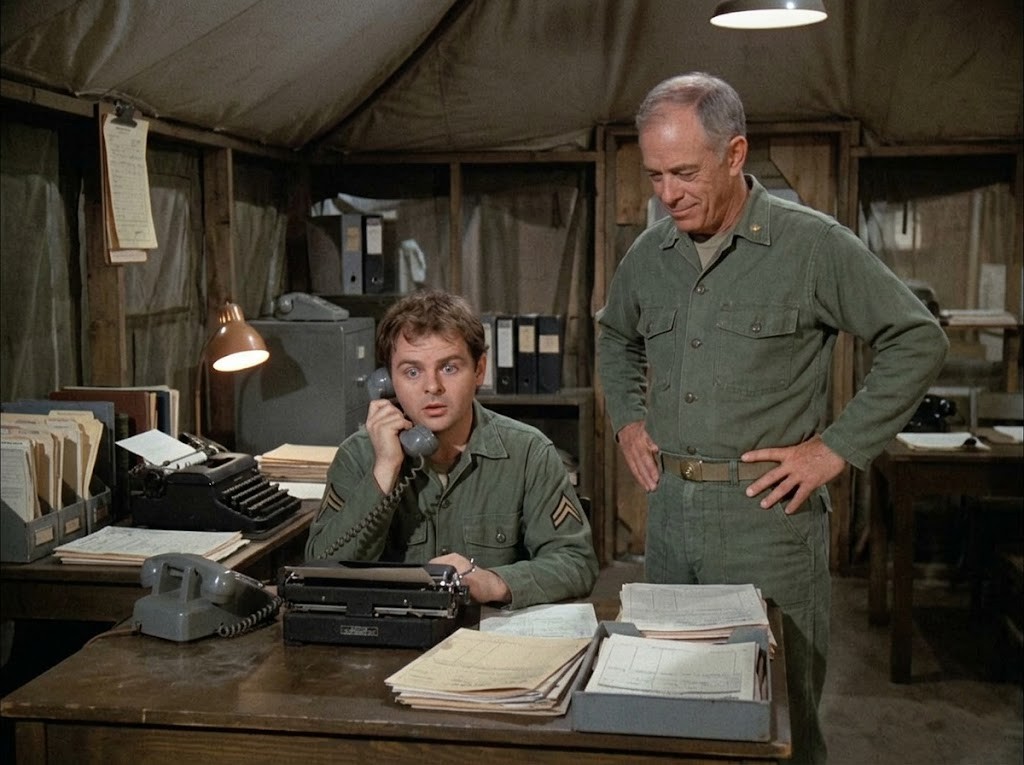
The Swamp was freezing, the O.R. was a distant echo of clicking hemostats, and the company clerk’s office smelled permanently of stale coffee and damp canvas. It was 0300 hours, that specific brand of military time where the soul feels scraped thin and the brain starts playing tricks on you.
Radar O’Reilly sat huddled over his desk, the heavy black telephone receiver pressed so tightly to his ear that his knuckles were turning white. His eyes were wide, blinking against the harsh glare of the single overhead bulb, caught in that familiar, desperate dance between absolute exhaustion and hyper-vigilant duty.
Across the desk, standing with his hands planted firmly on his hips, Colonel Potter watched the young corporal with a mixture of practiced sternness and quiet, fatherly concern. The old cavalryman’s posture was stiff, but his eyes were soft, reflecting the dim light of an office that had seen too many long nights and too many bad reports.
“Well, Corporal?” Potter’s voice was a low rumble, cutting through the rhythmic clatter of the typewriter keys that Radar had been mindlessly tapping just moments before. “Is that Sparky on the line, or are you just listening to the wind blow through the tactical wire again?”
Radar swallowed hard, his Adam’s apple bobbing above the collar of his oversized olive-drab fatigues. He held up a single, trembling finger, his gaze locked onto some invisible point on the canvas ceiling as if he could see the signal bouncing all the way from Seoul.
“It’s… it’s a priority patch, Colonel,” Radar whispered, his voice cracking slightly with the vulnerability of a boy who was far too young to be managing the communications of a war zone. “But it’s not coming from headquarters. It’s routed through San Francisco. I think… I think it’s Iowa, sir.”
Potter’s eyebrows knitted together, his amusement fading into a sharper, more focused alertness. A call from Iowa at three in the morning rarely meant good news, and in the 4077th, bad news from home was the one casualty they couldn’t patch up with penicillin and silk sutures.
The line crackled violently, a harsh burst of static that made Radar wince and pull the receiver an inch away from his ear. Through the white noise, a faint, metallic voice drifted into the tent—a voice that sounded like cornfields in July and Sunday dinners after church.
Radar’s face went pale, his grip tightening on the phone until his arm began to shake. “Mom?” he breathed into the mouthpiece, his eyes darting up to meet Potter’s steady gaze with a sudden, overwhelming look of sheer panic.
The silence in the office grew so heavy you could hear the slow, rhythmic drip of the melting frost outside the tent flap. Colonel Potter didn’t move an inch, his hands staying glued to his hips, but his shoulders dropped a fraction of a degree, absorbing the tension radiating from the young man in front of him.
“Radar? Walter? Is that you, drawing breath?” The voice from the receiver was incredibly faint, fighting its way through thousands of miles of copper wire and deep-sea cable, but it was unmistakably the voice of Mrs. O’Reilly.
Radar couldn’t speak; the words were jammed tightly in his throat, trapped behind a wall of exhaustion and sudden, terrifying homesickness. He looked up at Potter, his eyes pleading for a lifeline, looking less like the backbone of the 4077th and more like a lost kid from Ottumwa who wanted to go home.
Potter leaned forward slightly, his voice dropping into that calm, reassuring tone he used when a patient’s pulse started to flutter on the table. “Talk to her, son,” the Colonel murmured gently. “The United States Army can wait five minutes. Tell your mother you’re alive.”
Radar cleared his throat, his fingers fumbling with the cord of the telephone. “Yeah, Mom. It’s me. I’m here. I’m okay. Is… is everything alright with the farm? Is Uncle Albert’s hip acting up again?”
There was a long pause, filled with the rushing sound of the Pacific ocean line, before the faint voice returned, carrying a gentle, tired chuckle. “The farm is just fine, Walter. Uncle Albert’s out back fixing the tractor right now. I just… I got your letter about the cold weather up there, and I couldn’t sleep until I heard your voice. You wearing your wool socks, Walter?”
A sudden, watery smile broke across Radar’s face, chasing away the shadows of the Korean night. He looked up at the Colonel, a flush of embarrassed color returning to his cheeks as he realized his commanding officer was listening to his mother lecture him about hosiery.
Potter didn’t laugh; instead, a wry, knowing smile tugged at the corner of his mustache. He reached out and tapped the stack of paperwork on Radar’s desk, a silent reminder that the war was still waiting, but his touch was incredibly gentle.
“Yes, Mom, I’m wearing the socks. Both pairs,” Radar said into the phone, his voice steadying, grounded by the beautiful familiarity of a mother’s worry. “Listen, I gotta go. The Colonel is standing right here, and we’ve got a lot of… corporate business to take care of.”
“You tell your Colonel he looks after my boy,” the faint voice replied, followed by a final, crackling pop that signaled the line cutting out, leaving only the dull hum of the dial tone in its wake.
Radar slowly lowered the receiver back onto its cradle, the silence of the tent returning all at once. He looked down at his typewriter, suddenly feeling the full weight of the forty-eight straight hours he’d been awake, his shoulders slumping under the fatigue.
Colonel Potter stood there for a moment longer, looking down at the young man who kept their entire world from falling apart every single day. He reached out and gave Radar’s shoulder a firm, brief squeeze—the kind of gesture that said everything the Army regulations didn’t allow him to put into words.
“Get some sleep, Radar,” Potter said softly, turning toward the door of the tent. “The morning reports can wait until the sun decides to show its face. And that’s a direct order from your commander… and your mother.”
Radar watched the Colonel walk out into the cold morning air, a deep sense of warmth settling in his chest despite the freezing draft. He reached into his desk drawer, pulled out a pair of thick, hand-knitted woolen socks, and smiled.
In a place where tomorrow was never promised, sometimes a faint voice from across the ocean was the only medicine that could truly save a soldier’s soul.