The Weight of a Typo and the Peace of the 4077th
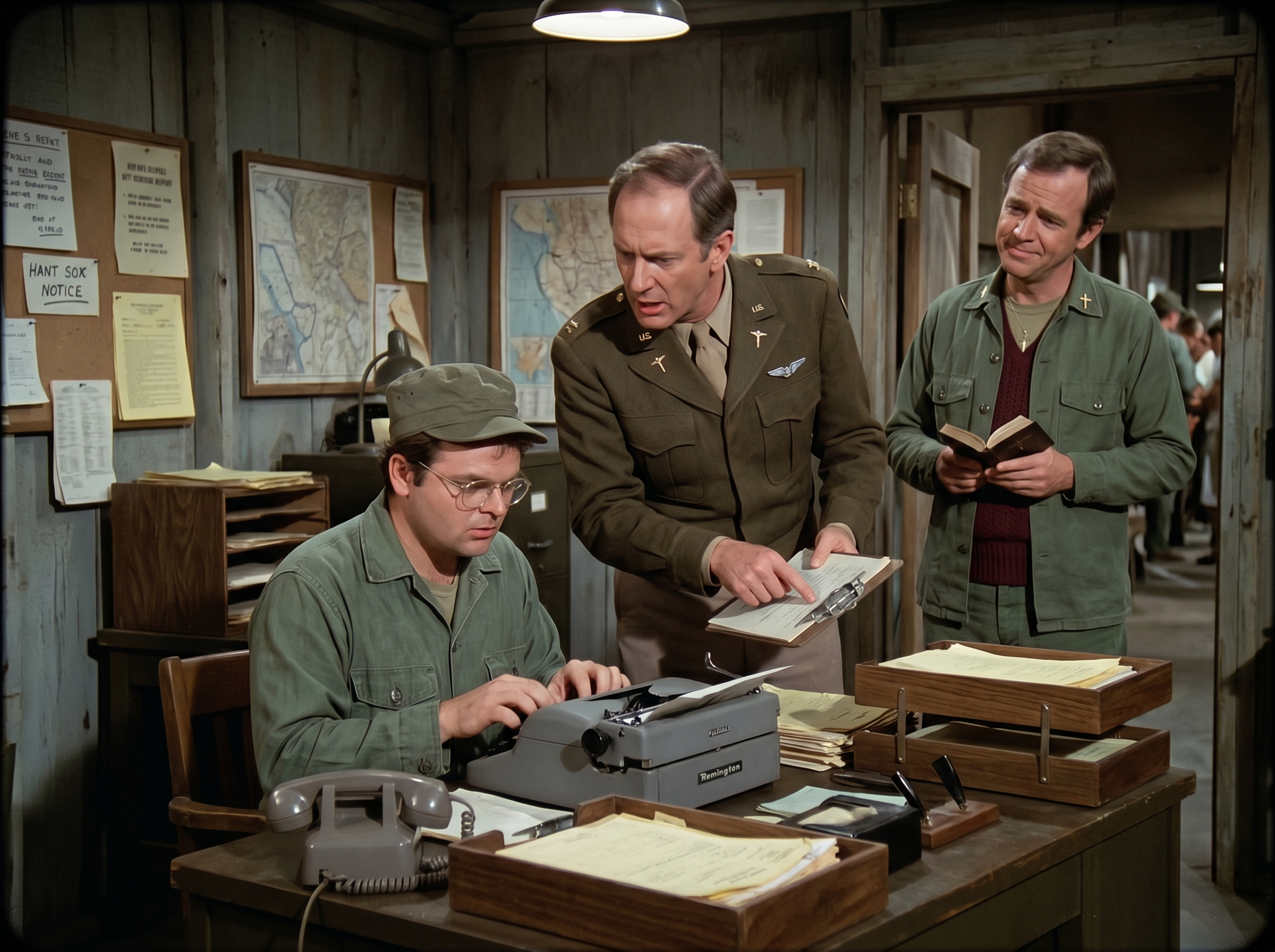
The rhythmic clack-clack-clack of Radar’s Remington typewriter was the only steady heartbeat the 4077th had on a Tuesday afternoon. It was that peculiar kind of quiet that only settled over the camp when the chopper blades had finally stopped spinning and the operating room smelled of stale soap and dried copper.
Everyone was operating on three hours of sleep and a collective sense of borrowed time.
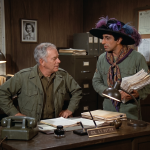
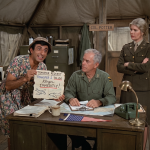
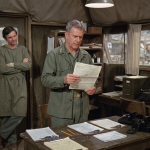
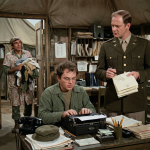
Radar O’Reilly sat hunched over his desk, his cap pulled low, his thick glasses sliding down the bridge of his nose. His fingers moved with frantic precision, trying to outrun the exhaustion creeping into his wrists. To his right, Colonel Potter leaned over the wooden counter, his finger firmly pinning down a clipboard, his face etched with the stern, fatherly worry of a man who carried three hundred lives on his shoulders.
“Radar, look at this line right here,” Colonel Potter muttered, his voice a gravelly mix of fatigue and insistence. “You’ve got the supply requisition for the entire third quarter listed as ‘essential winter blankets’ under the medical category, but the serial number belongs to a shipment of standard-issue dress shoes. We can’t wrap a freezing pre-op patient in formal footwear, son.”
Radar stopped typing, his fingers hovering over the keys like frozen spiders. His eyes widened behind his lenses, a sudden wave of panic washing over his tired face. “Oh, jeepers, Colonel… I—I must’ve looked at the wrong column. The light in here at three in the morning isn’t exactly… well, the bulb’s losing its spirit, sir.”
Standing a few feet away, leaning casually against the doorframe, Father Mulcahy watched the exchange with a small, knowing smile. He held a small, leather-bound prayer book in his hands, his fingers gently keeping his place. He wore his standard green utility jacket over a dark maroon sweater, a small silver cross pinned to his collar catching the dim light of the overhead lamp.
He didn’t interrupt; he simply offered the room his quiet, steadying presence, a sanctuary in a room full of military red tape.
“It’s not just the shoes, Radar,” Potter continued, his tone softening just a fraction as he looked at the young corporal’s slumped shoulders. “If this form goes through to Seoul with the wrong header, General Mitchell will have us auditing every shoelace from here to Incheon. We don’t have the hours for it.”
Radar’s lip quivered slightly, his hand moving instinctively toward his telephone as if looking for a lifeline. “I can re-type the whole layout, Colonel. It’ll only take me until midnight. I’ll just… I’ll skip dinner. I’m not very hungry anyway. The mess tent served something grey today that looked like it was trying to crawl away.”
Father Mulcahy stepped forward a single pace, his gentle eyes crinkling at the corners. “Sherman, the boy has been on his feet since the ambulance arrived at dawn. Perhaps a short breather before the ink dries?”
Potter sighed, the harsh glare of the desk lamp highlighting the deep lines around his eyes. He looked from the clipboard, to Radar’s trembling hands, and then out toward the compound where the wind was picking up.
“We don’t have time for a breather, Father,” Potter said quietly, his voice heavy with the realization of what lay ahead. “Because if this report isn’t on the five o’clock jeep, the medical supplies we actually need—the penicillin and the arterial clamps—won’t clear the checkpoint by Friday. And we have a storm coming.”
The room fell into a heavy, suffocating silence, the kind that usually preceded a heavy influx of casualties. Radar looked down at the keys of his Remington, the letters blurring together under the strain of his tears. He felt the immense weight of the war, not in the explosions or the shrapnel, but in the terrifying fragility of a single piece of paper. One wrong stroke of a key, and someone three days from now wouldn’t get the medicine they needed to go home.
Father Mulcahy closed his prayer book with a soft, decisive click. He walked over to the side of the desk, placing a gentle hand on Radar’s shoulder. “Corporal, do you remember the passage we read yesterday morning? The one about patience and the strength found in small things?”
Radar swallowed hard, nodding without looking up. “Yes, Father. The one about the mustard seed.”
“Exactly,” Mulcahy said, his voice dropping to that comforting, melodic register that had calmed a hundred dying boys in the post-op ward. “A typewriter key is much smaller than a mustard seed. And a mistake is merely a line that hasn’t found its proper place yet. Let us take a breath.”
Colonel Potter looked at the priest, then down at the boy who kept the entire camp running on grape juice and pure devotion. The stern commander vanished, replaced entirely by the old cavalry doctor who understood the breaking point of the human spirit. He lifted his finger from the clipboard and gently tapped the top of Radar’s olive-drab cap.
“Alright, Sparky,” Potter said, using the affectionate nickname reserved for moments when the army felt too big and too cold. “Take it easy. No one is skipping dinner, even if the mess tent is serving weaponized meatloaf today. We’ll fix it together.”
“But the five o’clock jeep, sir…” Radar whispered, his voice small.
“The jeep will wait,” Potter declared, his jaw setting into that stubborn, unyielding line that defied the Pentagon itself. “If Driver Miller tries to put that vehicle in gear before this clipboard is in his hand, I’ll personally confiscate his spark plugs. I am still the boss of this outfit, last time I checked my collar.”
A tiny, relieved chuckle escaped Radar’s throat. He reached into his drawer, pulled out a small bottle of correction fluid, and carefully dabbed the white liquid over the offending serial number.
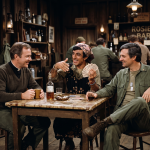
Father Mulcahy stood by, his presence a silent shield against the chaos of the outside world. He looked out the doorway toward the swamp, where he could hear Hawkeye and B.J. laughing loudly about some ridiculous prank involving Hawkeye’s bathrobe. It was a beautiful, chaotic, exhausting home they had built here in the mud.
“You see, Radar?” Father Mulcahy said softly, his thumb tracing the cover of his book. “The world doesn’t end because of a typographical error. The Lord gives us white-out for a reason.”
“Thank you, Father. Thank you, Colonel,” Radar said, his glasses clearing up as he wiped them on his sleeve. He lined up the carriage of the typewriter once more, his fingers steady now, grounded by the love of the two men standing over him.
Potter leaned back against the desk, watching the boy type with a renewed, rhythmic energy. “Just get it right this time, son. I don’t want to explain to the Pentagon why the 4077th is receiving forty boxes of combat boots instead of sterile gauze.”
The clacking resumed, louder and more confident this time, filling the small office with the beautiful, ordinary sound of survival.
In the corner of a forgotten war, the greatest victories were often won with a little grace, a lot of patience, and a fresh ribbon in an old typewriter.