The Best Medicine in a Tin Cup
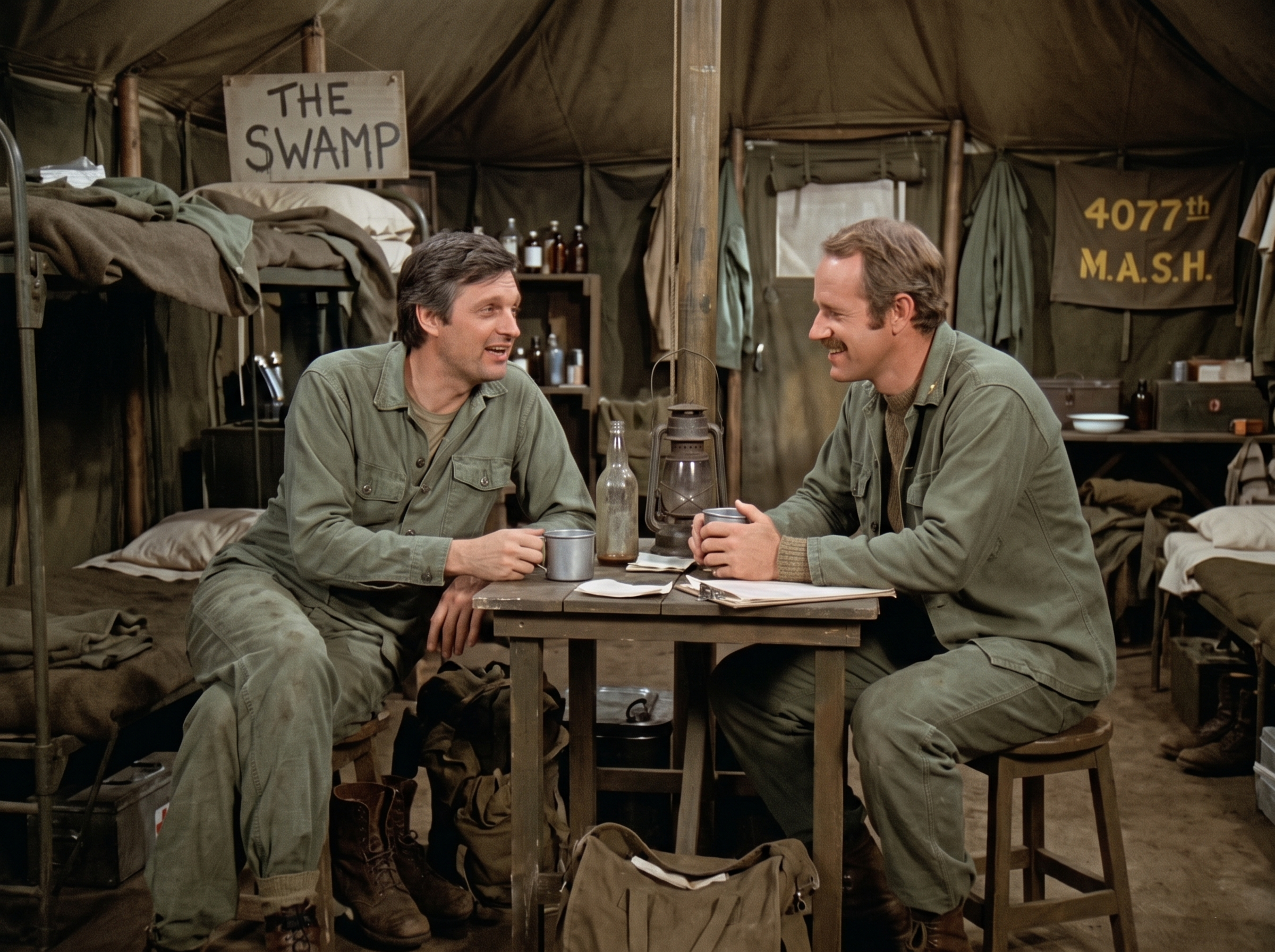
It was the kind of heavy, ringing quiet that only settles over the 4077th after the helicopters finally stop coming.
Twenty straight hours in the operating room had drained the color from the camp, leaving everything painted in exhausted shades of olive drab and dusty tan.
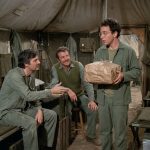
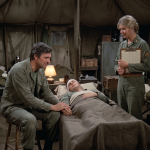
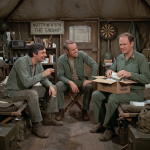
Inside The Swamp, the air was thick with the scent of old canvas, damp wool, and the sharp, medicinal sting of homemade gin.
The small, makeshift space was a mess of practical camp furniture, wrinkled cots, and the modest, lived-in clutter of men who had nowhere else to go.
Hawkeye Pierce was slouched back on his cot, looking like a marionette whose strings had been abruptly cut. Yet, despite the deep lines of fatigue etched around his eyes, his mouth was running at full speed.
He was leaning back in a relaxed, almost defiant slouch, a playfully teasing expression lighting up his face as he delivered a dryly witty monologue to the other side of the tent.
“I’m telling you, Beej, it’s a conspiracy,” Hawkeye declared, waving a hand casually in the air. “The Army isn’t trying to win a war. They are conducting a highly classified psychological experiment to see how long a man can survive on creamed chipped beef and the smell of his own boots.”
Across the small improvised table, B.J. Hunnicutt sat leaning forward comfortably, a picture of quiet empathy. He held a battered tin cup loosely in his hands, resting his forearms on his knees.
B.J. wasn’t offering a punchline. He was offering an audience. He watched his friend with a gentle, dryly amused smile, letting Hawkeye spin his verbal webs to keep the ghosts of the OR at bay.
“I think you’re overestimating the Army’s organizational skills, Hawk,” B.J. replied mildly, his voice a soft, grounding rumble in the quiet tent.
Hawkeye flashed a brilliant, sarcastic grin. “Never underestimate the sheer, unadulterated power of military incompetence.”
B.J. chuckled softly, taking a sip from his tin cup. The familiar banter felt good. It felt normal.
But the normalcy was fragile. A sudden, distant rumble of a jeep shifting gears outside echoed through the compound.
Hawkeye froze. The playful light in his eyes flickered and died, replaced instantly by the haunted, hollow stare of a man remembering too much.
He slowly lowered his hand, his gaze drifting away from B.J. and settling on the blank canvas wall. The transition was immediate and devastating. The wit that had been protecting him suddenly evaporated.
“He was just a kid, Beej,” Hawkeye whispered, his voice cracking perfectly down the middle. The silence rushed back into The Swamp, heavy and cold. “The chest wound on table two. He couldn’t have been more than eighteen.”
Hawkeye looked down at his own hands, almost as if he expected them to still be covered in blood.
The war had slipped past the guards and walked right back into the tent.
B.J. didn’t flinch. He didn’t offer empty platitudes, and he didn’t tell Hawkeye that he had done his best.
In the 4077th, “your best” often wasn’t enough, and they both knew it.
Instead, B.J. kept his posture relaxed. He leaned forward just a fraction of an inch more, closing the emotional distance between them across the small, cluttered space.
He let the silence hang for a long, necessary moment, honoring the grief that filled the room. Then, he gently swirled the clear liquid in his tin cup.
“Eighteen,” B.J. said quietly, his voice carrying a soft, steadying warmth. “He told me he was from somewhere in Ohio. Said his mom made the best cherry pie in the county.”
Hawkeye squeezed his eyes shut, a brief expression of agony crossing his face. The specific details were always the hardest part.
“Cherry pie,” Hawkeye murmured, shaking his head. “God. What are we doing here, B.J.? What is the point of all this?”
“We’re stitching them up, Hawk,” B.J. answered simply, his gaze never leaving his friend. “We’re stitching them up so they have a chance to go back and eat cherry pie again. Sometimes we miss. But we don’t stop stitching.”
B.J.’s gentle, dry smile slowly returned. “Besides, if we stopped, who would drink all this terrible gin?”
The question hung in the air, a small, ridiculous life raft thrown into a sea of despair.
Hawkeye kept his eyes closed for another second. Then, a long, ragged sigh escaped his lips. He opened his eyes, looking at B.J. through the soft, archival television lighting of the tent.
The deep well of pain was still there, but B.J.’s steady presence had pulled him back from the edge.
Hawkeye shifted on the cot, his posture losing its rigid tension and settling back into that familiar, tired slouch. The ghost of his playful grin began to tug at the corner of his mouth.
“You call this gin?” Hawkeye scoffed softly, his voice rough but finding its familiar rhythm. “This isn’t gin, B.J. This is a violation of the Geneva Convention.”
B.J. raised his tin cup in a modest salute. “It cleans the mind, too. If you drink enough of it, you forget your own name. I consider that a medical breakthrough.”
Hawkeye reached across the modest camp table and picked up his own tin cup. He looked at the clear liquid inside with a mock expression of deep suspicion.
“I’m only drinking this because I lack the energy to walk to the Officers’ Club,” Hawkeye stated, pointing a finger at B.J. “And because I deeply value our friendship. But mostly the walking thing.”
B.J. chuckled, a warm, resonant sound that seemed to chase the last of the cold out of the tent. “Your sacrifice is noted, Captain Pierce.”
They clinked their tin cups together. The hollow metallic sound was small, but it filled the space perfectly.
Hawkeye took a sip and immediately coughed, his face contorting into a mask of exaggerated disgust. He gasped for air, clutching his throat.
“Sweet mother of all that is holy,” Hawkeye wheezed, his eyes watering. “What did you put in this batch? Battery acid? Paint thinner?”
“Just a hint of juniper,” B.J. said, thoroughly amused. “And maybe a touch of despair. You said so yourself.”
Hawkeye leaned back against the cot again. The haunted look was gone, replaced once more by the emotionally alert, dryly witty surgeon.
He looked at B.J., the warmth of their profound friendship unspoken but vividly present in the muted olive and tan space between them.
“You’re a good man, B.J. Hunnicutt,” Hawkeye said quietly, the teasing tone dropping away just enough to let the sincerity shine through.
B.J. smiled, a genuine expression of quiet tenderness. He took another slow sip from his cup, comfortable in the silence that followed.
The war was still raging somewhere out there in the dark. The helicopters would come back tomorrow, and the blood would start flowing again.
But for tonight, in the messy, lived-in sanctuary of The Swamp, they had bought themselves a little peace. They had terrible liquor, worn canvas cots, and the saving grace of knowing they didn’t have to carry the weight of the world alone.
Hawkeye let out a long breath, staring contentedly at the ceiling. “Now,” he said softly, “tell me more about this general with no chin.”
They survived the darkest days of the war not with medals or glory, but with terrible gin and the quiet miracle of having someone to share it with.