A Floral Gown and the Captain’s Conundrum
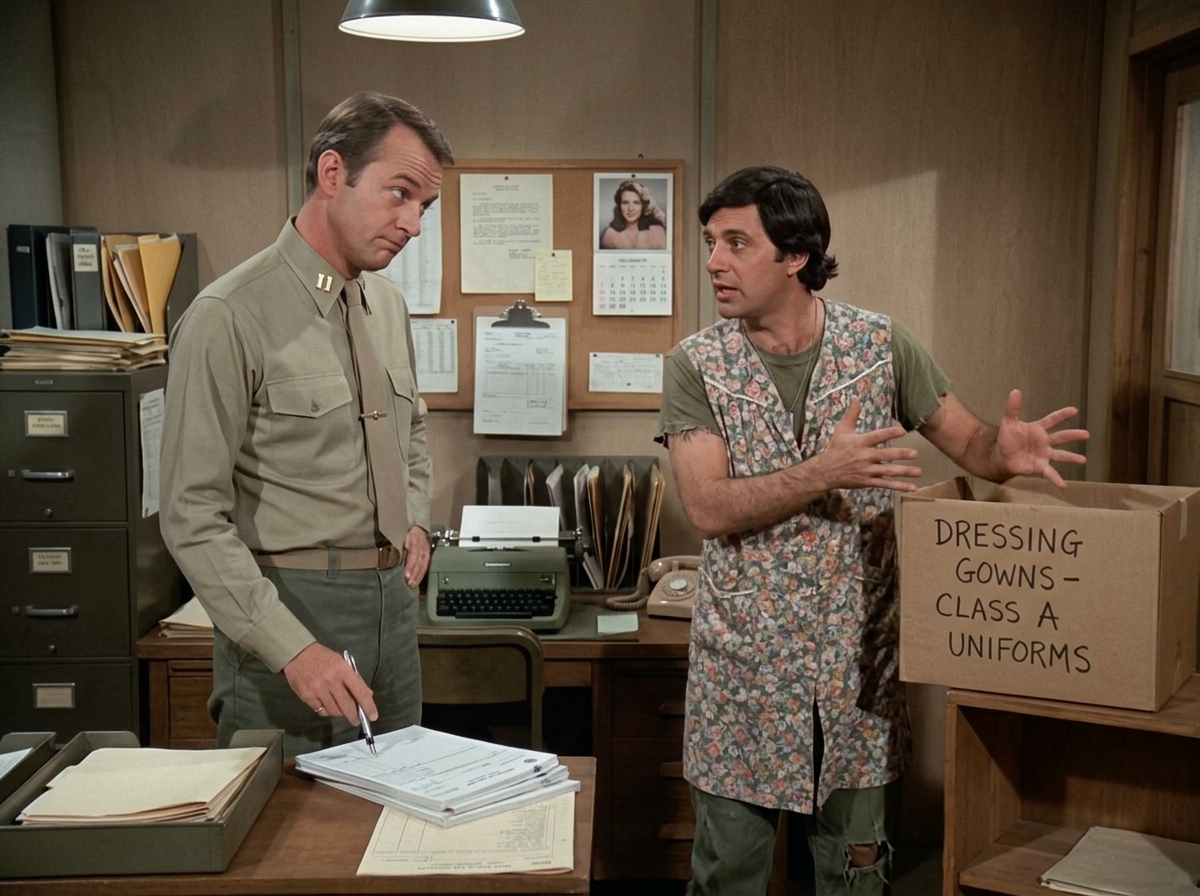
You could hear the silence all the way from Colonel Potter’s office. A rare, heavy kind of quiet that meant only one thing in the 4077th: the OR was finally empty.
The smell of sterilization fluid, tired coffee, and old paper filled the air. This was the calm between the storms, the momentary heartbeat before the choppers inevitable return.
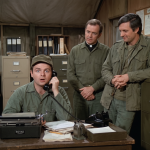
Captain B.J. Hunnicutt stood by the desk, the lines of exhaustion etching his features. Even in his Class A uniform, crisp and ready for something, his fatigue was a palpable weight.
He’d come in here looking for *something*. Peace, quiet, or maybe just a spare scalpel. What he found instead was Corporal Klinger.
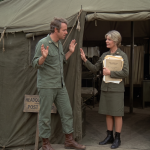
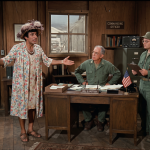
Klinger was a sight. In that sea of khaki, he was a vibrant, mismatched mosaic of florals. He stood beside a large cardboard box that screamed in block letters: ‘DRESSING GOWNS – CLASS A UNIFORMS’.
A box that, as far as Captain Hunnicutt could tell, was supposed to contain surgical gowns. Not, as Klinger so eloquently put it, “floral dreams.”
Klinger’s hands were spread wide, palms open, a picture of innocence and theatrical disbelief. His eyes, usually dancing with mischief, held an earnestness that was almost convincing. Almost.
“Captain,” he pleaded, the word almost a melody, “you *saw* the order form. You signed it yourself! Two hundred *surgical* gowns, Class A quality. I was specific!”
Captain Hunnicutt, ever the grounded force in this carnival, just stared. His eyes, the calm blue of a lake, met Klinger’s performance with a quiet, knowing gaze. He didn’t say a word. He just listened. He let the performance flow.
“You look at me,” Klinger continued, “and you see… what? A crazy person in floral pajamas? A man who thinks *this*,” he gestured wildly at the colorful fabric clinging to his body, “is acceptable attire?”
He didn’t wait for an answer. “But let me ask you this, Captain: when the choppers arrive and the wounded are here, do they care if their surgeon is wearing olive drab or this exquisite garden party creation?”
Captain Hunnicutt sighed. He reached down and picked up a stack of forms, tapping his pen against the top sheet, right next to where a signature was meant to go. A silent question hung in the air.
The silence stretched, thick with understanding. Klinger’s performance began to crack. The high notes of his argument faltered. His hands, previously expressive and open, slowly dropped.
“Okay,” he muttered, the bravado withering, “you’re not buying it.”
A tired smile, barely visible, ghosted across Captain Hunnicutt’s lips. It was a smile that spoke volumes. It said, *No, I’m not buying it. But I’m still listening.*
Klinger slumped onto a stack of files. “Look, Captain,” he said, all the theatricality gone, replaced by a quiet, raw exhaustion. “I ordered the gowns. Honest. Standard olive drab.”
“Then what’s with the floral number?” Captain Hunnicutt’s voice was soft, devoid of blame, only a weary curiosity.
Klinger gestured weakly at the box. “That? That was my… safety net. My insurance policy.”
“Insurance for what, Klinger?”
Klinger looked up, his eyes wide. “For when this is all over. For when we all get on those trucks and head back to where the flowers aren’t made of canvas.”
He touched the fabric of his sleeve, a wistful, distant look on his face. “I figured, if I couldn’t get a Section 8, maybe I could at least feel… pretty. For a few minutes. Like I’m not here. Like I’m at my Aunt Sofia’s in Toledo, at a garden party with tea and cucumber sandwiches.”
The humor, the absurdity, it all melted away. What was left was a raw, tired yearning for a simple, beautiful normalcy. The floral gown wasn’t just a costume; it was a small piece of Toledo, a whispered dream of a world without helicopters and olive drab.
Captain Hunnicutt stood there, his gaze fixed on the man in the floral gown. He didn’t see a “crazy person” or a theatrical performer. He saw a man holding onto a fragile hope, trying to find a spark of color in the grayness of war.
He gently placed the stack of forms and the pen back onto the desk. The signature, for now, could wait.
“Toledo,” he whispered, the word carrying a soft, nostalgic weight. He knew the feeling. He felt it every time he looked at his daughter’s photo.
“Aunt Sofia’s garden,” Klinger repeated, his voice barely a murmur.
The room, usually so full of noise and chaos, was now still. In that quiet moment, surrounded by the bureaucratic chaos and the smell of fatigue, there was a profound sense of found-family feeling.
They were all tired. They were all far from home. And sometimes, you just needed to wear your dreams on your sleeve. Even if that sleeve was made of floral cotton.
“Well,” Captain Hunnicutt said, his voice quiet but steady, “you don’t look too bad, Klinger. Fits you.”
Klinger’s eyes widened, a flicker of light returning. A slow, tentative smile spread across his face. It wasn’t the exaggerated smile of his performance; it was a genuine, surprised smile.
“You really think so, Captain?” he asked, a trace of vulnerability in his voice.
Captain Hunnicutt nodded. “Yeah. It’s a look.” He winked, a small gesture of solidarity.
Klinger stood up, the floral gown swirling around him. He wasn’t the manic performer anymore. He was just a tired man, who for a fleeting moment, had shared a piece of his heart. And found a bit of understanding.
As the familiar sound of a incoming helicopter began to filter into the room, the moment lingered. The floral gown, the tired Captain, the silent office… it was all a part of the tapestry of their lives at the 4077th. A world that was chaotic and heartbreaking, but also full of unexpected warmth and the quiet, enduring grace of friendship.
The paperwork could wait. The war could wait. For just a few seconds longer, they could dwell in the memory of Aunt Sofia’s garden party in Toledo.
The silence was just as loud as the noise, but for a moment, the quiet held a floral promise of home.