The Quietest Page in the Post-Op
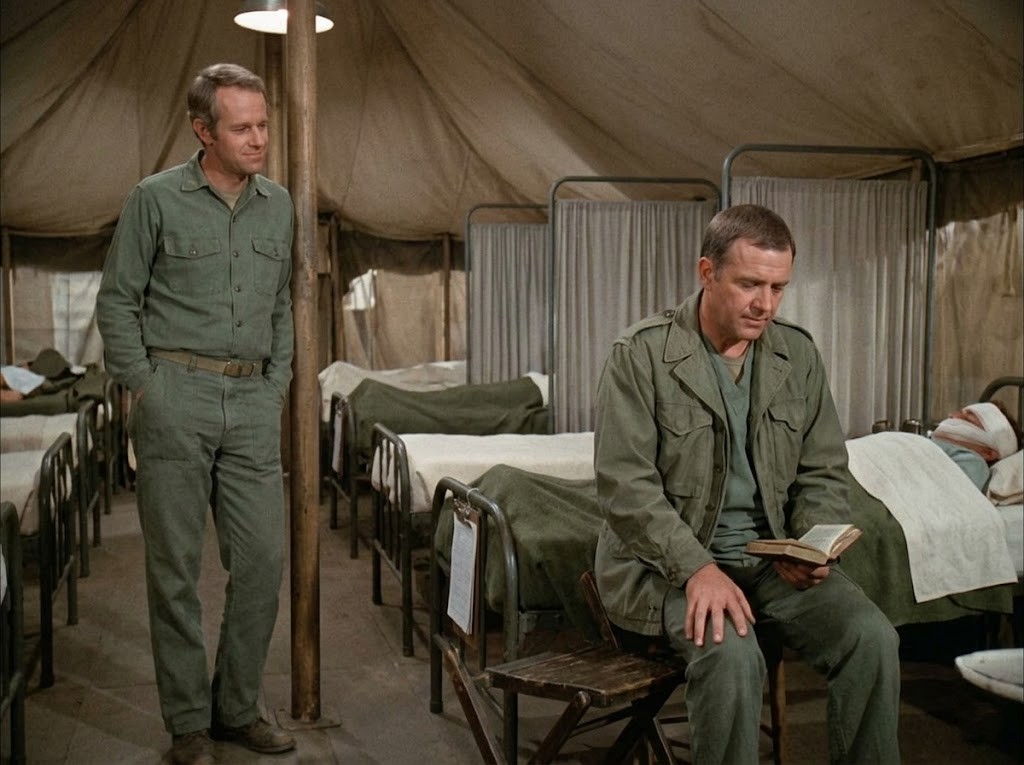
Some nights at the 4077th don’t end with a helicopter’s roar or a scramble to OR. They end with a heavy, thick silence that smells of canvas, rubbing alcohol, and damp earth.
It’s the kind of quiet that settles over the compound when the generators whine in the distance and every bone in your body begs for a mattress that doesn’t smell like damp straw.
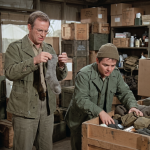
B.J. Hunnicutt leaned against the sturdy wooden support beam of the post-op tent, his hands shoved deep into his pockets. His boots were caked in mud, but a small, faint smile tugged at the corner of his mustache.
Across from him, sitting on a makeshift wooden stool, was Hawkeye Pierce.
Hawkeye hadn’t changed out of his green fatigue jacket yet. He sat with his shoulders slightly hunched, completely absorbed in a tiny, battered pocketbook.
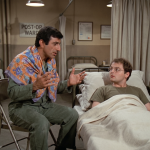
Around them, the post-op ward was mostly asleep. A few patients were tucked under olive-drab blankets, their breathing rhythmic and slow. Near the back, one soldier lay with his head heavily bandaged, stable but deeply unconscious.
“You’ve been on that same page for twenty minutes, Hawk,” B.J. said softly, his voice low so it wouldn’t wake the kids in the cots. “Either you’re reading backwards, or that’s the most complex piece of literature since the Sears catalog.”
Hawkeye didn’t look up right away. He turned the page with deliberate, slow care, his eyes tracking the small print.
“It’s poetry, Beej,” Hawkeye murmured, his voice lacking its usual rapid-fire theatricality. It was the quiet, gravelly voice reserved for the small hours of the morning. “A little volume of Robert Frost. Found it in the pocket of a corporal from Vermont who went home on a hospital ship last Tuesday. He told me to keep it.”
“Didn’t know you were a fan of the woods getting snowy,” B.J. quipped, though his eyes remained warm, watching his friend closely.
“I’m not. I’m looking for a specific line,” Hawkeye said, finally lifting his head. His face looked incredibly tired, lined with the kind of exhaustion that sleep couldn’t quite fix. “The kid told me there was a line in here that kept him warm during the worst freezing nights on the line. I’ve read every stanza twice, and all I’m getting is chilly.”
“Maybe you’re looking too hard,” B.J. suggested, stepping closer.
Before Hawkeye could answer, the canvas door of the tent rustled open. Radar O’Reilly slipped inside, holding a clipboard tightly against his chest, his oversized glasses reflecting the dull overhead bulb. He looked between the two doctors, his face pale and anxious.
“Sirs?” Radar whispered, his voice trembling slightly. “Colonel Potter needs you both in the office. It’s… it’s about the kid from Vermont.”
Hawkeye froze, his thumb still resting on the edge of the tiny page. The fragile peace of the tent seemed to shatter instantly. B.J.’s smile vanished, his posture straightening as the familiar, cold dread of the war crept back into the room.
“What is it, Radar?” B.J. asked, his voice steady but dropped to a tense whisper. “Did his transport run into trouble?”
Radar swallowed hard, looking down at his clipboard, then back up at Hawkeye. “No, sir. The hospital ship arrived safely in Japan. But the Colonel just got a wire from Tokyo. The boy’s mother is there. She flew in from New England because… well, they didn’t think he’d make the trip.”
Hawkeye stood up slowly from the wooden stool, the small book clamped tightly in his hand. His knuckles were white. “Is he…?”
“He’s awake, Captain,” Radar said, a sudden, soft smile breaking through his nervousness. “He made it. But his mother wanted the Colonel to relay a message to the surgeon who patched him up. She said to tell you that the fences are mended.”
Hawkeye blinked, the tension draining out of his shoulders so fast he almost looked dizzy. He looked down at the tiny book in his hand, a sudden spark of recognition lighting up his tired eyes.
“Mending Wall,” Hawkeye whispered, a genuine, breathless laugh escaping his lips. “The poet writes about fixing a stone wall with his neighbor. ‘Good fences make good neighbors.’ The kid wasn’t talking about the weather. He was talking about getting back home to his family’s farm.”
B.J. let out a long, relieved breath, stepping over and clapping a heavy, comforting hand on Hawkeye’s shoulder. “See? I told you that you were looking too hard. You were looking for a metaphor, and the kid was just homesick.”
“The Colonel says you can skip the morning briefing to get some sleep, sirs,” Radar added, visibly relieved to have delivered good news for once. He gave a small, awkward nod and slipped back out into the Korean night.
The tent returned to its quiet hum. The soldier with the bandaged head shifted slightly in his sleep, letting out a soft sigh, but remained peaceful.
Hawkeye looked at B.J., the cynical, defensive armor he usually wore completely gone. “You know, Beej, sometimes I think this place is just a giant machine designed to turn us into old, cynical men before our time.”
“And sometimes,” B.J. said softly, looking around the quiet room at the lives they had saved that week, “the machine fails, and we get to stay human.”
Hawkeye closed the little book gently and slipped it into his jacket pocket, right over his heart. He looked back at the rows of cots, his expression filled with a quiet, bittersweet reverence.
“Come on,” Hawkeye said, his dry humor returning in a gentle wave. “Let’s go find some of Swampman’s illegal gin. I feel a sudden urge to toast to the state of Vermont.”
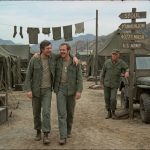
B.J. laughed quietly, walking side-by-side with his partner out into the cool air, leaving the boys in the cots to dream of home.
In the darkest corners of the war, it was the smallest fragments of home that kept the lanterns burning at the 4077th.