The Sound of the Keys at 0300
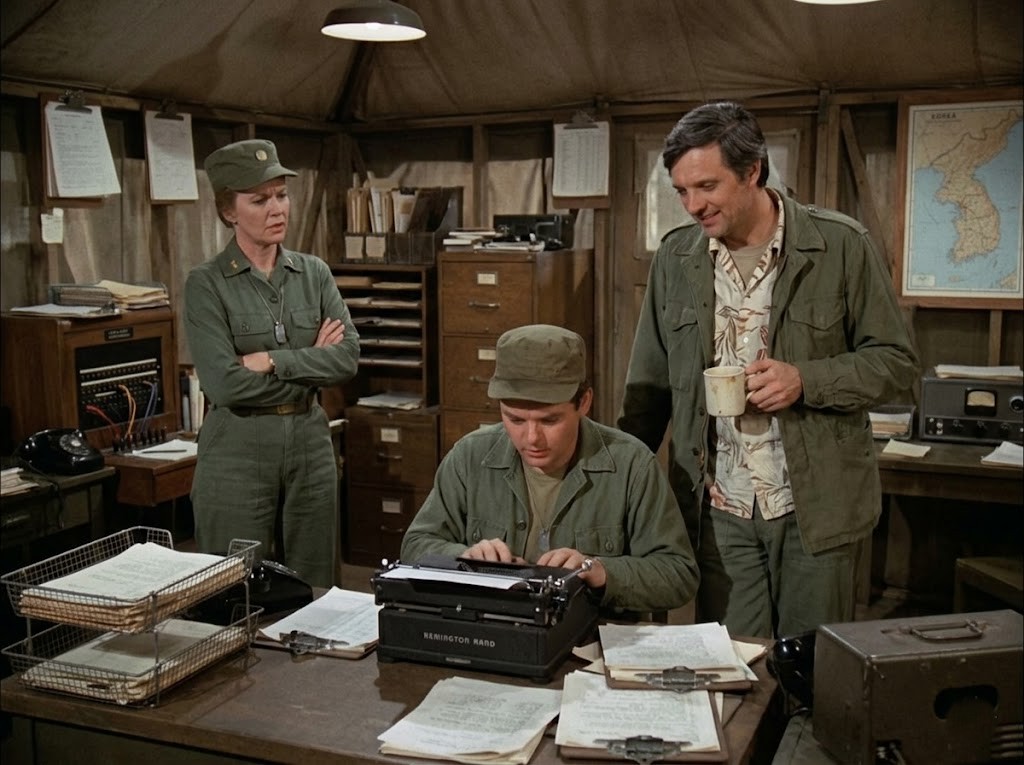
The hum of the generator always sounded louder when the rest of the camp was asleep. In the corner of the administrative tent, the single overhead bulb swayed slightly, casting a warm, tired glow over the worn wooden desk and the map of Korea pinned to the wall.
It was 0300 hours, that hollow time of night when the heavy thrum of the choppers had finally faded, leaving behind a silence that felt almost heavy.
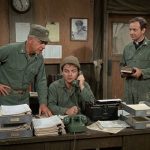
Radar sat hunched over the Remington Rand typewriter, his olive-drab cap pulled down low over his brow. His fingers hovered above the keys, hesitating as if each letter weighed a pound.
Behind him, Major Houlihan stood with her arms tightly crossed, her posture rigid in her immaculate uniform, yet her eyes held an expression that wasn’t entirely disciplinary. She stared down at the blank sheet of paper rolled into the machine, her lips pressed into a thin, tense line.
“He’s waiting, Corporal,” Margaret said, her voice dropping lower than its usual parade-ground command. “The Colonel needs this supply manifest finalized before the morning briefing. If we don’t account for those missing crates of penicillin now, Seoul will reallocate them by sunrise.”
“I know, Major, I know,” Radar muttered, his voice cracked with exhaustion. He tapped a single key—*clack*—and then stared at the page as if hoping the rest of the words would magically appear. “It’s just… the serial numbers from the third battalion don’t match the intake logs from Tuesday’s triage. I keep trying to make the numbers fit, but they won’t.”
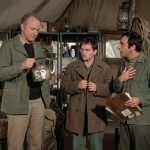
Hawkeye leaned against the wooden filing cabinet just a few feet away, a chipped ceramic mug cradled in his hand. He wore his faded green fatigue jacket loosely over a loud, tropical Hawaiian shirt—a stubborn, colorful protest against the drab monotony of the war zone.
He took a slow sip of cold coffee, his eyes tracking the exhaustion etched into the young corporal’s face. The usual sharp, rapid-fire wit was missing from his expression, replaced by the quiet, observant gaze of a doctor who knew exactly when a patient—or a friend—was running on empty.
“Take it easy on the kid, Margaret,” Hawkeye said softly, stepping closer to the desk. “He’s been staring at that typewriter so long I think he’s starting to look like a Remington himself. Look at his ears, they’re practically cursive.”
“This isn’t a joke, Pierce,” Margaret countered, though there was no real fire in her rebuke. She looked from Hawkeye back to Radar’s slumped shoulders. “If those crates aren’t logged properly, the next casualty influx won’t have what they need. We can’t afford a bureaucratic typo.”
Radar swallowed hard, his hands dropping into his lap. He looked incredibly small beneath the oversized green cap, the pressure of the entire unit’s well-being seemingly resting on his teenage shoulders.
Suddenly, the distinct, low-frequency crackle of the shortwave radio broke the silence from the corner of the room, followed by a faint, static-heavy voice that made Radar’s posture instantly freeze.
Radar didn’t even wait for the static to clear; his eyes widened, and his head tilted instantly toward the speaker before the audio even fully formed.
“Choppers,” Radar whispered, his voice cutting through the damp air of the tent. “Three minutes out. Multiple incoming.”
Margaret’s arms immediately uncrossed, her professional instincts overriding the fatigue that had weighed her down seconds before. She glanced at the unfinished manifest on the desk, then at Hawkeye, her expression instantly shifting from a worried administrator to a chief nurse ready for battle.
“The manifest will have to wait,” she said firmly, her voice steady and resolute. “Corporal, leave the typewriter. Get on the PA. Alert B.J., Winchester, and Father Mulcahy. Tell them we have incoming.”
Hawkeye set his coffee mug down on the edge of the desk, the faint humor entirely vanishing from his face, replaced by the grim, focused determination of the 4077th’s chief surgeon. He looked at Radar, who was already reaching for the microphone, his hands trembling slightly from the sudden rush of adrenaline.
“Hey,” Hawkeye said gently, placing a hand briefly on Radar’s shoulder before he could flick the switch. “Don’t worry about the numbers right now, son. We’ll find the penicillin. We always do. Just get the camp up.”
Radar nodded quickly, swallowing his exhaustion as he clicked the microphone. “Attention all personnel. Incoming wounded. This is not a drill. Repeat, incoming wounded.”
Within seconds, the quiet sanctuary of the administrative tent was shattered by the distant, rhythmic chopping of rotor blades cutting through the night sky. The floorboards vibrated beneath their boots. Outside, the dark camp instantly came to life with the sounds of shouting, running footsteps in the mud, and the slamming of screen doors.
Margaret moved toward the exit, pausing at the threshold to look back at the desk. The unfinished report still sat in the typewriter, a symbol of the endless paperwork that tried to govern a place where life and death moved too fast for carbon copies.
“Pierce,” she called out over the rising roar of the helicopters. “Let’s go.”
“Right behind you, Major,” Hawkeye replied. He glanced down at Radar, who was already gathering his clipboard, his nervous energy transformed into pure efficiency.
Hawkeye gave the typewriter a gentle, affectionate pat, the metal keys letting out a faint, melodic ring. It was a stark contrast to the brutal noise waiting for them outside on the helipad, a tiny reminder of the fragile normalcy they all clung to in the middle of a wasteland.
They stepped out of the tent into the cool, damp Korean night, leaving the single light bulb to sway over the empty desk. The paperwork would be there tomorrow, but tonight, the family of the 4077th had work to do.
Beneath the canvas and the chaos, it was the quiet moments of shared exhaustion that kept the heart of the 4077th beating.