The Temperature of a Tin Cup
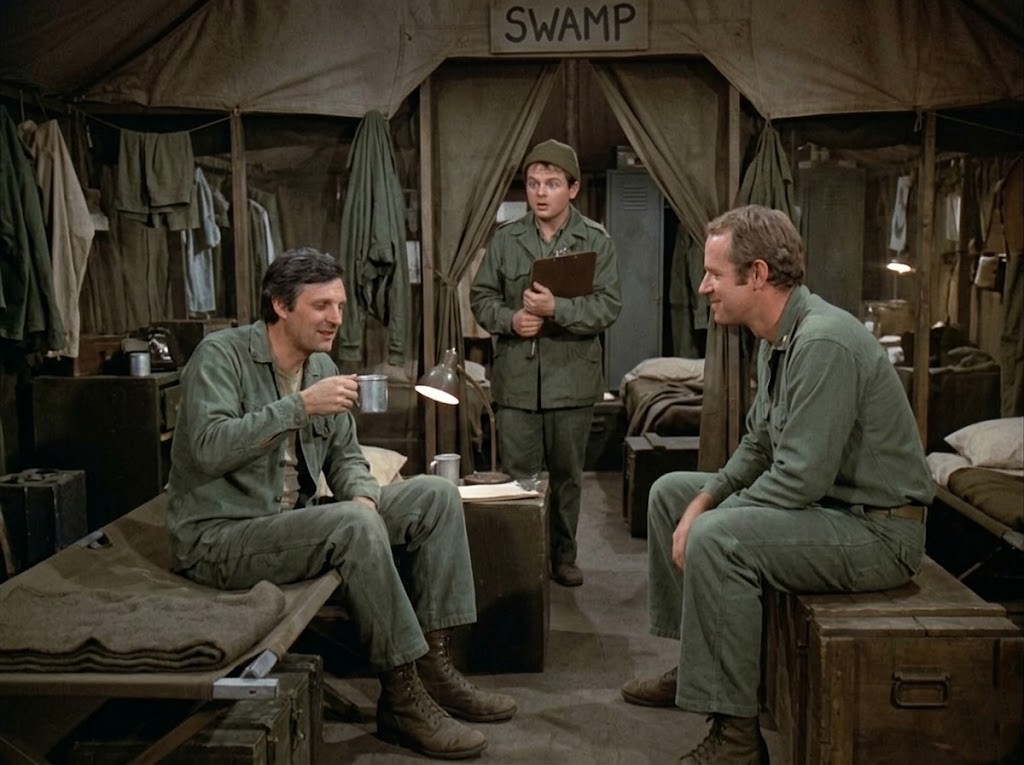
The mud outside was six inches deep, the color of wet cement, and cold enough to freeze the fillings right out of your teeth. But inside the canvas walls of the Swamp, the world shrank down to the size of a single, dented tin cup.
It was three o’clock in the morning, the hour when the war felt less like a global conflict and more like a personal grudge held by the universe.
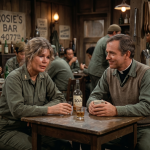
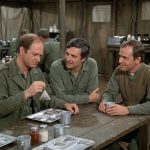
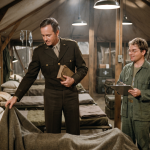
Hawkeye sat on the edge of his cot, his shoulders slumped beneath the heavy fatigue of a fourteen-hour shift in Post-Op. He held the tin cup between his palms like it was the last warm thing left on earth. His boots were still caked in the gray slime of the compound, and his eyes had that distant, hollow look that only a surgeon in Korea could truly understand.
Across from him, B.J. leaned back on a wooden packing crate, a quiet, knowing smile tugging at the corner of his mouth. He looked just as exhausted, his knuckles stained with dried scrub soap, but his posture was steady, grounded. He was the anchor that kept the tent from blowing away in the bitter wind.
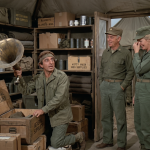
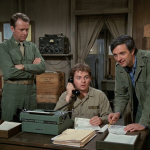
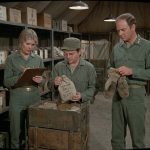
Between them stood Radar, framed perfectly by the tent’s opening, his clipboard clutched against his chest like a shield. He wore his woolen cap pulled low, his eyes wide behind his glasses, looking very much like a boy who had accidentally wandered into a room full of ghosts.
“It’s from the Colonel,” Radar stammered, his voice breaking slightly in the drafty air. “He said it’s an official requisition order, Captain. He was very specific about the word ‘mandatory’.”
Hawkeye took a slow, deliberate sip from the cup, his expression completely blank. He didn’t look at the clipboard. He didn’t look at Radar. He just stared into the dark liquid.
“Mandatory,” Hawkeye repeated, his voice dry as sandpaper. “Colonel Potter is a beautiful man, Radar. A visionary. A father figure with a mustache. But if this clipboard contains a directive telling me to put on clean socks, I’m going to have to defect to the other side. I hear they have better laundry facilities.”
“It’s not about socks, sir,” Radar said, taking a cautious half-step forward. He glanced nervously over his shoulder toward the dark compound, as if expecting the entire army to march in behind him.
B.J. chuckled softly, shifting his weight on the wooden crate. “Come on, Walter. Don’t leave us hanging. Did the brass finally discover that Hawkeye’s medical license was drawn in crayon?”
“No, sir,” Radar said, his face growing incredibly serious. “It’s a transfer notice. From Tokyo. They’ve been auditing the surgical logs from last month’s push.”
The casual warmth in the tent suddenly vanished, replaced by a cold, sharp stillness. Hawkeye froze, the tin cup stopping halfway to his lips. He looked up, his sharp wit suddenly trapped behind a wall of sudden, breathless dread.
The silence stretched out, heavy and suffocating, punctuated only by the distant, rhythmic thud of artillery miles away over the hills.
Hawkeye looked at B.J. The quiet smile had completely disappeared from B.J.’s face, replaced by a tense, rigid line. For all their jokes about wanting to leave, about wanting to catch the first plane back to Maine or San Francisco, the reality of a sudden separation was a punch to the gut.
“Who?” B.J. asked, his voice dropping an octave, completely devoid of its usual easygoing banter. “Which one of us, Radar?”
Radar looked from B.J. to Hawkeye, his thumbs twitching against the edge of the wooden clipboard. “They said one of the surgeons from the 4077th needs to report to the General Hospital in Tokyo immediately to demonstrate the arterial repair technique you two cooked up during the winter push. It’s a permanent assignment. Teaching staff.”
Hawkeye slowly lowered the tin cup, setting it down on the small footlocker beside his cot. The metal made a dull, hollow *clink*. Tokyo meant clean sheets. It meant hot running water. It meant stepping out of the mud and into a world where people didn’t arrive in pieces on the back of a chopper.
It was everything they dreamed about every single night. And it felt like a death sentence.
“They didn’t specify a name,” Radar whispered, looking down at his boots. “The Colonel told me to bring the order straight here. He said… he said he wasn’t going to make this choice for you. He told me to tell you that whoever’s name goes on this paper is leaving on the morning supply truck.”
Hawkeye stood up, his joints popping in the chill. He walked over to the small stove in the center of the tent, then turned back to face B.J. The bravado was entirely gone now. Underneath the sarcasm, he was just a tired man looking at his best friend.
“You have Peg,” Hawkeye said quietly, pointing a finger toward B.J. “And Erin. You’ve got a little girl who thinks her daddy is a photograph on the nightstand.”
“Don’t do that, Hawk,” B.J. said, standing up from the crate. He stepped into the light of the single desk lamp. “Don’t you dare play the martyr. You’ve been in this hellhole longer than I have. You’ve earned a ticket out of here ten times over. Your hands are shaking every time the choppers come in.”
“My hands are fine,” Hawkeye snapped, though he instinctively tucked them into his pockets. “Tokyo needs an instructor. I’m a terrible instructor. I have no patience, my bedside manner is atrocious, and I’d probably end up court-martialed for telling a General his tonsils look like pickled eggs. You’re steady, Beej. You’re the teacher.”
“I’m a healer, Hawk. Just like you,” B.J. said, his voice softening. He looked at the empty tin cup on the locker. “And I don’t leave my partner in the mud.”
Radar stood between them, holding the pen out like a peace offering, his heart visibly breaking for the two men he looked up to more than anyone else in the world. He knew what Tokyo meant, but he also knew what the Swamp would look like with an empty cot.
Hawkeye looked at B.J. for a long, unbroken moment. The dry humor returned to his eyes, but it was coated in a deep, unmistakable tenderness.
“Tell you what,” Hawkeye said, reaching out to take the pen from Radar. “We’ll let fate decide. We’ll flip for it. Heads, you go home to San Francisco via Tokyo. Tails, I go to Japan and eat raw fish until my skin turns pink.”
B.J. stared at him, then let out a long, ragged sigh. “You don’t have a coin, Pierce.”
“I don’t need one,” Hawkeye said, flashing a faint, melancholic grin. He took the clipboard from Radar, flipped the page over, and quickly scribbled a single name in the blank space. He didn’t let B.J. see it. He handed it back to Radar.
“Take it to the Colonel, Radar. Tell him the paperwork is finished.”
Radar blinked, looking down at the name written on the line. He looked up at Hawkeye, his eyes shining with a sudden wave of understanding, then looked at B.J. He gave a tiny, solemn nod, clutched the clipboard to his chest, and slipped out of the tent, pulling the canvas flap shut behind him.
B.J. didn’t move. “Whose name did you write, Hawk?”
Hawkeye walked back to his cot, picked up the tin cup, and took the last, cold sip of his coffee. He looked at his friend, his expression a perfect mix of fatigue, love, and ironclad loyalty.
“I wrote Father Mulcahy,” Hawkeye said, his voice cracking with a tiny laugh. “The man has been praying for a miracle for two years. It’s about time he got one.”
B.J. let out a breathless laugh, the tension breaking instantly. He walked over, grabbed his own cup, and sat back down on the crate. They both knew Hawkeye hadn’t written Mulcahy’s name. They both knew exactly whose name was on that paper, and they knew that the morning truck would bring whatever it brought.
But for tonight, the mud could wait. The war could wait. They still had each other, a dim light, and a cup of bad coffee to keep the cold away.
In a place where everything was temporary, the only things that truly lasted were the quiet promises made between friends in the dark.