The Quiet Geography of the Heart
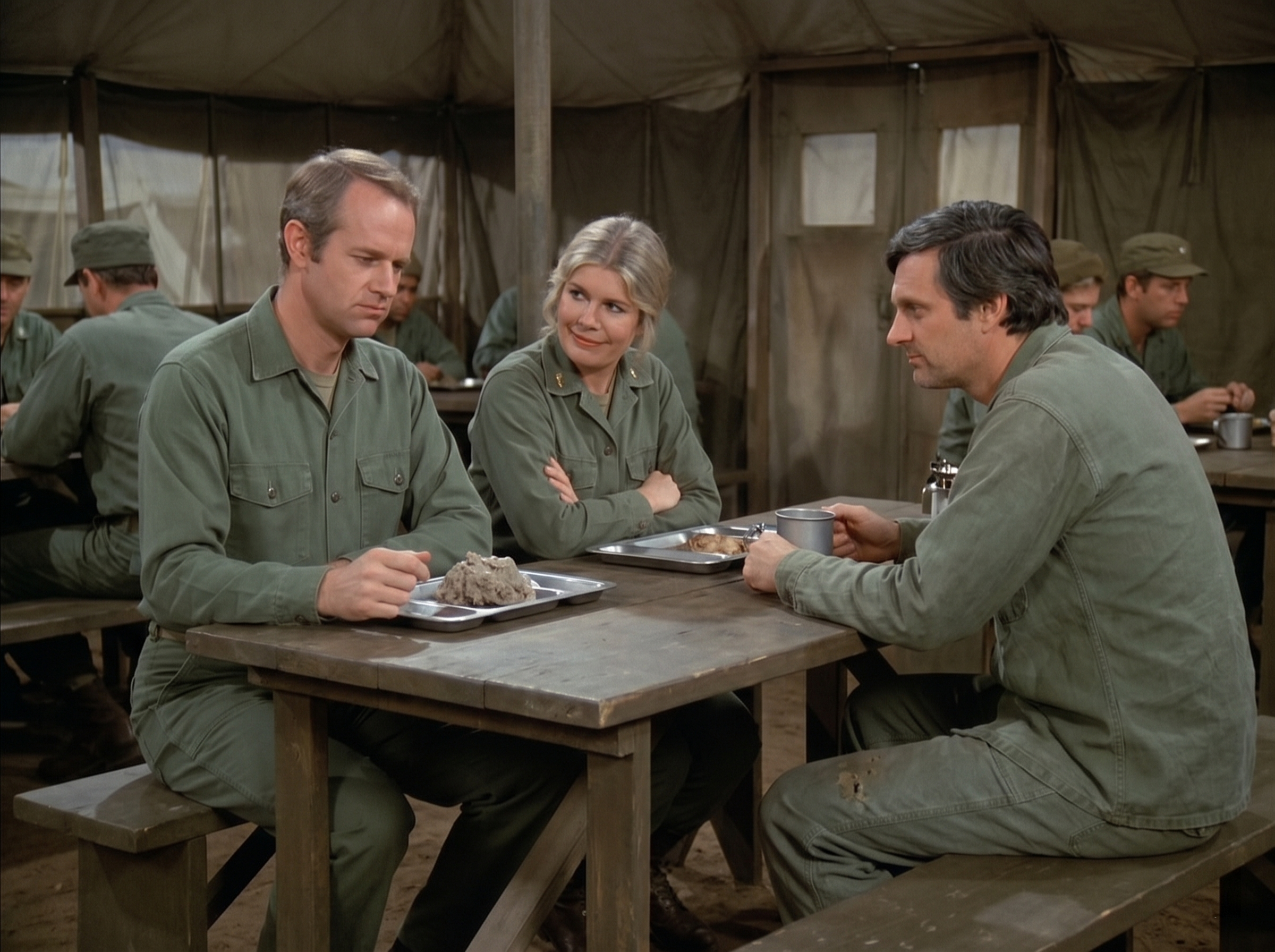
The mess tent at the 4077th always smelled of two things: boiled cabbage and survival. It was a place where you came to remind your stomach you were still alive, even if your taste buds begged to differ. On this particular afternoon, the air was thick with the aftermath of a thirty-six-hour push in the operating room.
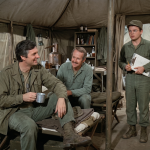
Hawkeye Pierce sat at the worn wooden table, his fingers wrapped around a battered metal cup. His fatigues were damp with sweat, and a fresh tear at the knee of his trousers showed a patch of skin caked with dried mud. He hadn’t bothered to wash it off; out here, the mud was just another layer of clothing. His eyes, usually dancing with a restless, frantic energy, were pinned entirely on his tentmate.
Across from him, B.J. Hunnicutt was staring down at his tray. On the rectangular metal partition rested a gray, featureless lump of what Igor had cheerfully called “meatloaf,” though no one in San Francisco would have recognized it. B.J.’s hands were idle, hovering just above the table, his face lined with the deep, crushing exhaustion that only comes when the adrenaline finally leaves the bloodstream.
Next to B.J., Margaret Houlihan sat with her arms crossed tightly over her chest. The rigid, immaculate posture of the Chief Nurse was still there, but the sharp edge of Major Houlihan had completely vanished. Instead, she was looking down at B.J. with an expression of quiet, unguarded tenderness—a look reserved for the moments when the war threatened to break the best of them.
The background of the tent was a low murmur of clattering silverware and the tired drone of other soldiers eating in silence, as seen in `a3_clean.jpg`. But at their table, the silence was absolute. It was the kind of heavy, suffocating quiet that happens when a man is staring at a plate of bad food but seeing a kitchen thousands of miles away.
“You know, if you stare at it long enough, it eventually learns to crawl back to the kitchen,” Hawkeye said softly, breaking the silence with a gentle nudge of his voice. He kept his tone light, a familiar defense mechanism, but his eyes remained sharp and concerned.
B.J. didn’t look up. He just shifted his gaze slightly, his shoulders dropping a fraction of an inch lower. “Peg sent a letter,” he murmured, his voice thick with a fatigue that went straight to the bone. “It arrived just before the choppers came in yesterday morning.”
Margaret leaned in a little closer, her eyes softening further as she watched the side of B.J.’s face. “Is everything alright at home, B.J.?” she asked, her voice entirely devoid of its usual military authority.
“Erin is talking in full sentences now,” B.J. said, his voice cracking slightly on his daughter’s name. “Peg says she stands by the front window every afternoon around five, pointing at the driveway and saying, ‘Daddy’s turn.’ Because that’s when the neighbors come home from work.”
Hawkeye set his tin cup down with a tiny, metallic thud. The casual wit he usually used to shield his friends suddenly felt too flimsy, too inadequate for the raw ache sitting across from him. He looked at B.J., seeing the exact moment the distance between a muddy tent in Korea and a warm living room in California became too wide to cross.
B.J. finally lifted his eyes, and they were bright with unshed tears, reflecting the dim light of the canvas tent. “I’m missing the whole thing, Hawk,” he whispered, his voice trembling as the emotional dam finally began to give way. “I’m sitting here in the dirt, and my little girl is growing up without me.”
The words hung in the humid air of the mess tent, heavy and undeniable. For a long moment, nobody spoke. The contrast between B.J.’s heartbreaking words and the ugly, gray mound of food on his tray was almost too much to bear.
Margaret reached out, her hand resting gently on the sleeve of B.J.’s fatigue jacket. It wasn’t a gesture a Major was supposed to make to a Captain, but inside the canvas walls of the 4077th, the manual didn’t mean a damn thing when a friend was hurting. “She won’t forget you, B.J.,” Margaret said, her voice steady and full of a fierce, protective conviction. “A little girl doesn’t forget a father who loves her that much. Not ever.”
B.J. swallowed hard, looking from Margaret’s comforting smile back to Hawkeye. He let out a long, ragged breath, trying to steady his hands. “It’s just… some days the geography of this place gets to me. You look around, and everything is olive drab. Everything is gray. You start to forget what color looks like.”
Hawkeye leaned forward, resting his forearms on the rough wood of the table. The serious, watchful expression from `a3_clean.jpg` remained, but a familiar, comforting warmth crept back into his eyes. “Hey, look at me,” Hawkeye said quietly, waiting until B.J. met his gaze. “You haven’t forgotten what color looks like, Beej. You carry it around with you every single day.”
Hawkeye gestured around the crowded, noisy tent. “Look at what you do in the O.R. You give these kids back their tomorrows. You give them back their driveways, their five o’clocks, their chances to have little girls who stand by the window waiting for them. You’re keeping the world colorful, even if we have to live in the gray for a little while.”
A small, bittersweet smile finally tugged at the corner of B.J.’s mouth. It was a faint, tired thing, but it was there. He looked down at his hand, then back up at Hawkeye. “You’re a real philosopher when you’re sleep-deprived, Pierce.”
“It’s a gift,” Hawkeye replied, the tension in the air finally fracturing into a comfortable, familiar ease. “Passed down through generations of Pierces who drank too much terrible coffee. Speaking of which, if you’re not going to eat that culinary masterpiece in front of you, I happen to know a very discerning goat near the swamp who might find it insulting.”
Margaret let out a soft, genuine laugh, shaking her head as she crossed her arms again. “Honestly, Pierce, you have the table manners of a swamp rat.”
“I am a swamp rat, Major,” Hawkeye said proudly, raising his tin cup in a mock toast. “And proud of it. To the 4077th, where the food is questionable, the clothes are torn, but the company is strictly first-rate.”
B.J. reached out and picked up his fork, finally breaking apart the gray mystery meat on his tray. The ache in his chest hadn’t vanished—it never truly did—but the crushing weight of it had been shared, divided among three people who had become an unlikely, unbreakable family in the middle of a forgotten peninsula.
They sat together as the afternoon light began to fade through the canvas walls, talking about nothing and everything, finding a way to laugh through the fatigue. It was just another ordinary, extraordinary day at the 4077th, where survival wasn’t just about making it to tomorrow, but about holding onto each other until tomorrow arrived.
In a place where everything felt temporary, the love they held for home—and for each other—was the only thing that stayed permanent.