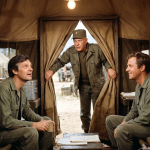
The Last Stitch Before Dawn
The physical weight of a twenty-hour shift at the 4077th didn’t hit you all at once.
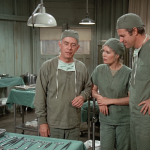
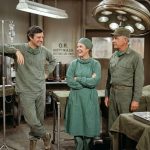
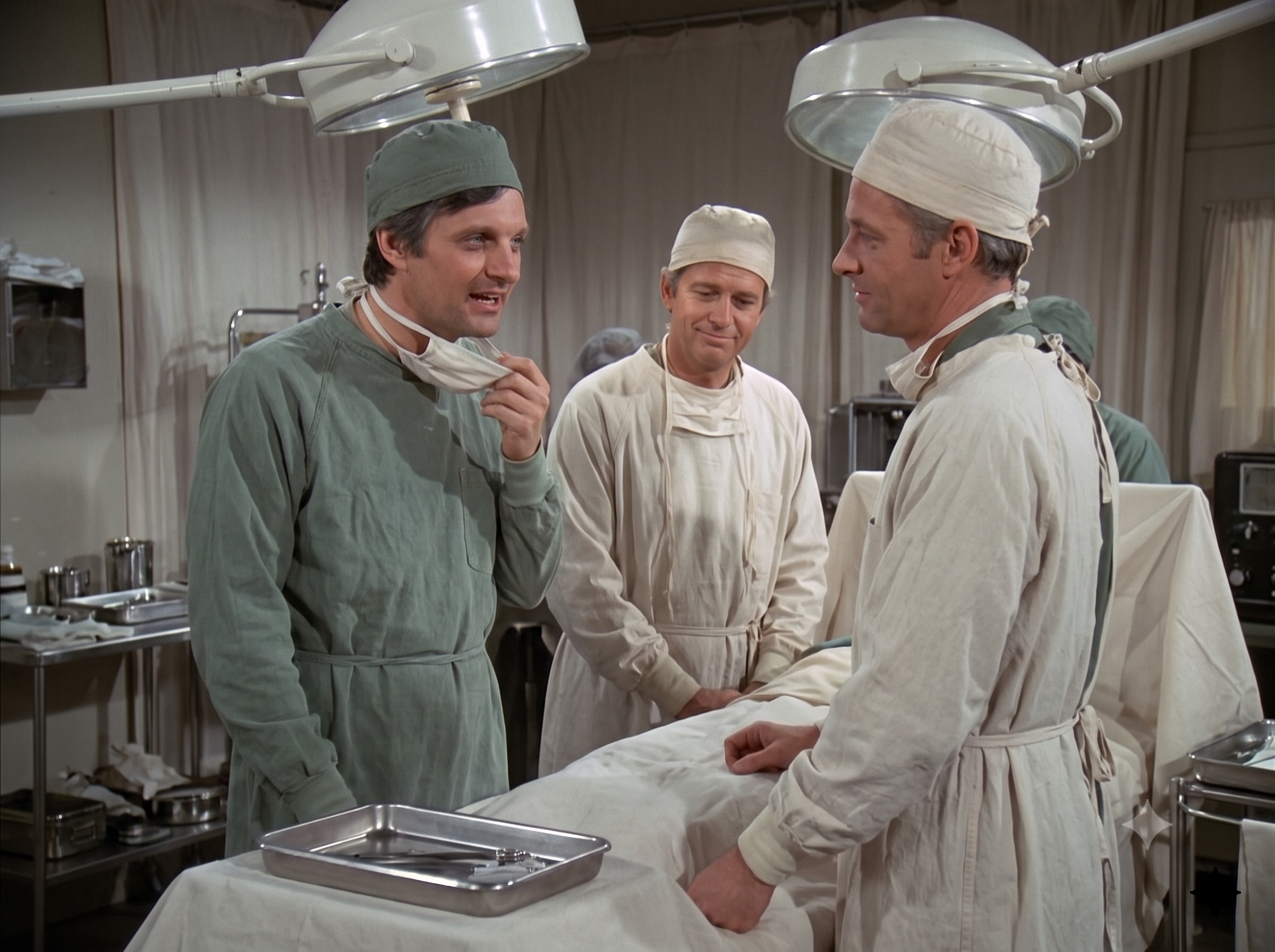
It crept into your bones slowly, settling into your joints with every sutured artery and every discarded clamp. Inside the modest operating room, the heavy canvas walls seemed to hold their breath against the chill of the Korean night. The twin surgical lamps overhead cast a bright, glaring light on the operating table, yet the shadows in the corners of the room felt soft, faded, and endlessly tired.
It was a small, enclosed world painted in muted whites and weary hospital greens.
On the stainless steel tray in the foreground, a mess of surgical instruments sat discarded. They rested there like a metallic graveyard of the night’s frantic, desperate work. The last chopper had departed hours ago. The manic rush of triage was finally over. Now, there was only the hollow, ringing silence of the aftermath, accompanied by the low, steady hum of the camp’s generator.
Standing over the final patient of the shift, Hawkeye Pierce finally stopped moving.
He reached up with a gloved hand and pulled his damp cotton surgical mask down beneath his chin. His face was a map of absolute exhaustion. His skin was pale and drawn from hours under the hot lamps, but his dark eyes remained sharply, painfully alert.
He looked directly across the operating table.
Charles Emerson Winchester III stood frozen in his spot. His white surgical cap sat perfectly straight, a stubborn symbol of his breeding, but his refined, aristocratic dignity was visibly cracking at the seams. Charles stared blankly down at the young corporal on the table. It was a kid who had been wheeled in with no pulse, no color, and mathematically speaking, no hope.
They had spent the last four grueling hours pulling off a medical miracle.
It had required absolute, punishing precision. It had demanded a brutal disregard for their own physical limits and a desperate, unspoken reliance on the hands of the men standing next to them. Now, against all odds, the young boy was breathing on his own. But Charles couldn’t seem to look away from the rising and falling chest.
The Boston surgeon was completely drained.
The reluctant compassion he tried so tirelessly to hide beneath layers of snobbery and bravado was written plainly across his exhausted features. He looked like a man standing on the edge of a very dark, very quiet cliff, overwhelmed by the sheer fragility of human life.
Standing exactly between them, B.J. Hunnicutt shifted his weight.
His calm, relaxed posture served as an anchor in the tense, silent room. B.J. offered a gentle, dryly amused smile, quietly watching the unspoken standoff. He knew this dance intimately. He saw the heavy, suffocating ghosts of the war pressing down hard on Charles’s shoulders.
Hawkeye saw it too.
The silence in the OR was growing far too loud. It was stretching out, pulling tighter and tighter until it threatened to break the Major entirely. Hawkeye took a slow breath, letting his mask hang loose around his neck. He knew he had to do something. He prepared himself to throw the perfectly timed verbal grenade that his bunkmate so desperately needed to snap back to reality.
“You know, Charles,” Hawkeye said, his voice raspy but cutting through the silence like a fresh scalpel.
“For a man who considers a misaligned salad fork a personal tragedy, your vascular work tonight was shockingly pedestrian.”
The words hung in the stale, ether-soaked air.
Across the table, Charles blinked. The rigid, haunted look in his eyes shattered almost instantly. It was replaced by a sudden, magnificent flare of aristocratic indignation. He slowly lifted his head, his posture stiffening as the familiar, comforting armor of his ego slammed firmly back into place.
“Pedestrian?” Charles breathed, his voice dripping with cultured, outraged disdain.
“Pierce, my suturing on that descending aorta was nothing short of a symphony. It belongs in a prestigious medical textbook.”
“It belongs in a comic book,” Hawkeye fired back without missing a beat.
A ghost of a smirk finally played on Hawkeye’s tired lips. “I counted at least three microscopic imperfections. My grandmother knits a tighter purl, and she’s been dead for twelve years.”
B.J.’s gentle smile widened into a quiet, knowing grin.
He leaned back casually against the metal instrument stand, crossing his arms comfortably over his stained green scrubs.
“Children, please,” B.J. murmured in his soft, steady drawl. “Let’s not bicker in front of the unconscious. It sets a terrible example for the enlisted men, and frankly, I’m too tired to separate you.”
The tension in the room, which just moments ago had felt thick enough to choke on, suddenly evaporated.
The invisible pressure valve had been successfully released. Charles let out a long, heavy exhale, the fight draining out of his shoulders. He looked away from Hawkeye and glanced back down at the sleeping corporal.
This time, his gaze wasn’t haunted by the ghosts of the war. It was just profoundly, humanly tired.
“He will live,” Charles said quietly, speaking almost to himself. The biting sarcasm was entirely gone, replaced by a reluctant, undeniable tenderness that he would never publicly admit to.
“Yeah. He will,” Hawkeye agreed softly.
The sharp wit faded from Hawkeye’s face, leaving behind the shared, quiet truth of what they had just managed to accomplish. They had beaten death. Again. Just for tonight, in this tiny canvas tent, they had won.
Hawkeye stripped off his surgical gloves, tossing them into the laundry bin with a dull, echoing thud.
He looked at the two men standing across from him in the fading light. They were three entirely different species of human beings, thrown violently together in the worst place on earth. Yet, they were surviving it only because they actively refused to let each other fall apart in the dark.
“I’m buying the first round at the Swamp,” Hawkeye announced, his voice returning to its normal, slightly manic cadence. “Provided we have anything left in the still that won’t immediately dissolve the enamel on our teeth.”
“I believe I have a small reserve of actual scotch hidden away,” Charles admitted begrudgingly.
He began to unfasten the tight strings of his surgical gown with clumsy, tired fingers. “I suppose… given the unique circumstances of this evening, I could be persuaded to share a thimbleful.”
B.J. chuckled softly, pushing himself off the metal stand.
“A thimbleful of Winchester’s prized scotch. Be still my beating heart. Lead the way, Hawk.”
They moved away from the operating table, leaving the quiet hum of the generator and the steady breathing of their young patient behind. They were three very tired men, smelling of iodine and stale sweat, walking out of the glaring light of the OR and into the cold, gray dawn of a Korean morning.
They were thousands of miles from home, bone-weary, and completely sick of the war.
But as they walked out shoulder to shoulder, bickering softly about the questionable quality of the gin waiting for them, the crushing weight of the 4077th felt just a little bit lighter. They were a team. They were an unlikely family. And they had survived another shift.
Some wars are survived not with bullets and bravado, but with a well-timed joke, a shared bottle, and the quiet grace of standing side by side in the dark.