The Infinite Ledger of the 4077th
Sometimes, the war wasn’t fought with bullets or scalpels, but with carbon paper and the sheer, stubborn audacity of a clerk holding back the tide.
It was a Tuesday that felt remarkably like every other day—dusty, tired, and smelling faintly of scorched coffee. Inside the main office of the 4077th, the air was thick with the weight of unfiled requisitions and the frantic, rhythmic clacking of a typewriter that seemed to be complaining as much as the people using it.
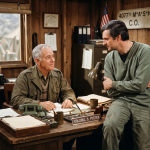
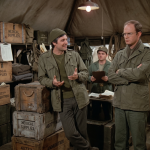
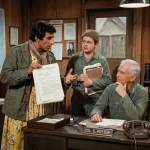
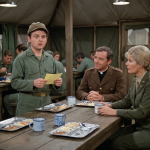
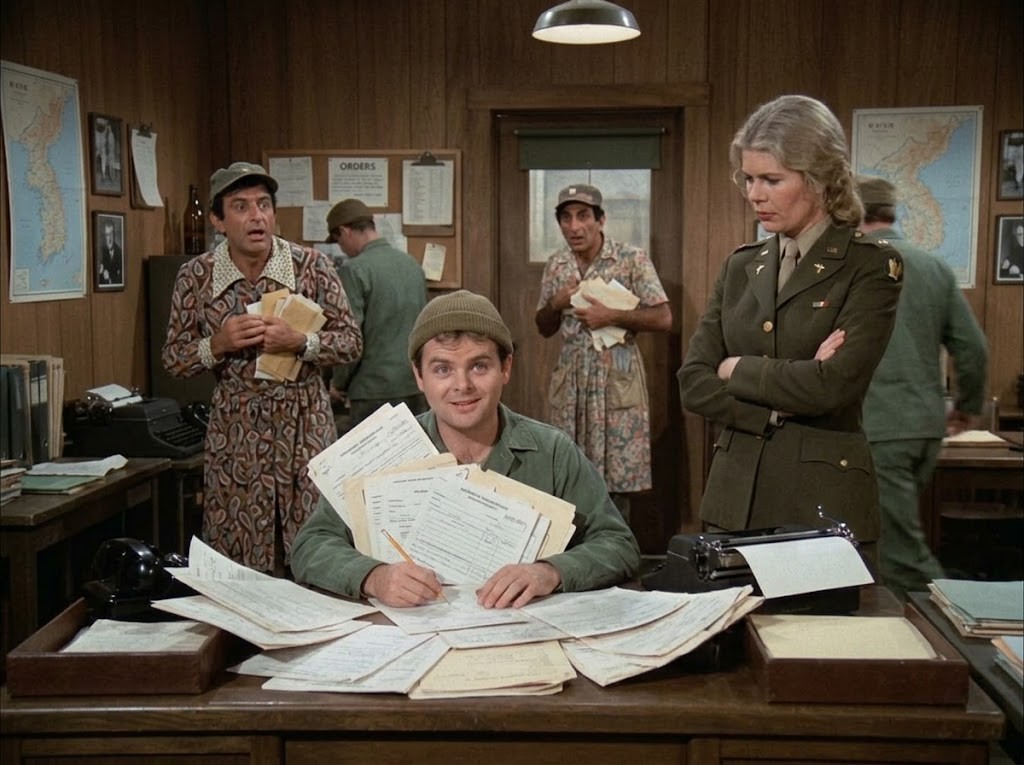
Radar O’Reilly sat at his desk, his face a mask of practiced, earnest concentration. He was buried—literally—under a mountain of paperwork that threatened to swallow him whole. It was a bizarre scene that would have looked ridiculous anywhere else, but here, it was just another afternoon.
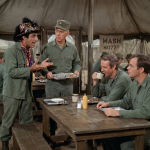
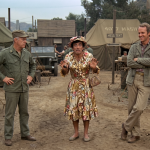
Behind him, Klinger had drifted in, his latest ensemble—a bold, paisley-patterned robe—clashing magnificently with the drab, utilitarian wood of the office walls. He clutched a stack of forms to his chest like a holy relic, his expression a mixture of theatrical exasperation and genuine, weary confusion. Across the room, another member of the camp hovered, clutching his own pile of bureaucratic demands, his eyes darting toward the door as if looking for a path to sanity.
And then there was Major Houlihan. She stood apart, her arms crossed tightly, her posture impeccable. Her face was stern, radiating that signature blend of rigid military discipline and the kind of long-suffering patience that only comes from serving in a place where nothing ever quite goes according to plan. She watched the chaos, her lips pressed into a thin line, her silence a heavy, unspoken judgment on the entire inefficient operation.
Radar looked up, his eyes wide and pleading beneath the rim of his wool cap. He held his pencil like a lifeline, surrounded by the paper fortress he’d built just to keep the world from crashing in.
“I… I think I’ve found a mistake, Major,” Radar squeaked, his voice cracking just enough to betray the exhaustion underneath. “A big one. If I sign this, I might accidentally requisition a shipment of snowshoes instead of bandages, and I don’t think Korea is expecting a blizzard.”
Margaret didn’t move, but the air in the room suddenly sharpened. The hum of the camp outside seemed to fall away, leaving only the sound of Radar’s ragged breathing.
Margaret sighed, the sound echoing off the wood-paneled walls. She looked at the wall of paper, then back at Radar, and for a fleeting second, the armor of the Major slipped, revealing the tired, dedicated woman beneath the uniform.
“Radar,” she said, her voice softer than she intended. “If you sign for the snowshoes, I will personally ensure you are the first one wearing them when you’re sent to the North Pole.”
Klinger, not missing a beat, leaned against the doorframe, his paisley robe swirling around him. “Actually, Major, if they’re silk-lined, I’ll take a pair. It gets awfully drafty in that tent at night, and I’ve always felt my wardrobe lacked winter accessories.”
The tension broke, replaced by a weary, shared chuckle that rippled through the room. Even the man in the floral-print dress behind Radar let out a breath he’d clearly been holding. The absurdity of it all—the fact that they were debating footwear in the middle of a war zone, surrounded by mountains of forms—was the only thing keeping them from losing their minds.
Radar gave a small, lopsided grin, adjusting his cap. He began to organize the mess, his movements quick and efficient now that the panic had subsided. He wasn’t just a clerk; he was the heartbeat of the camp, the one who knew exactly where everything was, from the spare parts to the hidden stash of good brandy.
Margaret uncrossed her arms and stepped forward, reaching out to help him sort the top pile. It was a small gesture, almost invisible, but in the context of the 4077th, it meant everything. It was a silent acknowledgment: *We are all in this together, and we are all doing our best.*
The room settled back into its usual rhythm. The typewriter resumed its clatter, the papers were organized, and the quiet, crushing weight of the war felt just a little bit lighter. They were a family of misfits, bound not by blood or military mandate, but by the shared, impossible days they endured side-by-side.
As the sun began to dip below the ridge, casting long, orange shadows through the office windows, the exhaustion remained, but the sharp edges of the day had been smoothed away by kindness. They would do it all again tomorrow—the forms, the orders, the chaos—but for this moment, they were just people, standing in a wooden room, holding each other up in the only way they knew how.
In the end, it wasn’t the glory that held us together; it was the quiet grace of a friend helping you clear the desk before the next storm rolled in.