The Quiet Hour at Rosie’s
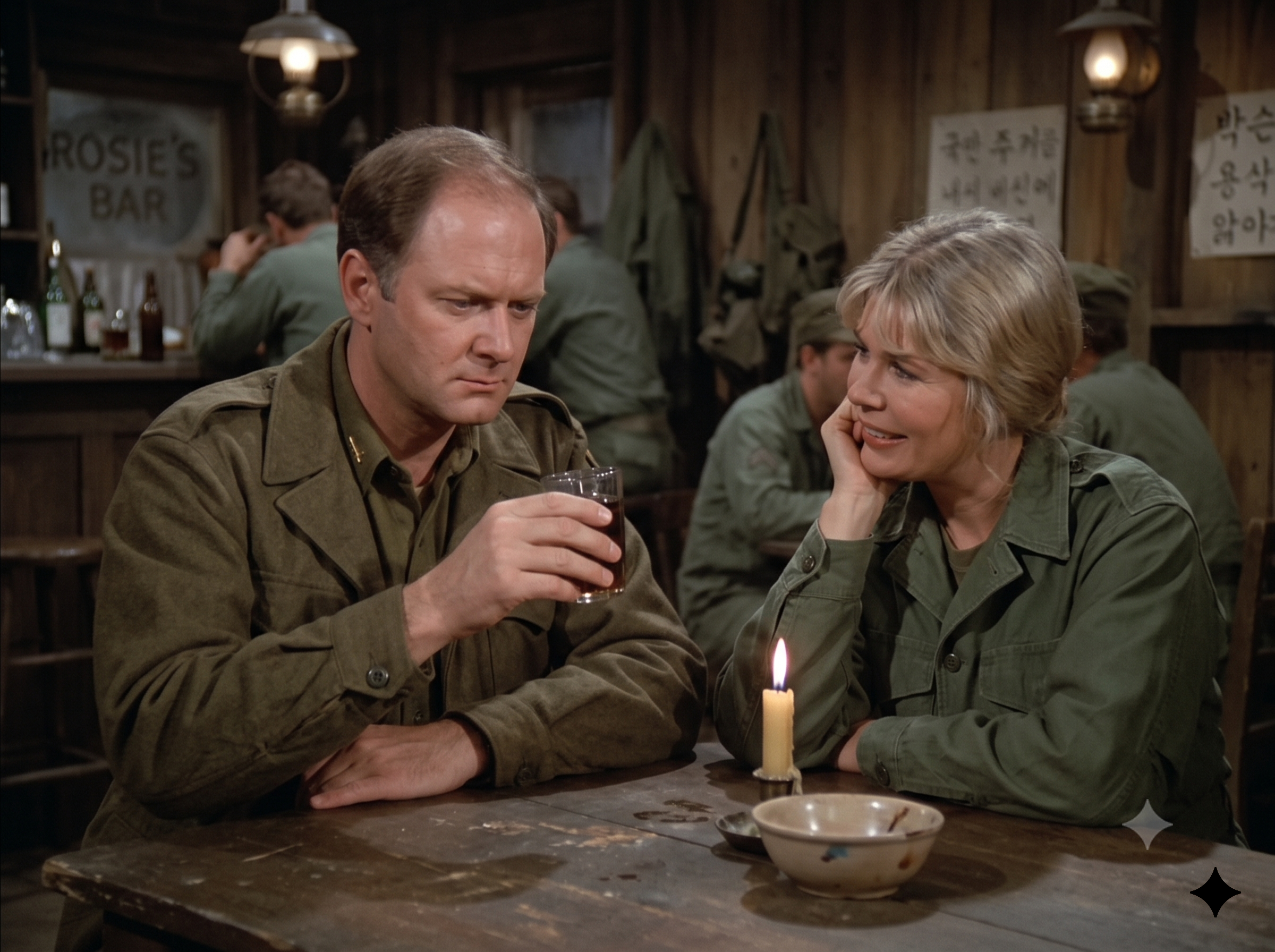
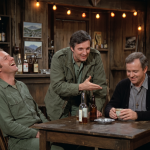
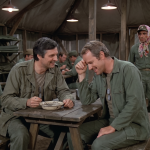
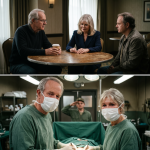
The war didn’t end at 5:00 PM; it just changed its scenery. For Charles Emerson Winchester III, that scenery was the slightly peeling wood and flickering candlelight of Rosie’s Bar, a place he usually considered a testament to the collapse of civilization. But tonight, the humidity of the tent felt heavy, and the silence of the swamp was too loud to bear. He sat across from Margaret Houlihan, the two of them anchored by a small, scarred wooden table that had seen more secrets than the camp’s official logbook.
Charles held his drink as if it were a delicate specimen, his gaze fixed on the liquid rather than the chaos of the room behind them. Beside him, Margaret leaned her chin on her hand, her expression unguarded in a way she never allowed herself to be in the mess tent. There was a rare, fragile stillness between them, a truce forged by sheer, bone-deep exhaustion.
“You know, Charles,” she said softly, breaking the quiet. Her voice wasn’t the sharp, authoritative command of the head nurse, but something softer, weathered by too many long shifts and not enough sleep. “I think the hardest part isn’t the work anymore. It’s the waiting for the next sound that tells us we’re still here, instead of somewhere—anywhere—else.”
Charles looked up then, and for a fleeting second, the practiced condescension vanished, replaced by a raw, startled vulnerability. He opened his mouth to offer a witty retort, something about the lack of decent vintage cognac or the absurdity of their situation, but the words withered on his tongue. Instead, he simply watched the candle flame dance in her eyes. The air in the bar suddenly felt electric, charged with the weight of everything they hadn’t said for years, as if the entire war were holding its breath just to see what would happen next.
Charles took a slow sip, the amber liquid burning just enough to bring him back to earth. He cleared his throat, but the sarcasm failed to materialize. “I find myself in the peculiar position of agreeing with you, Margaret,” he murmured, his voice uncharacteristically low. “It is a haunting existence, is it not? To be so desperately needed, yet feel so utterly invisible to the rest of the world.”
Margaret didn’t pull away. She just nodded, her gaze fixed on the flickering wick of the candle between them. In the background, the muffled laughter of other soldiers faded into a dull hum, white noise against the intensity of their conversation. For once, the social hierarchy of the 4077th didn’t matter; they were just two people who had seen too much and weren’t quite sure how to explain it to anyone who hadn’t walked the same muddy path.
“Do you think we’ll ever be the same?” she asked, her voice barely a whisper. “Even if we make it home? I look in the mirror sometimes, and I don’t recognize the person looking back. She looks… tired, Charles. Deeply, permanently tired.”
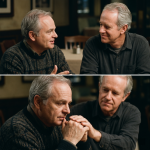
Charles reached out, hesitating for only a heartbeat, before resting his hand flat on the table, just inches from hers. It was a gesture of profound respect, a quiet acknowledgment of the shared trauma that bound them together. “We are not the same,” he admitted, the honesty of the statement catching him off guard. “We are versions of ourselves that have been forged in a fire we never asked to walk through. But that does not mean we are broken beyond repair. We are just… changed.”
Margaret shifted, and for a moment, her fingers brushed against his. The contact was brief, but it was solid, a reminder that they weren’t entirely alone in the dark. A small, sad smile tugged at the corners of her mouth, and she finally let out a long, shuddering breath she seemed to have been holding since the morning’s triage.
“I suppose that’s the best we can hope for, isn’t it?” she said. “A little bit of ourselves, left over from the person we used to be.”
Charles lifted his glass, a gesture that felt more like a salute than a toast. “To the parts of us that survived,” he said quietly.
They sat like that for a long time, not needing to fill the silence with the usual noise of the base. Around them, the bar was full of ghosts and laughter, of homesickness and desperate attempts at normalcy, but at their small, candlelit table, there was only the peace of being understood. It wasn’t happiness, and it certainly wasn’t the end of the war, but it was a bridge. It was the humanity they held onto when everything else seemed to be slipping away.
As the candle finally sputtered and the flame dipped low, they didn’t rush to leave. They simply sat in the dim light, two soldiers finding comfort in the simple, profound act of being present with one another. When they eventually walked out into the cool night air, the stars above Korea seemed a little less alien, the silence a little less daunting. They carried the memory of that hour like a lantern, a small, glowing ember to warm them through whatever tomorrow might bring.
In the heart of the storm, it’s the quiet moments with friends that keep the light from going out.