The Toledo Illusion
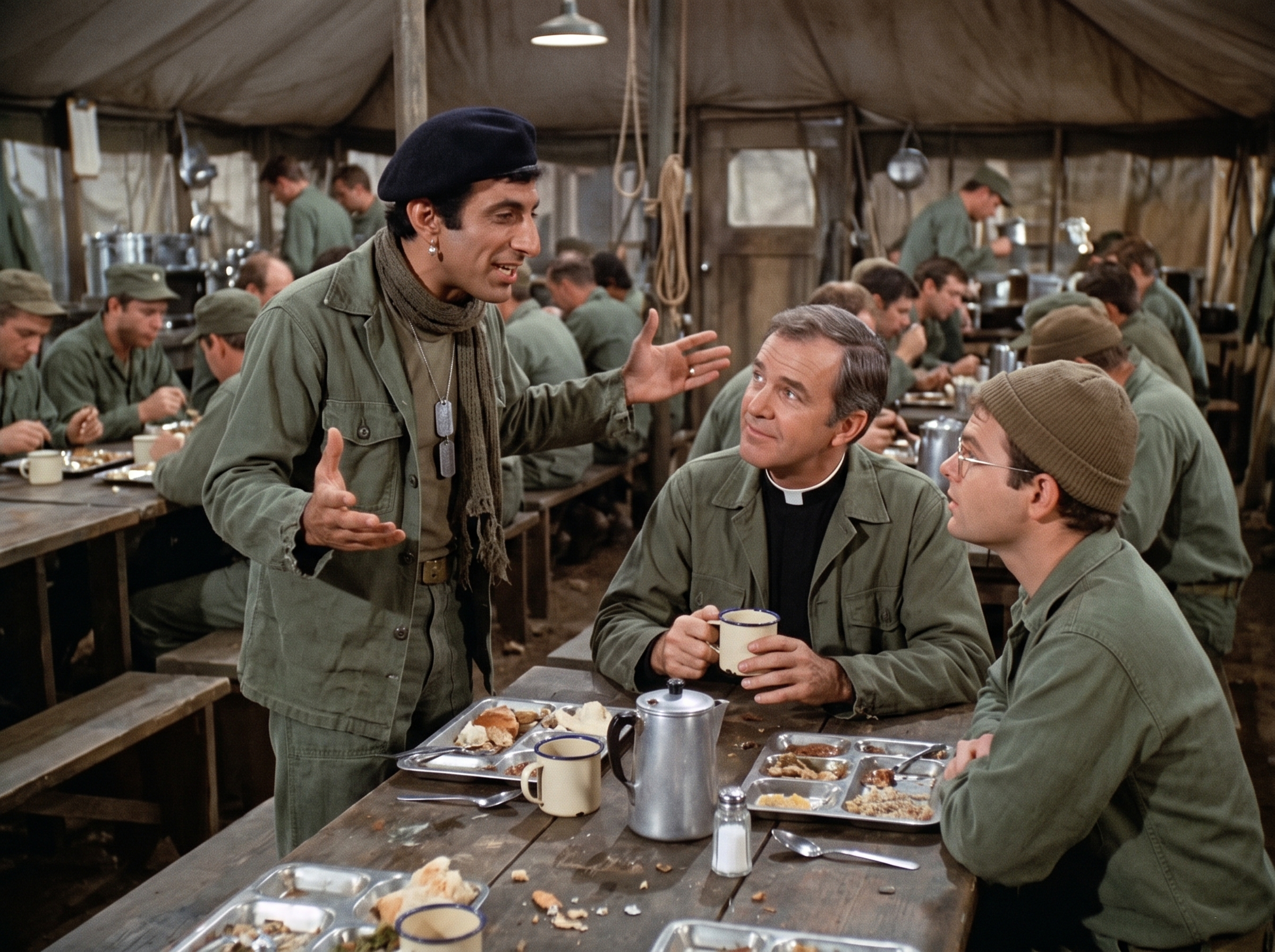
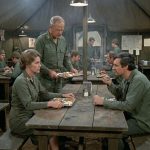
The mess tent of the 4077th Mobile Army Surgical Hospital always smelled of a very specific, inescapable despair. It was a fragrant blend of powdered eggs, stale chicory coffee, and damp canvas, hanging heavy in the humid Korean air.
Yet, amid the clatter of dull metal trays and the low, exhausted murmur of drafted surgeons, there were always pockets of sheer, unadulterated theater.
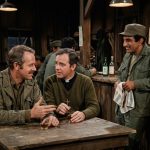
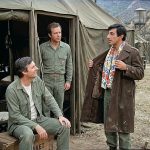
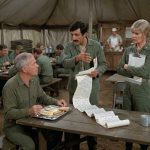
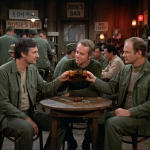
Corporal Maxwell Klinger held court at the center of a scarred wooden table. He was standing, leaning forward with the intense, theatrical posture of a man pitching a Broadway show to a room full of skeptics.
Today’s ensemble was a masterpiece of geographical confusion. He wore a dark, vaguely Parisian beret perched atop his head, perfectly complementing a thick, woven scarf wrapped securely around his neck.
His silver dog tags dangled prominently over his standard-issue green fatigue shirt, a harsh reminder of the United States Army cutting through his bohemian illusion. He gestured grandly, his hands wide, eyes bright with comic pride as he explained the intricate mechanics of his latest, guaranteed-to-work scheme.
Sitting across from him, Father Francis Mulcahy was a portrait of divine patience. The chaplain held a chipped enamel coffee mug in both hands, letting the meager warmth seep into his palms.
Mulcahy wore his clerical collar beneath his worn green jacket. His soft, kind face was tilted upward, watching Klinger with an expression of sincere, gentle misunderstanding. He wasn’t entirely sure how trading a jeep hubcap for a French beret was going to convince General Clayton of a sudden onset of European nobility, but he was willing to listen.
Just to Mulcahy’s right sat Corporal Radar O’Reilly. Wrapped in his signature knit olive drab beanie and wire-rimmed glasses, the young clerk leaned in over his half-eaten lunch.
Radar was completely, earnestly absorbed. While the rest of the camp saw Klinger as a man trying to fake his way out of a war, Radar always listened to the Corporal’s stories as if they were vital, classified briefings. He absorbed every absurd detail with innocent focus, trying to mentally chart Klinger’s chaotic logic.
“You see, Father,” Klinger declared, his voice dropping to a conspiratorial whisper that carried across three tables. “It’s all about the psychological profile. The army expects a crazy man to wear dresses. They anticipate the chiffon! But a displaced, tragic French poet?”
Klinger tapped his beret with a flourish. “It shows a fragmentation of the ego! By tomorrow morning, I’ll be sitting in a café in Montmartre, courtesy of a Section 8 discharge.”
Mulcahy smiled softly, taking a slow sip from his mug. “It’s a very robust theory, Maxwell. Though I suspect the army psychiatrists might wonder why a tragic French poet is still wearing army-issue boots.”
“Details, Father! Mere bumps on the road to freedom,” Klinger scoffed, waving a hand dismissively. “I have the final piece of the puzzle right here. The absolute clincher.”
Klinger reached confidently into the breast pocket of his fatigue shirt, his face glowing with impending victory. He intended to produce the forged ‘cultural exchange’ papers he had spent three nights typing up.
But as his fingers slipped into the pocket, Klinger’s grand, theatrical smile abruptly vanished.
His hand froze. His posture stiffened. The booming, confident voice of the Toledo huckster evaporated into the damp air. Klinger began to pat his other pockets, first casually, then with a sudden, frantic urgency. His eyes went wide, sweeping desperately over the dull metal trays and the sticky wooden tabletop, the carefully constructed illusion of the French poet shattering into pure, naked panic.
“Klinger?” Radar asked, his voice pitching up with immediate concern. He sat up straight, pushing his glasses up the bridge of his nose. “What is it? Did you lose the papers?”
Klinger didn’t answer. He was practically tearing at his uniform, his hands flying over his shirt, his trousers, checking the folds of his thick scarf. The comic bravado was entirely gone, replaced by a pale, breathless anxiety that had nothing to do with getting a Section 8.
Father Mulcahy set his coffee mug down on the table with a soft, definitive clunk. The gentle amusement faded from his eyes, instantly replaced by the sharp, intuitive concern of a camp priest who knew exactly when a man was genuinely hurting.
“Maxwell,” Mulcahy said, his voice low and steady, cutting through the background noise of the mess tent. “Take a breath. What are you looking for?”
“It’s not the papers,” Klinger whispered, his hands dropping to the table. He leaned his weight onto his palms, staring blankly at the rough wood. He looked suddenly very small, despite the grand beret and the heavy scarf. “It was… it was a postcard.”
Radar was already out of his seat. When something went missing at the 4077th, Radar O’Reilly was the man you wanted looking for it. He dropped to his hands and knees, ignoring the sticky, mud-caked floor of the mess tent, and began scanning the ground beneath the benches.
“A postcard?” Mulcahy asked gently. “From home?”
Klinger nodded, swallowing hard. “From my Uncle Habib. It just came in the morning mail. It wasn’t even a letter, Father. Just a picture of the corner of Cherry and Erie Street. You can see the awning of the bakery. You can see the streetlamp where we used to hang out.”
Klinger touched his dog tags, his fingers tracing the cold metal. “I’ve been carrying it all morning. It felt… it felt like if I held onto it hard enough, I could just close my eyes and smell the fresh bread. If I lose that picture…”
He didn’t need to finish the sentence. In a place where death and mud were the only constants, a piece of cardboard from Toledo was an anchor to reality. It was proof that a sane, normal world still existed across the ocean.
“I got it!” came a muffled shout from beneath the table.
Radar popped up on the other side, his beanie slightly askew. He held a slightly crumpled, faded postcard carefully by the edges, as if he were handling an unexploded shell. He wiped a smudge of dirt off the back with his sleeve and handed it across the table.
“It must have slipped out when you were doing the big arm wave,” Radar said earnestly, sitting back down. “It was right by the leg of the bench.”
Klinger took the postcard. His shoulders dropped an inch, a massive, silent sigh escaping his chest. He stared at the glossy image of a completely unremarkable Ohio street corner for a long, quiet moment. The frantic energy bled out of him, leaving behind only the deep, bone-aching fatigue they all shared.
He carefully slid the postcard into a deeper, buttoned pocket of his trousers, patting it twice to ensure it was secure.
Father Mulcahy picked up his mug again, holding it with both hands. He didn’t offer a grand sermon or a pitying look. He simply offered the warm, quiet solidarity of a man who understood the weight of the miles between Korea and home.
“It’s a fine thing, Maxwell,” Mulcahy said softly, his eyes crinkling at the corners. “To have a place so wonderful waiting for you. The bakery sounds lovely.”
Radar nodded vigorously in agreement. “My Uncle Ed used to send me pictures of the tractor back in Ottumwa. Sometimes it’s just nice to look at things that aren’t painted olive drab, you know?”
Klinger looked at the priest, and then at the young clerk. He saw the genuine care in their tired eyes. This was the strange magic of the 4077th. They were a miserable, exhausted collection of strangers, yet they caught each other every time they fell.
Klinger took a deep breath, pulling the cold, damp air into his lungs. The vulnerability had shown its face, but it was time to put the armor back on.
He reached up and adjusted the dark beret, tilting it to a slightly more jaunty, arrogant angle. He straightened the thick scarf around his neck and puffed out his chest, letting the dog tags catch the dim light of the tent overhead.
“Well,” Klinger announced, his voice finding its theatrical boom once more, though the edge was noticeably softer, warmer. “As I was saying before we were so rudely interrupted by gravity… the French poet angle is foolproof. General Clayton won’t know what hit him.”
Radar leaned back in, resting his chin on his hands, his eyes wide and ready behind his glasses. “So, do you have to speak French, Klinger? Because I only know how to say ‘hello’ and ‘thank you’.”
“My dear Corporal O’Reilly,” Klinger said grandly, gesturing toward the dull metal trays as if they were a feast at Versailles. “A true artist speaks the language of the soul. And also, I’ve memorized three items off a menu from a fancy restaurant in Chicago.”
Father Mulcahy took another sip of his terrible coffee, a genuine, fond smile spreading across his face as he listened to the Corporal spin his web. The war raged on outside the canvas walls, but inside, for just a few minutes longer, they were safe in the ridiculous, beautiful illusion.
They were an ocean away from everything they loved, but in the muddy, exhausted heart of the camp, they had somehow found exactly what they needed to survive each other.