The Late Night Letter and the Quietest Hour
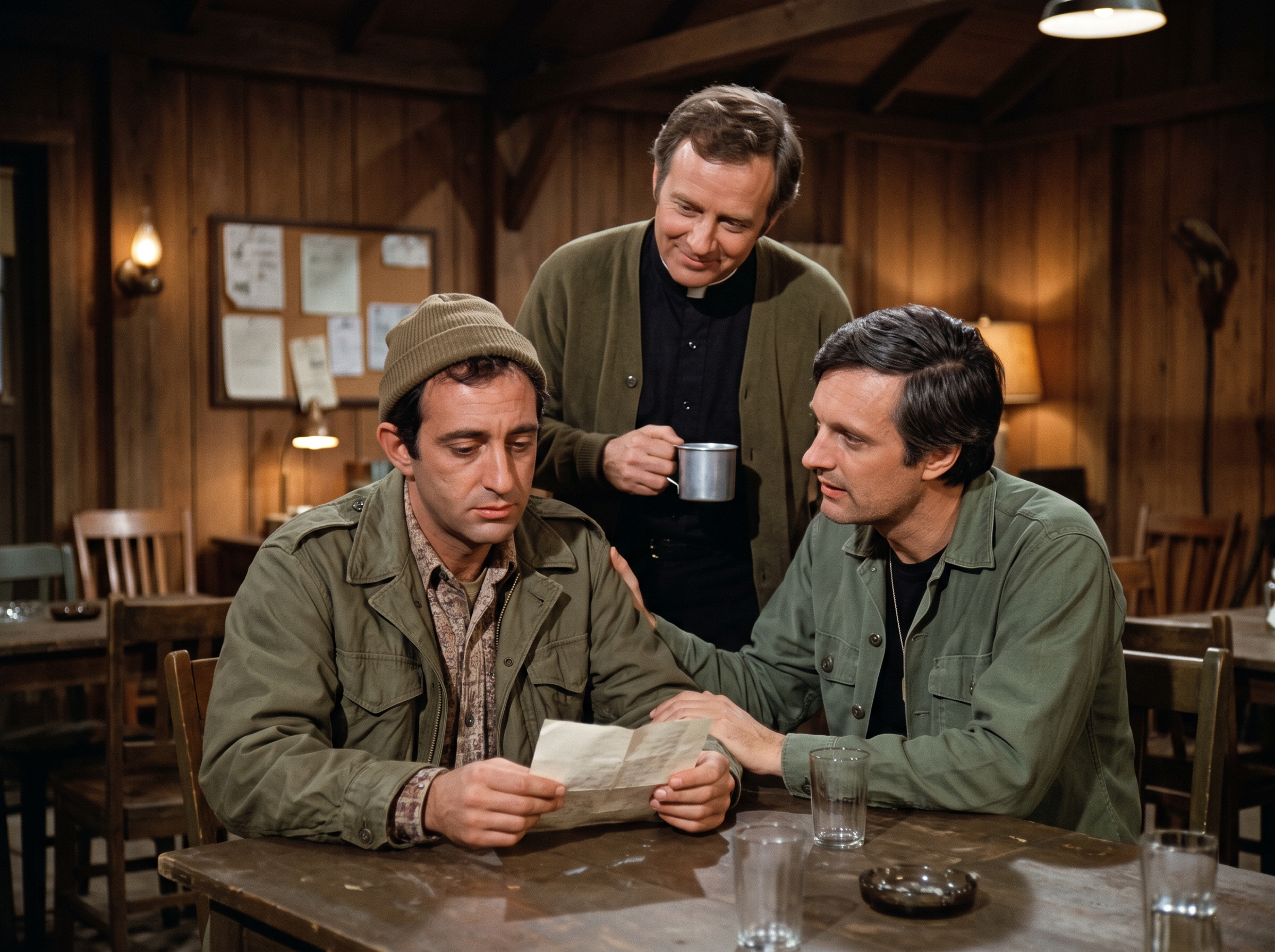
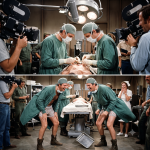
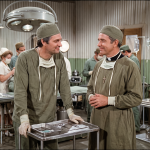
The Operating Room was, for once, silent.
The sound of clanging instruments and the frantic shouts for blood had faded an hour ago.
Inside The Swamp, the air was heavy, not just with the smell of ether, but with the collective exhaustion of three days and two nights of nonstop casualties.
It was the time of night when the war seemed both closest and furthest away.
In the corner, an oil lamp sputtered, casting dancing shadows against the wood-paneled walls and the cluttered bulletin board.
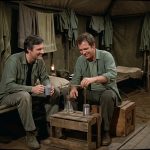
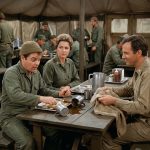
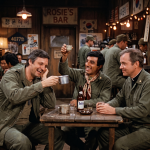
Hawkeye Pierce and Father Mulcahy were there, each nursing a cup of something warm—some of it coffee, some of it perhaps not—sitting at the worn wooden table.
A third figure sat with them.
Max Klinger wasn’t wearing an elaborate hat tonight. There was no flowing skirt, no high heels, no theatrical plea for a Section Eight.
Tonight, he was in an olive drab watch cap and his field jacket, the clothes of a soldier who had nowhere else to be.
He looked younger, smaller, and incredibly weary.
Klinger had not spoken for ten minutes.
His gaze was fixed, not on his friends, but on the crumpled, creased piece of paper held tightly in both of his hands.
It was a letter from Toledo, delivered just before the last push had started.
He had waited until now to open it.
Hawkeye, whose hands usually never stopped moving, watched him with quiet, focused concern.
His own weariness, the jokes he had used to mask the horrors of the last few days, all fell away.
He saw the lines around Klinger’s eyes, the way his jaw was set, and the tremor in the hands holding the letter.
B.J. was usually the one for this, the stable, grounded friend who knew the quiet language of shared pain.
But B.J. was already asleep, his face crushed against his bunk.
Hawkeye stepped in.
He reached out slowly, his arm crossing the small distance of the table, and placed a warm, steady hand on Klinger’s shoulder.
He didn’t speak. He didn’t ask what was wrong. He just let the silence hold them.
Father Mulcahy, leaning gently against the back of his chair, looked down at them with that profound, gentle compassion that always seemed to cut through the cynicism.
He held his small metal mess cup with both hands, his expression one of quiet, helpless concern for a friend.
“Max?” Hawkeye’s voice was soft, barely more than a whisper.
Klinger didn’t look up immediately. He just kept staring at the writing.
A single tear made its slow, painful way down his nose.
His fingers clenched the paper so tightly the edges began to tear.
“It’s not good, Hawk,” Klinger finally whispered, his voice cracking, the normal bravado gone.
“Ma. It’s… it’s Ma.“
The air in the room seemed to vanish.
Mulcahy leaned closer, his eyes widening.
Hawkeye’s grip on Klinger’s shoulder tightened, a silent confirmation that he was hearing him.
“She’s fine,” Klinger said, a weak attempt at a reassuring breath that failed.
“She’s fine, but the… the bakery…“
His voice failed again. He looked up, his eyes swimming with tears, and the sheer, raw homesickness that lay beneath all his comedy was laid bare.
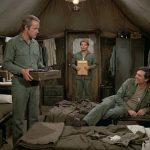
He looked around the dim tent, the water glasses, the empty cots, the oil lamp, and he saw everything except the place he needed to be.
He took a jagged breath, opened his mouth as if to explain, and then, completely overwhelmed, just buried his face in the letter and let the first sob wrench free.
The Swamp, which had seen so much and held so much pain, seemed to hold its breath.
The sound of Klinger’s grief was raw. It wasn’t loud, but it was deep, the sound of a man watching his world crumble from six thousand miles away, powerless to stop it.
Klinger, usually the king of resilient, comedic struggle, was just a son, broken-hearted, longing for his mother’s bakery and the safety of home.
Hawkeye didn’t make a witty remark. He didn’t offer a medical diagnosis.
He just shifted in his seat, moving closer.
Without removing his hand from Klinger’s shoulder, he used his other arm to draw Klinger into a brief, tight, silent embrace.
Klinger leaned into it, just for a moment, letting the heavy wool of Hawkeye’s fatigue jacket soak up his tears.
When they parted, Klinger sat up, wiping his face with the sleeve of his field jacket.
His face was red, but he wasn’t crying anymore. He was just empty.
Father Mulcahy, who had watched with quiet, profound pain, set his metal cup down gently on the table.
He leaned forward, his gentle face close.
“The bakery, Max?” Mulcahy asked softly. “What happened?“
Klinger took a shaky breath, looking back at the letter.
“It’s… it’s all gone. Not just burned… it’s bankrupt. Ma put everything in. She’s… she’s moving out of the old place. She’s staying with Cousin Rosa.“
Klinger’s eyes went far away, looking not at the tent wall but at a street corner in Toledo.
“Every Sunday, we had a smell of cinnamon. Every single Sunday. It’s what kept me… what kept me believing there was still a world that didn’t smell like ether and dirt.“
His voice began to crack again. “And now… it’s just gone.“
Hawkeye looked down at the table. He knew about things being gone. He knew about the homesickness that never truly went away.
He picked up one of the simple water glasses from the table and placed it directly in front of Klinger, a small, practical offering.
“Is your Ma safe?” Hawkeye asked, his voice steady.
“Yeah,” Klinger said, picking up the glass, his hand now only trembling slightly. “She is.“
“And Cousin Rosa? Is she good people?“
Klinger nodded. “Yeah. Rosa will take care of her.“
Hawkeye nodded, leaning his elbows on the table, looking at Klinger with intense empathy.
“Max, your family… they’re a family of survivors. You’re a survivor. Cousin Rosa is a survivor.“
Hawkeye looked around their dimly lit tent, at Mulcahy, and at the sleeping forms in the bunks.
“You’ve got a family over there that Rosa will protect. And you’ve got a family over here that’s going to protect you.“
Hawkeye glanced up at Father Mulcahy, who nodded quietly.
“We’re here, Max,” Mulcahy said. “Whatever you need.“
Klinger looked from Hawkeye to Mulcahy.
The two of them, a cynic and a priest, sitting in a leaky tent in a combat zone, both watching him with the same open, sincere concern.
He took a slow drink of the water.
“It’s weird,” Klinger said, his voice finally reclaiming a hint of its usual timbre.
“Here I am, wearing these clothes, begging, practically dying to get kicked out so I can go home and save that bakery… and I can’t.“
“I am officially a soldier, Hawk. I am a soldier who can do absolutely nothing but watch things burn.“
“You’re a soldier who survived,” Hawkeye corrected. “You’re a soldier who made it through three days of hell and is now here, taking care of your friends, even if it’s just by sitting in the silence with us.“
Hawkeye picked up his own coffee cup, raising it slightly.
“To Toledo,” Hawkeye said, his expression serious. “And to Cousin Rosa.“
Father Mulcahy lifted his imaginary cup. “To Cousin Rosa and all who provide refuge.“
Klinger, for the first time that night, smiled. It was a faint, tired smile, but it was real.
He raised his own water glass. “To Toledo.“
He looked at the letter one more time, not with the terror he had felt earlier, but with a quiet resolve.
He didn’t crumple it up. He began to fold it, slowly and with great care, smoothing the creases, and then slid it into the breast pocket of his field jacket, right against his heart.
They sat in the quiet again for a long time.
Hawkeye and Mulcahy didn’t speak, they just stayed.
Outside, the distant thud of artillery broke the silence, a constant reminder of the world beyond the oil lamp.
But in that small, cramped space, the war was briefly held at bay.
It wasn’t an escape, not like the comedy usually was. It was a temporary truce.
They were three exhausted men, found family, taking comfort in the quietest hour of the night, bound by the simple, fragile understanding of the home they all carried inside.
Hawkeye’s hand never left Klinger’s arm.
A quiet moment shared in a world that seldom paused for grief.