The Frequency of Home
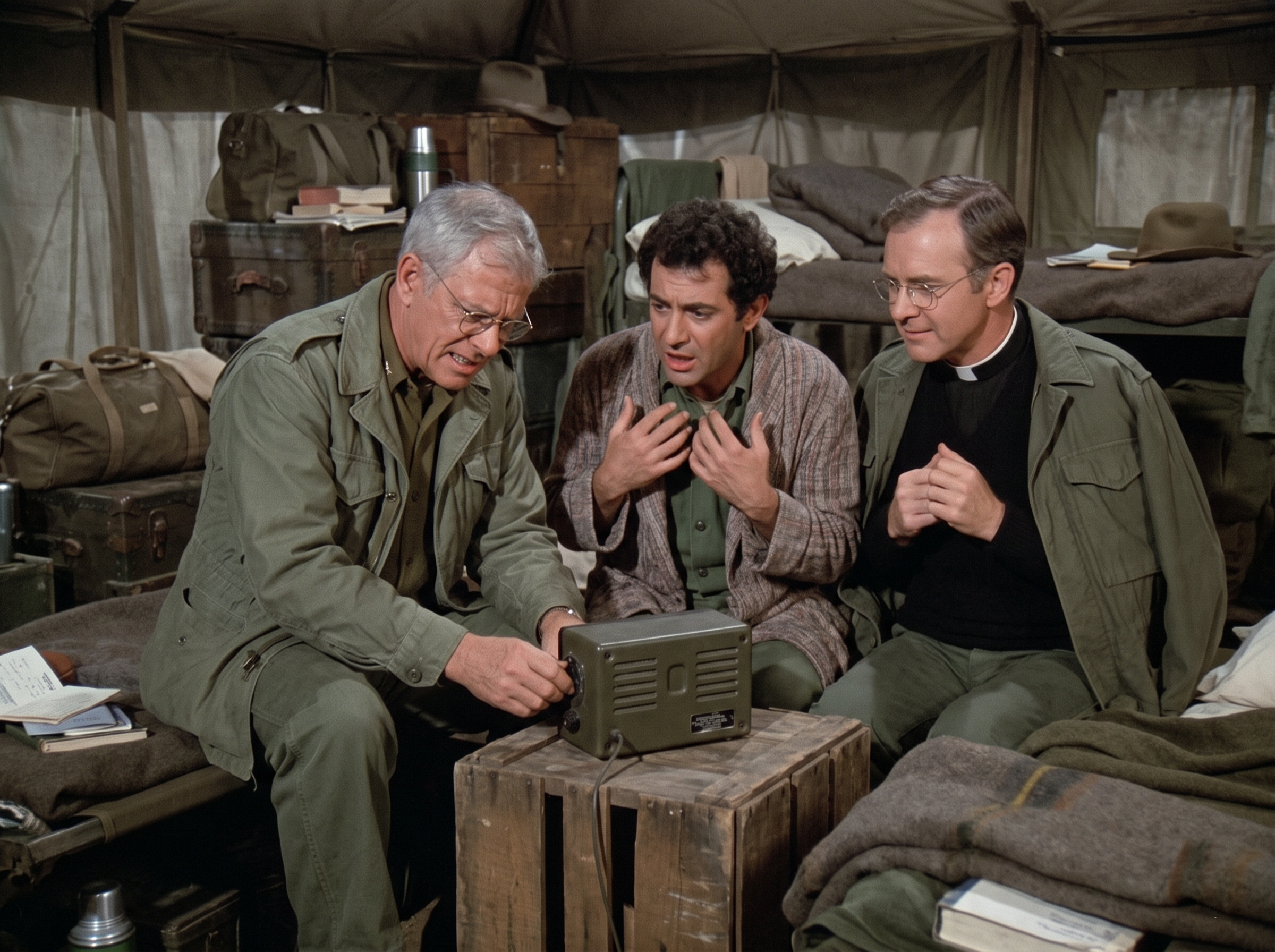
Sometimes, the loudest thing in Korea isn’t the distant rumble of artillery, but the agonizing silence of a tent when you’re waiting for news that feels a lifetime away.
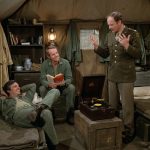
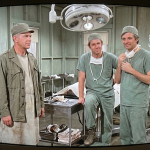
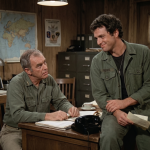
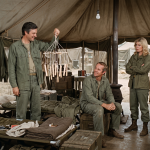
The air inside the Swamp was thick with the scent of damp canvas, old leather, and the lingering exhaustion of a fourteen-hour shift. Colonel Potter sat hunched over the wooden crate, his weathered hands working the dial of a battered radio with the precision of a surgeon. Beside him, Hawkeye looked on, his usual sharp-edged grin replaced by a strained, fragile stillness. Father Mulcahy sat close, his hands clasped tight, his head tilted as if listening for a whisper beneath the static.
They weren’t looking for a war update. They were hunting for a ghost—a specific, scratchy recording of a baseball game being broadcast from stateside, or perhaps just the faint, rhythmic music of a life that hadn’t been interrupted by mud and shrapnel.
The radio crackled, spitting out a harsh, metallic scream of interference.
“Come on, you beautiful piece of junk,” Hawkeye murmured, his voice cracking just enough to betray the desperation underneath. “Just give us a bar of something that isn’t a scream.”
Colonel Potter didn’t look up, his jaw set in that familiar, stubborn line. “Hold your horses, son. These waves have a long way to travel. They get tired, just like the rest of us.”
Suddenly, the static cleared. For a split second, a crystal-clear note of a piano cut through the damp air, followed by the unmistakable, warm hum of a human voice singing a lullaby. It was soft, domestic, and utterly alien to the harsh reality of their surroundings.
The three men froze. Hawkeye’s breath hitched, and a sudden, sharp light of recognition filled his eyes, a look that told them all exactly who he was thinking of—and exactly how far away she was.
“That’s it,” Hawkeye whispered, his hand reaching out instinctively toward the radio as if he could pull the sound into the room. “That’s her.”
But as he leaned in, the radio surged with a sudden, violent burst of static, drowning out the voice entirely, leaving the tent plunged back into the oppressive silence of the Korean night.
The silence that followed was heavy, almost suffocating. Hawkeye slumped back, his shoulders sagging, his fingers gripping his knees until the knuckles turned white. It was the kind of moment that reminded them all that they weren’t just doctors or soldiers; they were just husbands, sons, and fathers, stranded on a distant shore.
Colonel Potter grunted, his fingers flying across the knobs, his brow furrowed in fierce, fatherly determination. “Don’t you dare give up on me now,” he muttered to the machine. “I didn’t spend three years in this man’s army to be outsmarted by a tin box and some bad weather.”
Father Mulcahy leaned forward, his gentle face illuminated by the dim light of the lantern. He didn’t offer a prayer or a platitude; he just reached out and placed a steadying hand on the Colonel’s shoulder. “It’s all right, Colonel. Sometimes, just knowing it’s out there is enough to remind us that the world is still spinning.”
“It’s not enough, Father,” Hawkeye replied, his voice devoid of his usual sarcasm. “I was almost there. I could smell the perfume on her dress. I could hear the floorboards creaking.”
The Colonel didn’t respond immediately. He kept working the dial, moving it in microscopic increments, his eyes squinted against the frustration. He knew, better than anyone, that these small victories were the only things keeping the sanity intact in a place that tried its best to erode it.
Then, slowly, the static began to shift. It wasn’t the song again, but the low, reassuring drone of a broadcaster’s voice, calm and steady, reporting on the weather in a small town back in Ohio. It wasn’t home, but it was someone else’s home, and for a moment, the distance felt a little smaller.
Hawkeye let out a long, shuddering breath, the tension leaving his body as if he’d finally put down a heavy pack. He looked at the Colonel, then at Father Mulcahy, and a small, genuine smile touched his lips.
“We’ll take it,” Hawkeye whispered.
Colonel Potter finally looked up, a faint, wry glint in his eyes. He leaned back on the cot, resting his arm on his knee. “You bet we will. Sometimes, you have to settle for the view from the fence, even if you can’t quite get into the garden.”
The three of them sat there for a long time, bathed in the soft, glowing warmth of the small radio. They didn’t talk about the surgery, the casualties, or the endless red tape. They just sat in the dim light, listening to a stranger talk about the weather, feeling the quiet, unshakable comfort of being in the right company at the wrong time.
The war was still out there, just beyond the tent flaps, but in that small, crowded space, they were safely tucked away in a place where friendships were the strongest armor they had.
In the heart of the 4077th, home wasn’t a place on a map—it was the quiet frequency shared between friends who refused to let the darkness win.