The Stillness Between the Shells
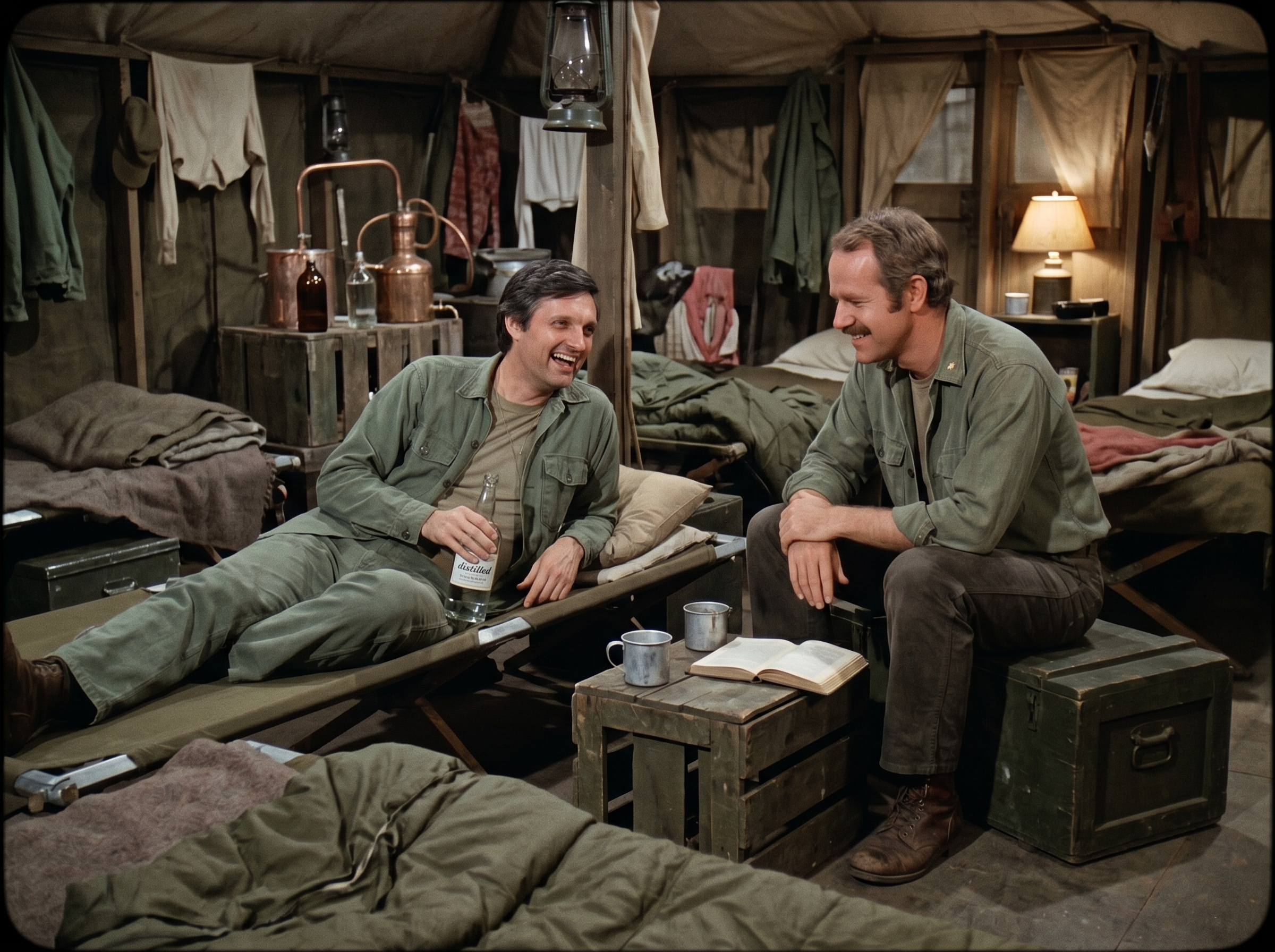
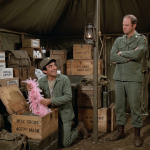
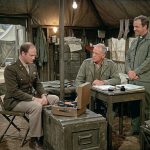
The mud had finally stopped being a nuisance and started being a permanent fixture of our existence. Inside the tent, the air hung heavy with the smell of canvas, damp wool, and the faint, unmistakable sharp tang of Hawkeye’s latest batch of illicit gin. It was one of those rare, precious lulls in the fighting—a quiet pocket of time where the choppers were silent and the casualty lists were mercifully short.
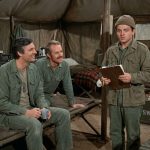
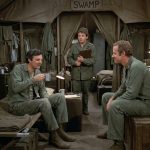
Hawkeye was sprawled across his cot, an easy, lopsided grin plastered on his face as he held up a bottle of the “distilled” nectar like a prized trophy. He looked tired, the kind of deep, bone-weary exhaustion that sleep couldn’t touch, but the laughter in his eyes was genuine.
B.J. sat on a wooden crate opposite him, his posture relaxed, a book forgotten in his hands. He was watching his friend with that familiar, steady warmth that anchored the entire mess tent. For a moment, the war didn’t exist. There was just the flicker of the lamp, the rough textures of the cots, and the low, conspiratorial murmur of two men who had seen far too much, yet still found a reason to smile.
“You know, Beej,” Hawkeye said, his voice dropping into a playful, mock-serious register, “if this batch is even half as potent as the last one, I’m fairly certain we could power the entire 4077th for a month just by bottling my breath.”
B.J. chuckled, shaking his head. “I’m sure Colonel Potter would be thrilled to hear that, Hawk. I can see the headline now: ‘Local Surgeons Solve Fuel Crisis with Homemade Hooch.'”
Hawkeye laughed, a genuine, bubbling sound that seemed to chase away the shadows in the corners of the tent. It was the perfect moment—a fleeting reprieve. But then, Hawkeye’s expression shifted, the smile faltering just enough for the underlying ache to peek through. He looked at the bottle, then at his friend, and his voice went quiet, stripped of the usual armor.
“I just… I didn’t think I’d hear anything funny today,” he admitted, his gaze suddenly intense. “And God, I really needed to.”
As he leaned forward, the bottle slipped—just an inch—and for a heart-stopping second, the silence in the tent shattered as the glass caught the edge of the cot with a sharp, warning *clink*.
The bottle didn’t break. It steadied in Hawkeye’s hand, but the sudden jolt had silenced the room. The humor evaporated, replaced by that heavy, familiar weight that always settled in whenever the reality of their situation forced its way back in.
B.J. reached out, his hand hovering near Hawkeye’s shoulder, a gesture of grounding support. He didn’t say anything. He didn’t need to. In the 4077th, you didn’t have to explain the darkness; it was written on every face by noon, and understood by midnight.
“I know,” B.J. finally said softly, his voice steadying the air. “Some days, the only thing keeping us upright is the ridiculousness of it all.”
He leaned back, picking up his book again, though he didn’t open it. He looked at Hawkeye with a quiet, brotherly empathy. “We’re still here, Hawk. And tomorrow, we’ll do what we do best—we’ll fix what we can, we’ll lean on each other when we can’t, and we’ll find another reason to laugh, even if it’s just to spite the misery of it.”
Hawkeye took a slow breath, the tension in his shoulders finally dropping. He looked around the tent—at the makeshift distillery setup in the background, the rumpled blankets, the small, intimate clutter of a life lived in a transit camp. It wasn’t home, but it was theirs.
He gave a small, tired nod, pouring a tiny measure of the clear liquid into a metal mug for his friend. It was a humble offering, a silent toast to the sheer stubbornness of survival. They clinked mugs—a dull, metallic sound that was far more sincere than any crystal glass toast could ever be.
They sat there for a long time after that, not talking, just existing in the quiet solidarity of friends who had become family by necessity. Outside, the distant hum of the camp began to pick up—a jeep engine turning over, the muffled sound of voices heading toward the mess tent—but in here, they held onto the stillness for as long as they could.
It was a small, fragile victory, but in a place designed for loss, a quiet moment shared between friends was the most rebellious act they could perform. As the light from the lamp cast long, soft shadows across the floor, they simply rested, grateful for the breath they had, the company they kept, and the resilience of a spirit that refused to be broken.
In the end, it was never about the war; it was about the people who kept you human while you were in it.