The Weight of an Empty Canvas Bag
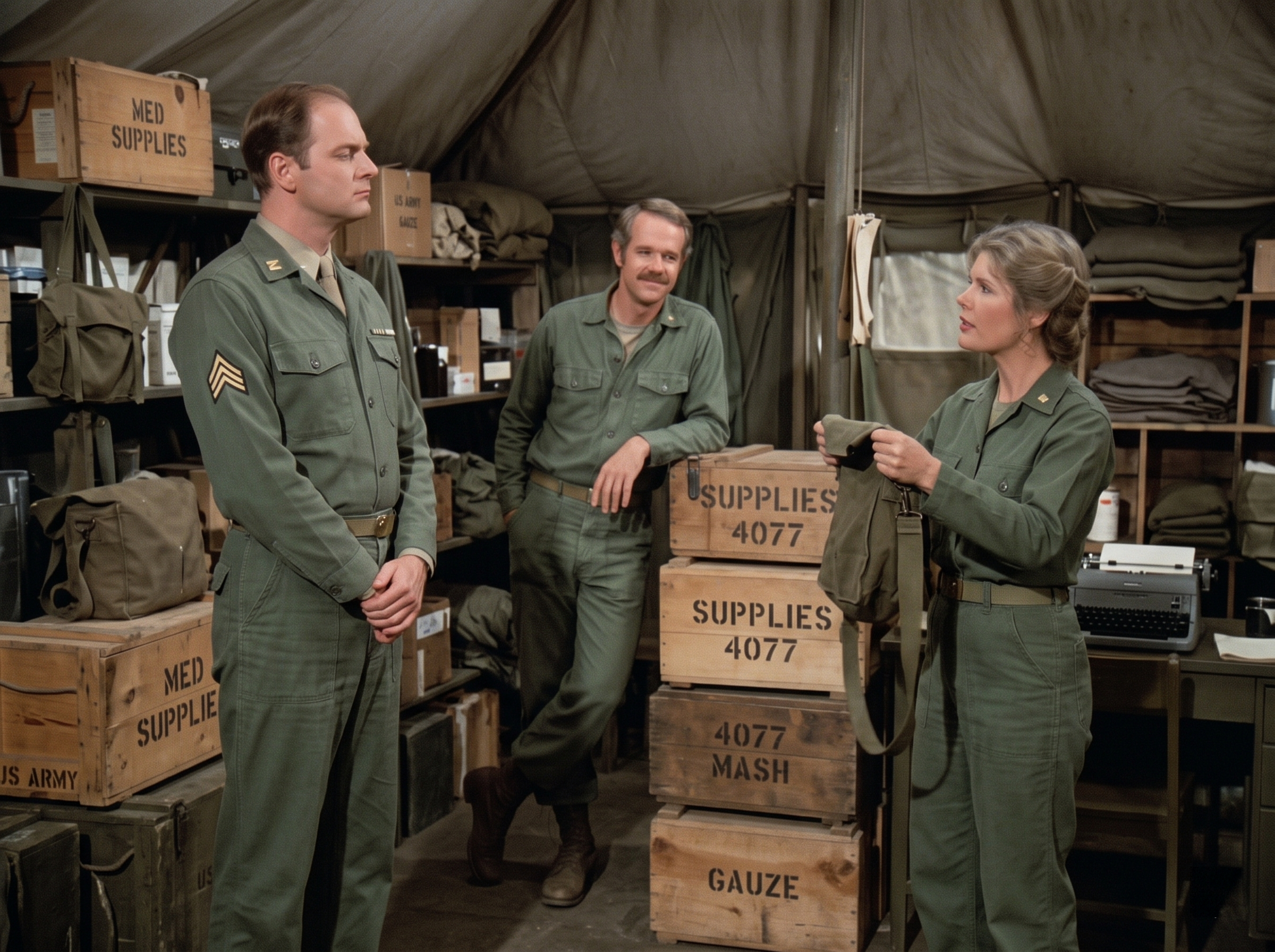
The war didn’t just take lives and years; it took inventory. It stole the small, necessary things, leaving behind a profound and dusty absence.
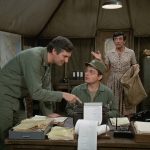
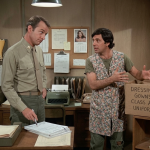
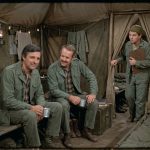
In the dim, olive-drab confines of the 4077th’s supply tent, the air was thick with the smell of old canvas, mothballs, and impending arguments.
Major Margaret Houlihan stood near a crooked wooden shelf, her posture as straight and unyielding as a rifle barrel. But her face carried a sharp, controlled frustration that even her best military bearing couldn’t hide.
In her hand, she held up a faded canvas medical bag.
It was completely, undeniably empty.
“Nothing,” Margaret said, her voice tight, the word dropping into the quiet tent like a stone. “Not a single roll of silk suture, not one box of sterile dressings. Just canvas and broken promises from Seoul.”
A few feet away, Major Charles Emerson Winchester III stood perfectly upright. He did not lean. He did not slouch. Even in a muddy, patched-together surgical hospital in the middle of nowhere, Charles carried himself as if he were waiting for a valet at the Boston symphony.
His hands were folded impeccably in front of him. He looked down his nose at the empty bag, his expression a masterpiece of refined, sarcastic irritation.
“I am shocked, Major,” Charles drawled, his voice dripping with aristocratic disdain. “Truly, I am left breathless by this stunning display of military efficiency. Who could have possibly foreseen that the United States Army would fail to deliver basic medical necessities to a medical unit?”
“It isn’t a joke, Major,” Margaret snapped, her grip tightening on the fabric.
“I assure you, I am not laughing,” Charles replied smoothly. “In Boston, a missing shipment of this magnitude would result in a swift and ruthless termination of employment. Here, I presume it will be met with a hearty shrug and a requisition form that will be filed directly into a latrine.”
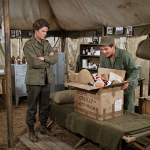
In the midground, leaning casually against a tall, precarious stack of wooden crates, B.J. Hunnicutt watched the show.
He didn’t intervene. He just observed their clash of pride with a relaxed, dry smile, his arms crossed over his chest.
B.J. loved these moments. The sheer, absurd humanity of two deeply proud people fighting a war of words over an empty piece of fabric. It was a momentary distraction from the heavier things waiting outside the tent flaps.
“You know, Charles,” B.J. offered mildly, his voice a gentle rumble in the dusty air. “If you stare at the bag long enough with that exact level of contempt, the supplies might just magically materialize out of pure fear.”
Charles didn’t even turn his head. “Your folksy, homespun optimism is as useless as that canvas sack, Hunnicutt.”
“It’s not about optimism,” Margaret interrupted, stepping forward, the fire in her eyes masking the deep, aching fatigue beneath. “It’s about the post-op ward. It’s about five beds that need fresh dressings by this evening.”
She thrust the empty bag slightly in Charles’s direction. “And your sarcasm isn’t going to stop a post-operative infection, Doctor.”
Charles’s sarcastic facade stiffened. The aristocratic armor cracked, just a fraction of an inch, revealing the dedicated surgeon trapped underneath.
He unclasped his hands, the irritation in his eyes suddenly shifting from the inconvenience of the situation to the grim reality of it.
Before Charles could fire back a retort, the scratchy, metallic whine of the camp’s PA system crackled to life above them.
“Attention all personnel. Incoming wounded. Choppers landing in five minutes. Cancel your dance lessons and grab your tools.”
The dry, sarcastic humor evaporated from the tent in a single heartbeat.
Margaret lowered the empty bag. The frustration on her face didn’t disappear, but it changed shape. It morphed into the heavy, terrifying weight of a professional who was being asked to do the impossible, yet again.
She looked at Charles. Charles looked at her.
The choppers were coming, and the bag was empty.
The silence in the supply tent stretched tight, broken only by the distant, rhythmic thumping of helicopter blades cutting through the Korean sky.
B.J. pushed himself off the stack of wooden crates. His dry smile was gone, replaced by the steady, grounded warmth that made him the quiet anchor of the camp.
He walked over to Margaret and gently put a hand on her shoulder.
“Okay,” B.J. said softly. “We don’t have silk. We don’t have the pre-cut sterile dressings. So, what do we have?”
Margaret took a deep breath, grounding herself in his calm demeanor. The sharp edges of her panic began to smooth out.
“We have cotton thread,” she said, her voice finding its familiar, commanding rhythm. “It’s not ideal. It’s thicker, it scars worse, but if we boil the absolute hell out of it, it will hold tissue together.”
Charles let out a long, slow sigh. It wasn’t a sigh of contempt; it was the sigh of a master craftsman being asked to build a cabinet with a rock and a rusty nail.
“Cotton thread,” Charles murmured, closing his eyes for a brief second. “I will be closing delicate abdominal fascia with the equivalent of nautical rope.”
“You’ll do it, Charles,” B.J. said quietly, looking at the tall surgeon. “And you’ll do it beautifully, because you’re too damn stubborn to let a patient suffer for the Army’s mistakes.”
Charles opened his eyes. He looked at B.J., then down at Margaret.
Slowly, Winchester reached out and took the empty canvas bag from Margaret’s hands. He folded it neatly, deliberately, and set it down on a nearby crate.
“You are entirely correct, Hunnicutt,” Charles said, his tone devoid of its usual mockery. “I shall stitch them together with burlap and prayer if I must. They will not die on my table today.”
He turned his gaze to Margaret.
“Major Houlihan,” Charles said, his voice surprisingly gentle. “Have your nurses prepare the cotton. Boil it until it screams. We shall make do.”
Margaret nodded, a silent look of profound gratitude passing between them. It was a fleeting, unspoken acknowledgment of the impossible burden they all shared.
They fought constantly. They irritated each other endlessly. They came from completely different worlds.
But in the shadow of the incoming choppers, all of that burned away.
“I’ll get them ready, Doctor,” Margaret said softly.
She turned and hurried out of the tent, her steps quick and purposeful, the momentary despair completely replaced by fierce, protective action.
B.J. and Charles were left alone in the dim light of the supply tent.
The sound of the choppers was deafening now, vibrating through the wooden crates and shaking the canvas walls. The war was at their doorstep again.
“Shall we, Charles?” B.J. asked, gesturing toward the door.
Charles adjusted his cuffs, his posture returning to that of the immaculate Bostonian, even as he prepared to walk into the bloody, chaotic reality of the O.R.
“After you, B.J.,” Charles replied quietly.
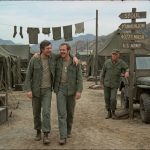
As they stepped out into the blinding daylight of the compound, the supply tent fell silent once more.
Left behind on the wooden crate was the folded, empty canvas bag. It was a symbol of everything the Army failed to give them, everything they lacked, and everything they had to overcome.
But it didn’t matter what was missing from the shelves.
Because what kept the 4077th alive wasn’t what came in the supply drops. It was the tired, stubborn, beautifully human people who refused to give up when the boxes were empty.
In a place where everything was in short supply, they always managed to find exactly enough of each other.