The Dress-Down Parade in Post-Op
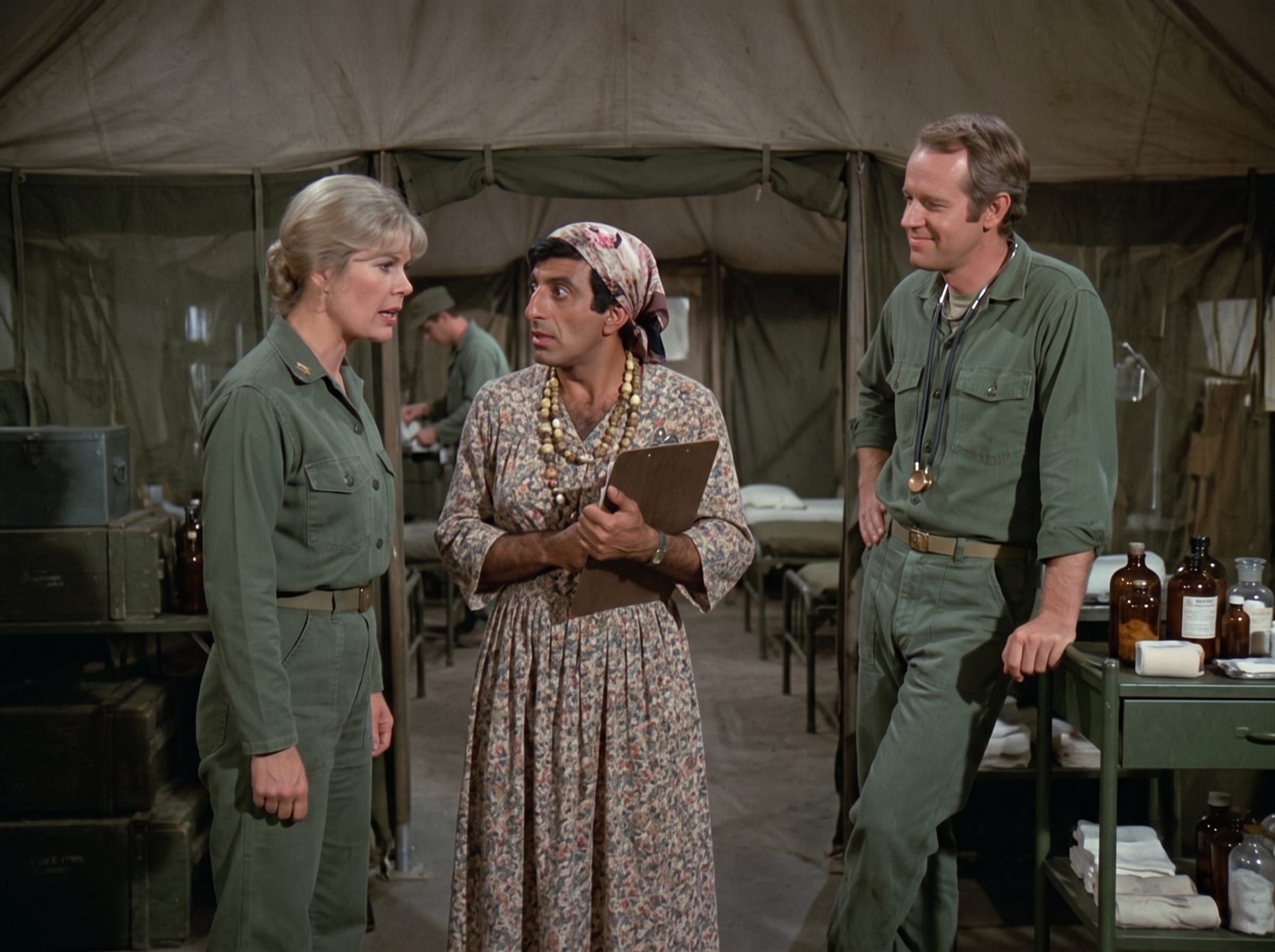
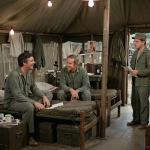
The wounded had finally stopped arriving, but the real work had just begun in the Post-Op tent, a cavernous canvas womb smelling of ether, antiseptic, and exhausted humanity.
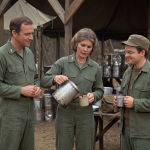
In the midst of it all, a small, unusual cluster of three people held the center line: Major Margaret Houlihan, Corporal Klinger, and Captain B.J. Hunnicutt.
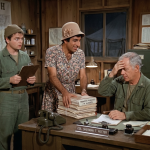
Margaret was in full command mode, her crisp, olive-drab fatigues a sharp contrast to the soft floral dress and headscarf worn by the Toledo native clutching a metal clipboard.
Her back was rigid, her gaze penetrating, as she focused entirely on Klinger.
“You are *not* a nurse, Corporal,” Margaret stated, her voice tight but precise.
“You are here to retrieve a critical supply inventory for Colonel Potter. This is *not* a fashion show.”
Klinger met her gaze with wide, earnest, brown eyes. His clipboard was his shield, held firmly against his chest.
His intricate bead necklace hung heavily over the floral cotton. The colorful headscarf framed his determined face.
“I am merely attempting to achieve a sense of inner and outer harmony, Major,” Klinger replied, his voice a theatrical plea. “And believe me, this outfit is *not* easy to move in.”
Behind Klinger, B.J. Hunnicutt stood, his frame casually leaned against a metal supply cart laden with medical bottles.
His stethoscope was draped around his neck, and his lips were curled in a soft, genuine smile, completely absorbed in the exchange.
Margaret shot B.J. a searing look, then returned her gaze to Klinger. “Harmony, Corporal? We are running a hospital in a war zone.”
“Your ‘harmony’ is a distraction and, quite frankly, a violation of regs.”
“I have regs too, Major,” Klinger said, a little defensively, waving the clipboard. “Potter wants this list. He needs it now. And I am delivering it.”
The tension hummed between the strict Major and the wildly persistent Corporal.
Just then, from a far corner of the tent, a faint groan cut through the quiet.
It was the first sound of recovery from a young soldier we’d all operated on hours ago.
Margaret and B.J. immediately froze, their focus shifting.
Klinger’s theatricality evaporated instantly, replaced by genuine concern as he looked toward the sound.
The groan was soft, but in that moment, it was the loudest thing in the room, and everything else simply stopped.
Without a word, Margaret was gone, slipping between the canvas flaps into the main ward.
B.J. was already on her heels, pushing past the supply cart and the bottles that had grounded his smile.
Klinger was left standing alone in the center, clutching his clipboard like a useless prop.
He waited, listening.
Moments later, B.J. reappeared, pulling the stethoscope from around his neck, his face thoughtful. “He’s just waking up,” he reported, leaning back against the cart, but without his initial amusement.
“He’s stable. Dr. Pierce is checking him.”
Klinger didn’t say anything. He just looked down at his floral dress, then back at the clipboard.
Margaret returned a moment later, her face set, but the sharp edges had softened.
She walked straight to Klinger. “Corporal,” she said quietly.
“Major,” he answered.
“The inventory list. Is it completed?”
He looked at the clipboard. “Yes, ma’m. Accurate down to the last bottle of hydrogen peroxide.”
Margaret nodded, then did something unexpected. She didn’t dismiss him.
She didn’t order him back to his original clothing. She simply sighed, a long, tired exhale that stripped away the Major and left the exhausted woman beneath.
She looked at Klinger’s dress, not with judgment, but with a strange kind of recognition.
“Where did you get it?” she asked.
Klinger paused. “It was sent from home. The fabric came from my aunt’s old living room curtains. She said it looked like hope.”
B.J. let out a short, quiet chuckle, and this time, Margaret didn’t glare. She just smiled, a fleeting, private smile.
“Hope,” she repeated the word, tasting it.
“It’s certainly not regulation hope,” B.J. added softly.
“But it’s better than no hope at all,” Margaret said.
She held out her hand. Klinger hesitated, then placed the clipboard firmly in it.
“Tell Colonel Potter his list has arrived. And tell him that the morale on my ward… is holding.”
Klinger gave a small, crisp salute (which was a bit awkward in the full dress) and turned to leave.
“Oh, and Klinger,” Margaret added, stopping him at the tent exit.
He looked back.
“Tell your aunt… that hope goes quite well with a bead necklace.”
Klinger smiled, a wide, genuine grin that made his eyes wrinkle. “Yes, ma’m. I’ll tell her, Major. I’ll tell her you liked it.”
He disappeared through the flaps, the soft floral pattern a fading burst of color in the drab environment.
B.J. pushed off the supply cart, the light of humor and tenderness shining clearly in his eyes as he looked at the strict Major holding the ridiculous clipboard.
He didn’t need to say a word. The simple fact that she hadn’t made him change was the biggest victory of the day, a small victory for humanity in a place where humanity was always under attack.
Margaret returned the clipboard to the cart, her hand momentarily lingering on a stack of bandages.
“I still hate that dress,” she murmured, a dry humor touching her voice.
“I know,” B.J. said, already walking toward his next patient. “I know.”
Sometimes the best hope was found exactly where you least expected it.