A Matter of Unbearable Indignity at the 4077th
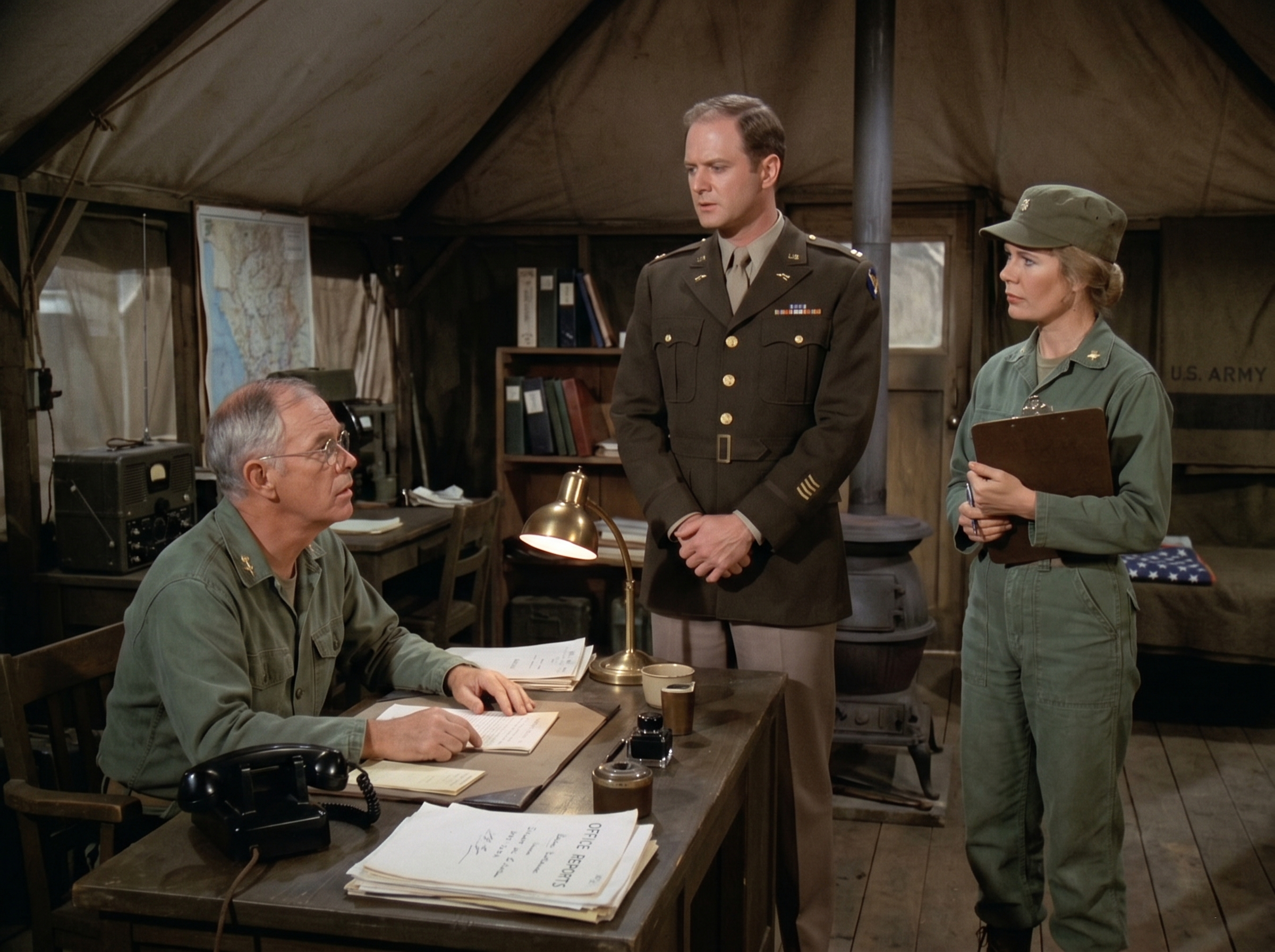
The morning sun had barely crested the barren, dusty hills of South Korea, but the war was already giving Colonel Sherman T. Potter a formidable headache.
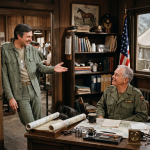
Inside the commanding officer’s tent, the air was thick with the smell of stale canvas, cheap ink, and cold coffee. The potbelly stove in the corner sat unlit and useless, a cold iron monument to the perpetual chill of the camp.
Potter sat grounded behind his worn wooden desk, surrounded by the endless, soul-crushing paperwork that kept a Mobile Army Surgical Hospital breathing. A warm, practical desk lamp cast a golden circle of light across the requisition forms and duty rosters.
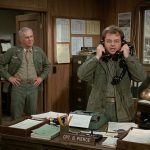
To his left, the black, heavy field phone rested silently. It was a rare mercy, a temporary pause in the endless stream of bad news, incoming wounded, and logistical nightmares from I Corps.
Potter leaned slightly forward, his reading glasses perched on the bridge of his nose. He wore his faded green fatigue shirt, the fabric worn soft from too many washings in harsh chemical soap.
His face was a portrait of weary wisdom, etched with the deep lines of a man who had seen too much war, yet still cared too deeply for the people fighting it. Right now, however, that deep well of fatherly compassion was being severely tested by the man standing before his desk.
Major Charles Emerson Winchester III stood at strict attention, an imposing figure of wounded pride and rigid Bostonian dignity. He was dressed, bafflingly, in his full Class A uniform.
His olive drab wool jacket was buttoned perfectly, his tie was knotted with geometric precision, and his posture was so upright it looked painful. In a camp where most personnel looked like unmade beds, Charles looked ready for a parade ground inspection.
His hands were folded formally in front of him, fingers intertwined to hide the slight, nervous tremor of exhaustion. His face, usually a mask of aristocratic superiority, was pinched into an expression of profound, personal offense.
Standing off to the right, maintaining a respectful but distinct distance, was Major Margaret Houlihan. She wore her practical green fatigue coveralls and a patrol cap pulled down slightly over her blonde hair.
She held a heavy wooden clipboard pressed against her side, a pen poised in her fingers. Margaret had just been in the middle of delivering the morning nursing report when the whirlwind of Winchester had swept into the office.
Now, she stood perfectly still, maintaining a highly controlled posture. Her sharp, skeptical expression was directed entirely at Charles, her eyes narrowing as she observed his theatrical display.
“Colonel,” Charles began, his voice dropping an octave into its most formal, resonant register. “I stand before you not merely as an officer, but as a gentleman who has reached the absolute terminus of his endurance.”
Potter didn’t immediately look up. He kept his eyes on a supply manifest, his jaw working slightly as if chewing on the absurdity of the moment. “Major, unless the mess tent is currently on fire, or the North Korean army has breached the perimeter, I am incredibly busy.”
“I assure you, Colonel, the situation is far more dire than a simple grease fire,” Charles insisted, his chin lifting higher. “I am here to formally lodge an official, documented grievance regarding the unconscionable, barbaric living conditions within my quarters.”
Margaret let out a short, sharp breath of disbelief. She shifted her weight, the clipboard tapping softly against her hip.
Potter slowly lowered the paperwork to the desk. He peered over the top of his glasses at the immaculate surgeon standing before him. “Your quarters, Major? You mean the Swamp?”
“I refuse to use that colloquialism, as it implies a level of rustic charm the structure severely lacks,” Charles countered smoothly. “I am speaking of the haphazard collection of rotting canvas and splintered wood I am forced to share with two certified lunatics.”
Potter sighed, a long, heavy sound that seemed to carry the weight of the entire 4077th. He rested his hands on the desk, interlacing his fingers. “And what exactly is the crisis this morning, Winchester? Did Pierce steal your silk pajamas again?”
“This is not a matter for jest, Colonel,” Charles bristled, his face flushing with genuine indignation. “I am speaking of the structural integrity of my cot, the criminal rationing of acceptable bath soap, and the hostile, sleep-depriving environment deliberately cultivated by Captains Pierce and Hunnicutt.”
Charles reached into the breast pocket of his pristine tunic and withdrew a neatly folded, perfectly crisp piece of white paper. “I have drafted a formal letter of complaint, Colonel. It outlines thirteen specific violations of standard Army housing regulations.”
He stepped forward and placed the paper exactly in the center of Potter’s desk, right under the warm glow of the lamp.
“I expect you to sign it, Colonel,” Charles demanded, his voice trembling with a mix of exhaustion and stubborn pride. “I expect it to be dispatched to General Headquarters immediately. If this indignity is not rectified, I shall be forced to contact my senator.”
Potter stared at the paper. The small tent suddenly went completely silent, save for the faint, distant sound of a jeep engine starting up in the compound.
Margaret’s knuckles turned white as she gripped her clipboard, waiting for the explosion. Potter slowly reached up, took hold of his glasses, and pulled them off his face, locking eyes with the defiant Major.
The silence in the commanding officer’s tent stretched out, thick and dangerous. It was the kind of quiet that usually preceded an artillery barrage, or in this case, a legendary Sherman T. Potter dressing down.
Charles held his ground, though his rigid posture looked incredibly fragile in the warm, dusty light of the office. His eyes, normally sharp and dismissive, carried a hollow, frantic edge.
Margaret watched Potter carefully. She knew the pressure the Colonel was under. Supply lines were stalled, I Corps was breathing down his neck, and they were fresh out of a brutal, thirty-six-hour marathon session in the operating room.
She expected Potter to roar. She expected him to tear the pristine white paper into tiny pieces and throw them in Winchester’s haughty face.
Instead, Potter just looked at the younger man. The weary exasperation on his face slowly melted into something far more profound. It was a look of deep, knowing, fatherly sorrow.
He didn’t see a pompous, over-privileged Boston Brahmin standing before him. He saw a brilliant, exhausted surgeon who was quietly, desperately falling apart under the weight of the war.
Potter glanced over at Margaret. Their eyes met for a fraction of a second.
In that brief, silent exchange, decades of combined military and medical experience spoke volumes. Margaret’s sharp, skeptical expression softened instantly.
She recognized it too. The perfectly knotted tie, the polished medals, the absurd, multi-syllabic complaint about soap and cots. It was a shield.
When the blood, the mud, and the sheer helplessness of the OR became too much, a man like Charles Emerson Winchester III didn’t cry. He clung to the only thing he knew how to control: protocol, rules, and his own impenetrable sense of superiority.
Potter slowly picked up the piece of paper. He didn’t read it. He just held it gently between his fingers.
“Thirteen violations, you say, Major?” Potter asked, his voice entirely devoid of anger. It was soft, gravelly, and remarkably gentle.
Charles blinked, clearly thrown off balance by the lack of shouting. “Y-yes, Colonel. Thirteen distinct and undeniable breaches of basic human decency.”
“And you believe that a formal inquiry by General Headquarters is the only suitable remedy for this… hostile environment?” Potter continued, tapping the paper against his knuckles.
“I see no other recourse,” Charles said, though his voice lacked its previous booming authority. The adrenaline was wearing off, leaving only the crushing weight of his fatigue.
Margaret stepped forward, just half a pace. She didn’t look at Charles; she addressed Potter, her voice professional but laced with protective warmth.
“Colonel, if I may,” Margaret said smoothly. “Major Winchester performed seven complex arterial repairs yesterday. He was on his feet in the OR for twenty-two hours straight without relief.”
Charles stiffened, turning his head sharply toward the head nurse. “Major Houlihan, my professional endurance is not the subject of this inquiry. I do not require your—”
“She’s not making excuses for you, Charles,” Potter interrupted softly. “She’s giving me the morning report.”
Potter opened the top drawer of his wooden desk. He didn’t toss the paper in; he placed it inside carefully, with a degree of ceremony, and closed the drawer with a solid thud.
“I take complaints about camp conditions very seriously, Major,” Potter said, leaning back in his chair and crossing his arms. “A surgeon cannot be expected to perform miracles if he’s being kept awake by drafty canvas and sub-par soap.”
Charles’s posture relaxed, just a fraction of an inch. A flicker of genuine relief crossed his tired face. “Then you will forward the grievance, Colonel?”
“I will do better than that, Major,” Potter said, his eyes crinkling at the corners. “I am taking immediate, unilateral action as your commanding officer.”
Potter picked up a pen and pointed it directly at Charles.
“I am launching a full, personal investigation into the structural integrity of the Swamp. But until I have concluded my findings, you are a liability to my hospital, Major.”
Charles frowned, confused. “A liability? Colonel, I assure you my surgical skills remain—”
“You are practically asleep on your feet, Charles,” Potter said, his voice firming into an undeniable command. “Your hands are shaking, and you look like a stiff breeze would knock you into the next county.”
Potter set the pen down. “Here is my ruling on your grievance, Major. You are going to walk out of this tent. You are going to return to your quarters.”
“But the hostile environment—” Charles protested weakly.
“You will insert earplugs,” Potter continued smoothly. “And you will sleep for the next ten hours. You will not emerge from that tent for anything less than a full-scale offensive. That is a direct, undeniable order.”
Margaret nodded firmly. “I will personally instruct the nursing staff that Major Winchester’s quarters are strictly off-limits for the duration of the Colonel’s investigation. No interruptions.”
Charles looked between the two of them. The wounded pride was still there on his face, but the dry superiority had vanished.
He was a highly intelligent man. He knew exactly what they were doing. They were giving him an out.
They were giving him permission to collapse, wrapped up neatly in the guise of a military order and an ongoing investigation. They were protecting his dignity while saving his sanity.
Charles swallowed hard. He adjusted the cuffs of his immaculate uniform, gathering the last shreds of his formal persona.
“Very well, Colonel,” Charles said, his voice quiet but steady. “I shall comply with your order under protest. I expect a full update on the structural enhancements upon my return to duty.”
“You’ll be the first to know, Major,” Potter said, giving him a small, reassuring nod. “Dismissed.”
Charles offered a crisp, perfectly executed salute. Potter returned it casually from his chair.
With a sharp about-face, Charles Emerson Winchester III marched out of the office, his rigid posture holding up just long enough to get him out the door.
The heavy canvas flap fell shut behind him. The office was quiet again, the warm light of the desk lamp glowing steadily.
Potter sighed, rubbing his eyes beneath his glasses. He looked over at Margaret.
Margaret relaxed her grip on the clipboard. The sharp, skeptical nurse was gone, replaced by a weary but deeply compassionate woman. She offered Potter a very small, knowing smile.
“You think he’ll actually sleep, Colonel?” she asked softly.
Potter picked up his reading glasses and slid them back onto his face. He pulled the supply manifest back into the center of his desk.
“With earplugs in and his pride intact?” Potter chuckled softly, the sound full of warm, fatherly affection. “He’ll be out before his head hits that substandard cot.”
Margaret let out a quiet breath of a laugh, adjusting her cap. “I’ll make sure Pierce and Hunnicutt keep the noise down. For the sake of the investigation, of course.”
“Of course, Major,” Potter agreed, dipping his pen into the inkwell. “Can’t have anything interfering with official military protocol.”
He bent back over his paperwork, the heavy burden of command feeling just a little bit lighter. In the heart of a senseless war, maintaining order sometimes just meant helping a friend find a quiet place to close his eyes.
In the 4077th, the greatest medicine they ever prescribed wasn’t found in a bottle, but in the quiet, unspoken grace they offered each other on the hardest days.