The Masterpiece in Triplicate
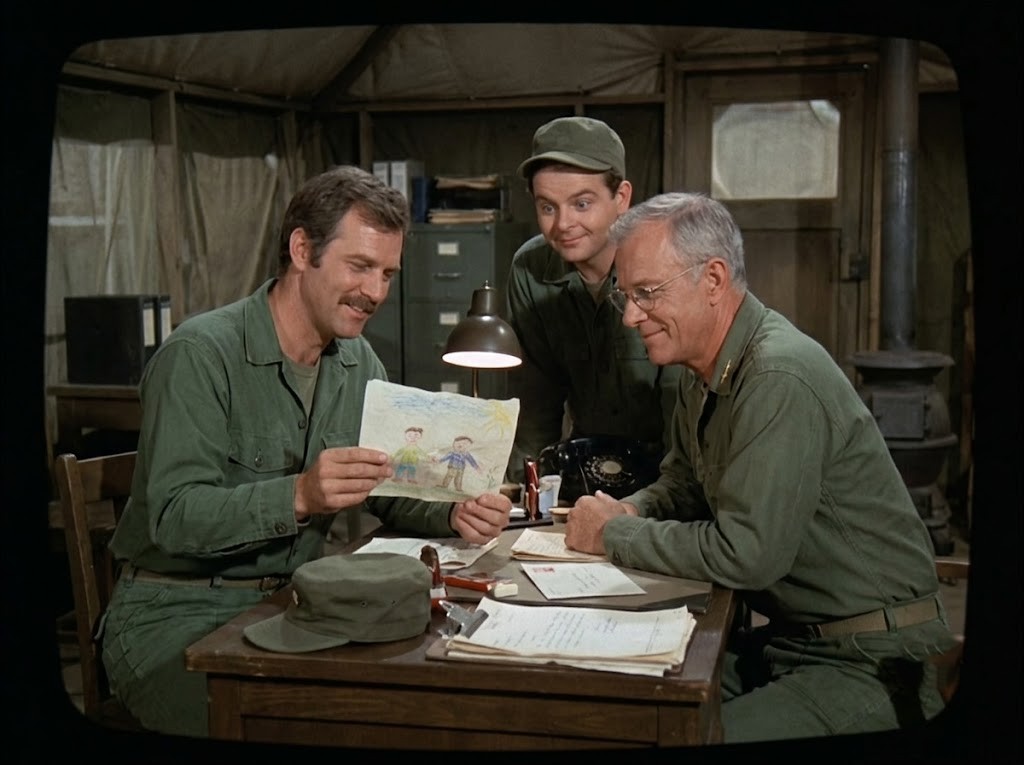
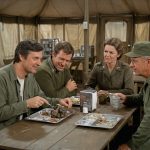
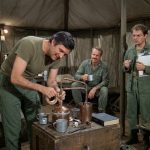
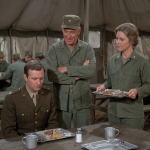
Some days, the war doesn’t knock on the door of the 4077th; it just seeps through the canvas, heavy and gray. We had just come out of a brutal, thirty-six-hour session in the Operating Room, the kind that leaves your fingers cramping, your back screaming, and your soul feeling like a piece of chewed-down leather. The smell of ether and damp earth seemed permanently baked into our fatigues, and nobody had the energy to even complain about the swamp water Sparky called coffee.
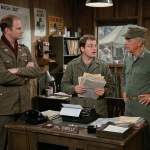
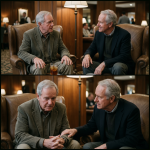
BJ Hunnicutt sat at the edge of Colonel Potter’s desk, his shoulders slouched under the weight of a exhaustion that sleep couldn’t quite fix. His mustache, usually upturned in a quick, reassuring grin, drooped slightly at the corners as he stared down at a crinkled, tear-stained piece of drawing paper.
Radar O’Reilly had slipped into the office moments before, his boots making no sound on the floorboards as he hovered just over BJ’s shoulder. His large, round spectacles caught the dim glow of the desk lamp, his face a perfect picture of innocent curiosity and gentle wonder.
Colonel Potter leaned back in his chair, his usual stern, military posture softening into the easy grace of a grandfather who had seen too many boys grow old too fast. He had a look in his eyes that wasn’t reserved for regulations or supply lines; it was the quiet, deeply buried warmth of a man who remembered what a home felt like before the army gave him a serial number.
“It arrived in the afternoon pouch from Seoul,” Radar whispered, his voice small and reverent, as if speaking too loudly might shatter the fragile piece of paper BJ was holding. “I almost didn’t see it mixed in with the medical requisitions for more plaster of Paris.”
BJ didn’t say anything at first. He just held the paper by its edges, his thumb gently smoothing out a crease where the mail bag had pressed too hard against it.
The drawing was simple, executed in the bold, frantic strokes of a child’s crayon. It depicted two figures, hand in hand under a jagged yellow sun, both wearing what looked like oversized green suits and crooked smiles.
“Erin sent it,” BJ said, his voice thick, rough around the edges from hours of shouting over the roar of incoming choppers. “Peg says she sits by the front window every Tuesday waiting for the mailman, asking if the man in the green suit is coming home today.”
He swallowed hard, his eyes tracing the uneven lines of the wax crayon. “She thinks everybody in Korea wears green, Colonel. She thinks we’re all just standing around in a big field, holding hands under the sun.”
Potter took off his glasses, clearing his throat with a sound like gravel rolling in a bucket. “A child’s perspective is a beautiful thing, Pierce… sorry, Hunnicutt. It ignores the mud. It ignores the miles.”
“But look closer, Colonel,” BJ murmured, his finger moving to the second figure in the drawing, the one next to the stick-figure version of himself. “That’s not Peg. Erin drew a little hat on this one. A little round hat with a brim turned up.”
Radar leaned in a fraction of an inch closer, his breath catching as he recognized the tiny, crudely drawn cap on the second green figure. It wasn’t a picture of BJ and his daughter, nor was it BJ and his wife.
The room went completely still, save for the distant, rhythmic thrumming of a generator somewhere near the mess tent. BJ looked up, his eyes meeting Potter’s, and the sudden, sharp ache of realization hung in the air between them, thick enough to cut with a scalpel.
“She drew Radar,” BJ said softly, a faint, bittersweet smile finally breaking through the exhaustion on his face. “In her letters, Peg told her about the boy who brings the mail and watches out for her daddy. So Erin made sure he was in the picture, too.”
Radar’s face flushed a deep, bright crimson that reached all the way to the tips of his ears. He blinked rapidly behind his glasses, his hands automatically dropping to his sides, fidgeting with the seam of his trousers as he tried to find something to look at besides the drawing.
“Me?” Radar squeaked, his voice cracking slightly in that familiar, youthful way. “She… she drew me? But she’s never even met me, Captain Hunnicutt. I’m just the guy who stamps the forms.”
“To a little girl five thousand miles away, Walter, you’re the guy keeping her father whole,” Colonel Potter said, his voice dropping into that low, paternal register that could calm a room full of panicked surgeons. He reached out, his hand resting gently on the corner of the desk near BJ’s sleeve. “And from where I’m sitting, that makes you a regular Michelangelo.”
BJ chuckled, the sound rich and human, breaking the heavy spell that had settled over the office. He turned slightly, looking up at Radar with genuine affection, the kind of look that only grows in places where people survive on nothing but shared misery and deep loyalty.
“See that, Radar? She even got your ears right,” BJ teased gently, pointing to two little brown circles on the side of the crayon head. “Though I think she was a little generous with the height. She made you almost as tall as me.”
“I could grow an inch or two before the draft is up, Captain,” Radar mumbled, though a wide, radiant smile was breaking across his face, lighting up the entire room. He leaned over further, his eyes locked on the drawing as if he wanted to memorize every single crayon stroke.
Potter picked up his pipe, unlit, and tapped it thoughtfully against his palm. “It’s a fine piece of work. Better than half the junk they hang in the museums back in Washington. It’s got honesty, Hunnicutt. That’s what’s missing from this whole damn peninsula. Honesty.”
The old Colonel looked at the two younger men, his gaze lingering on the exhaustion etched into the lines around BJ’s eyes, and then on the youthful innocence that Radar somehow managed to keep intact despite everything they witnessed daily.
“We spend all day putting people back together when they’re broken,” BJ whispered, his eyes drifting back down to the paper. “Sometimes you forget what they look like when they’re already whole. You forget that there’s a world where people just hold hands under a yellow sun.”
“That’s exactly why we keep the pieces together, son,” Potter said quietly, his eyes shining in the lamplight. “So they can go back to that sun.”
Radar reached out a hesitant finger, just barely touching the corner of the drawing. “Do you think… do you think I could get a copy of this, Captain? Not the real one, of course. That belongs on your footlocker. But maybe I could take it over to the mimeograph machine? I could run it off in purple ink.”
BJ laughed, a real, belly-shaking laugh that seemed to chase the lingering smell of the OR right out of the tent. “Radar, if you turn my daughter’s masterpiece into a purple mimeograph, she’ll never forgive you. Tell you what—you can keep it right here on the Colonel’s bulletin board for a few days. That way, whenever we forget why we’re wearing these ridiculous green suits, we can just come in here and take a look.”
Colonel Potter nodded, a rare, completely un-military grin spreading across his face as he watched his boys. “An excellent command decision, Captain. Right next to the duty roster. It’ll remind the brass that we have higher authorities to answer to than the Pentagon.”
Outside, the night air was turning cold, the Korean wind rattling the canvas walls of the administrative tent. But inside, under the warm, yellow glow of a single desk lamp, three tired men in green uniforms found themselves miles away from the mud, held together by a few scraps of crayon and the unconditional love of a little girl who was waiting for them all to come home.
Behind the charts, the regular supply shortages, and the endless roar of the choppers, the 4077th always found its way back to the things that mattered most—each other.