The Silent Stewardship of Metal Trays and Friendship
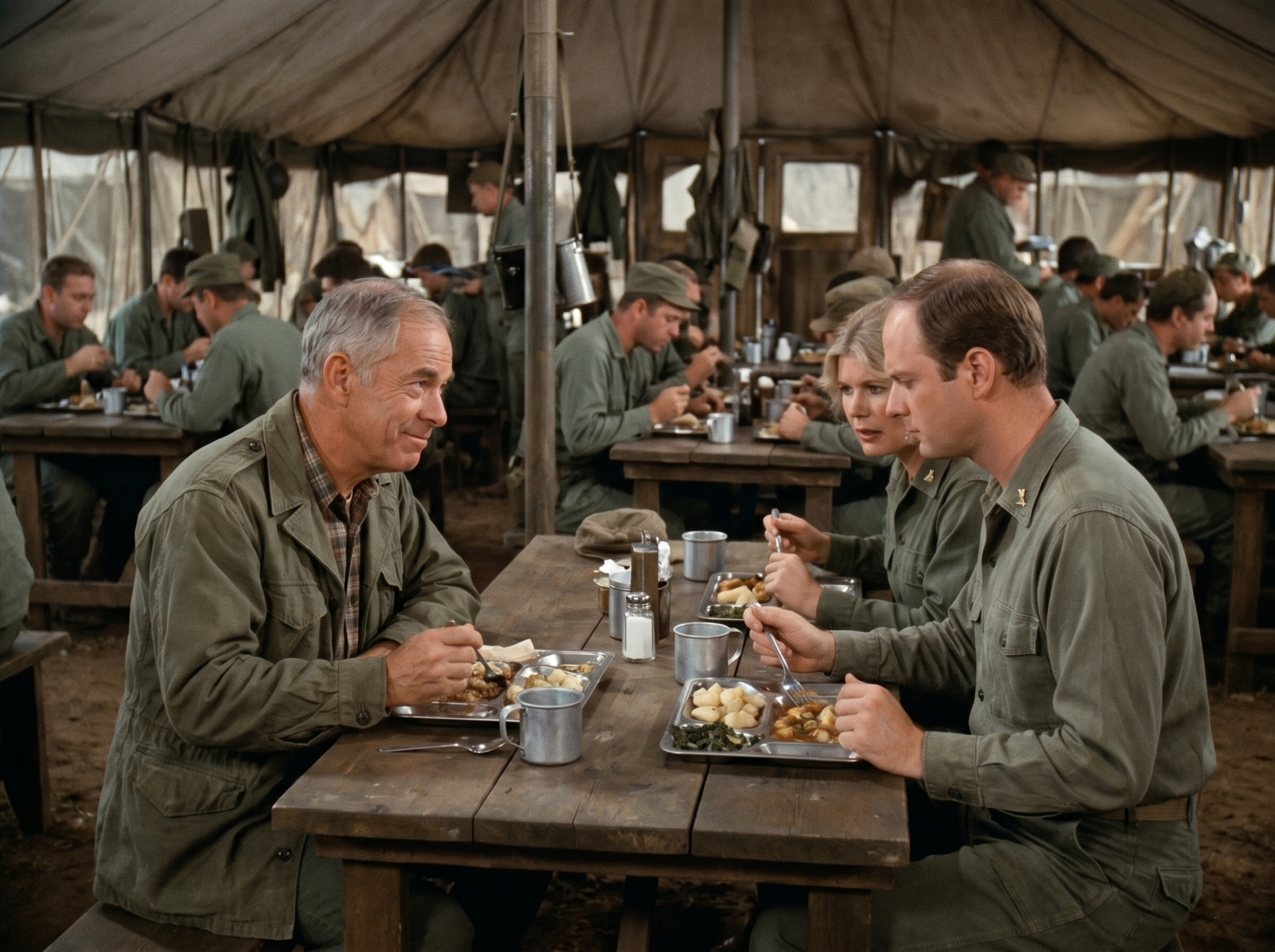
The mess tent is a familiar beast. A dinosaur of canvas and stale air, its ribcage of poles barely holding back the red dust that creeps over everything in Korea. This particular noon, the beast is breathing heavier than usual.
Lunch. It’s the one time you’re forced to confront the same, tired faces from the OR, without the mercy of green surgical gowns or masks to hide the weariness.
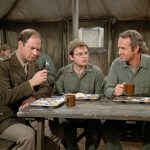
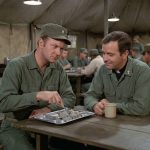
Colonel Sherman Potter sits across from his officers, his weathered face set in that dry, fatherly expression that says he’s seen worse, but he’s currently prioritizing this struggle. He dips a fork into a pile of gray stew that somehow resists gravitational forces. “I believe this stew has achieved its final form: mortar.“
Major Margaret Houlihan sits between Potter and B.J., maintaining a composed, almost defiant posture. Her focus is strictly on her meal, her hands moving with precision. She takes a bite and closes her eyes for just a second, a silent acknowledgement of culinary defeat. “At least the carrots are… bright,” she offers.
Captain B.J. Hunnicutt, on the other hand, makes no attempt to hide his exasperation. He’s staring at his tray as if it just insulted his entire family tree back in San Francisco. He picks up a single pale chunk of something and drops it, producing a wet, dull plop. “Look at this, Colonel. A single potato. If you poke it, I think it will squeak.“
Potter chuckles, a quiet, tired sound. It’s the laugh of a man who knows that in an hour, he’ll be making life-or-death decisions again, and these complaints are just steam venting. “It’s all about perspective, Hunnicutt. In some cultures, a squeaking potato is a sign of impending good fortune.“
“Or maybe just impending severe indigestion,” B.J. counters, jabbing at the stew again. He leans slightly closer to Margaret, his voice lowering but filled with shared misery. “You know what Peg is making for her sisters right now? Lemon meringue pie. Not just any lemon meringue pie. Her mother’s recipe, with a crust so flaky it practically melts into butter before you even chew.“
Margaret stops mid-chew. It’s subtle, but her composed exterior cracks for just an instant. For all her strength, for all her commitment, mentions of family, of home, of real food, hit different. B.J. knows he shouldn’t have said it, not to her. She just tightens her jaw, takes another determined bite, and doesn’t look up.
Potter watches them. He sees the silent truce they’re holding over their metal trays. He knows the weight of command, but he also knows the weight of simple human longing. He takes a long sip of his coffee—a substance that seems to have more in common with oil than any known bean. “I’ll tell you what’s impending,” Potter says quietly, leaning in, a new gravity in his voice. “Another casualty convoy. Radar just flagged a message from the 8063rd. We need to brace ourselves. This whole tent will be empty in ten minutes, and it won’t be because anyone is full.“
Potter’s words cut through the tired humor and shared complaints like a scalpel. B.J. freezes. The fork carrying the offending potato is halfway to his mouth. The visual joke is gone, replaced by the sudden, heavy reality of their situation. He looks at Potter, his eyes softening instantly. “How long?”
“Twenty minutes. Max,” Potter replies, his voice steady now, command-ready. “They are sending everything they have. They just lost a surgeon to dysentery, and another is just plain exhausted. The 4077th is going to be picking up the slack.”
Margaret finally sets down her fork. Her professional armor snaps back into place instantly. The brief flicker of personal longing is banished. “Sir, I’ll need to coordinate with nursing staff immediately. We need the extra beds in post-op set up, and I should inventory all plasma reserves. We were low yesterday.” She’s already organizing, planning, leading.
“Right away, Major,” Potter says. “Hunnicutt, you and Pierce need to clear the pre-op backlog. Mulcahy, get Klinger on the supply lines. We’re going to be living in the OR for the next thirty-six hours.” He pushed his tray slightly away, the unfinished meal forgotten.
The conversation changes completely. It’s no longer about bad potatoes or lemon meringue pie. The language is now medical, logistical, tactical. They move from being two friends and a father-figure complaining about lunch, back to a commanded team responding to a crisis. But the friendship is still the foundation, the silent understanding that they endure this together.
As B.J. stands, he looks back at Margaret, who is already scribbling notes. He gently places his hand on her shoulder for just a second. It’s not dramatic, not heavy. It’s just a simple, quiet gesture of solidarity. She looks up, her eyes meeting his for an instant, a silent acknowledgement. No words are needed. They are a found family, bonded by exhaustion, purpose, and the metal trays they all hate.
Potter is the last to stand. He takes a final look around the messy, crowded tent. The GIs at the other tables are already moving faster, responding to the invisible command signal that ripples through the camp. This tent, this messy, imperfect place, was their sanctuary, their dining room, their confession booth. And soon, it would be empty again, a quiet reminder of the real business of the 4077th.
They leave their trays behind, the bad stew growing cold on the metal surfaces. It’s just another lunch. Just another moment of shared weariness. But it’s these quiet moments, these shared struggles over terrible food and impending heartbreak, that truly bond the 4077th. In a place defined by trauma, it was the simple, messy humanity that kept them sane.
They walk out of the mess tent, the red dust swirling around their boots. They don’t talk much. The focus is ahead, on the sounds of incoming helicopters and ambulances that they can already hear in their minds. But as they go, the simple memory of Potter’s chuckle, Margaret’s control, and B.J.’s open heart stays with them. It’s the warmth of friendship, strong enough to light up the canvas ceiling and give meaning to the metal trays.
It was never just about the stew; it was about who was sharing the tray with you when the dust finally settled.