A Quiet Night in the Swamp
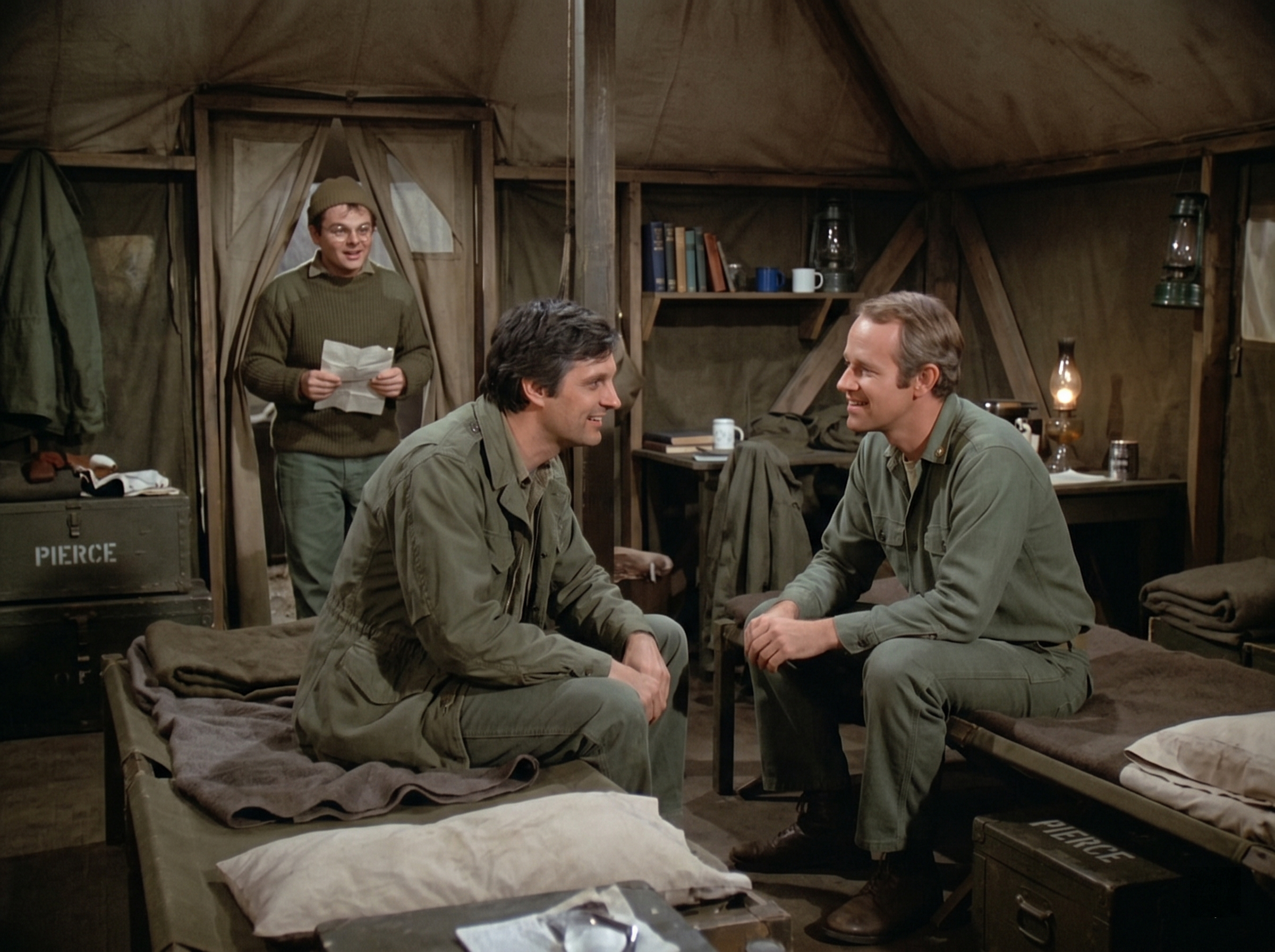
The war always seemed to stop right at the canvas flaps of the Swamp.
Inside that dusty, cluttered tent, the 4077th melted away, leaving only tired men trying desperately to remember what civilian life felt like. It was late, the kind of late where the cold Korean night finally settled into the bones, and the camp was wrapped in a rare, heavy silence. The warm, even glow of the lantern light pushed back the shadows, casting a gentle gold over the modest clutter of practical camp furniture, crumpled blankets, and scattered medical texts.
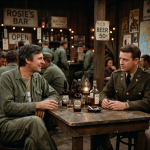
Hawkeye Pierce sat casually on the edge of his cot, wearing his worn fatigue jacket like a second skin. He was turned slightly toward his tentmate, a spark of quick attention in his eyes. He was in the middle of spinning one of his elaborate, ridiculous webs of nonsense, using his wit as a shield to keep the horrors of the operating room at bay. His expression was amused and teasing, a familiar mask that hid the deep, lingering fatigue of the day.
B.J. Hunnicutt sat across the small space, comfortably perched near Hawkeye’s cot. He was leaning forward, fully engaged in the conversation, anchored by that gentle, steady smile. B.J. always had a way of listening that made the madness feel manageable, his eyes full of thoughtful concern and quiet understanding. They were just two doctors, thousands of miles from home, finding a momentary sanctuary in each other’s company.
Then, the wooden door of the tent creaked open.
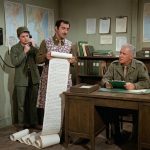
Radar O’Reilly stood half-entering the room, bundled up in his heavy olive-drab sweater and knit wool cap. He looked exactly like what he was: a kid from Iowa who had somehow wandered into a war.
But it wasn’t his winter gear that drew the doctors’ eyes; it was the piece of paper clutched in his hand.
In the 4077th, a piece of paper in the middle of the night was rarely a good thing. It usually meant a sudden influx of wounded, a ridiculous new directive from high command, or, worst of all, tragic news from the States. The warm, lighthearted atmosphere in the Swamp instantly froze. The banter died in Hawkeye’s throat, and his posture stiffened. B.J. didn’t move, but the relaxed slope of his shoulders suddenly turned rigid.
Radar stood frozen in the doorway, his eyes wide with a mix of earnest concern and something else—a shy, hesitant smile that didn’t quite match the dreaded paper in his hand.
Hawkeye took a slow breath, the amusement fading from his face as he braced himself for the inevitable blow. The silence in the tent stretched out, heavy and waiting.
“Alright, Radar,” Hawkeye said quietly, his voice losing its playful edge. “Give it to us straight. How many choppers are we expecting?”
Radar blinked, looking down at the paper and then back up at the doctors. His shy smile suddenly broke into a bright, genuine beam.
“No choppers, Captain,” Radar said, stepping fully into the warm light of the tent. “It’s not wounded. Honest.”
The collective exhale in the Swamp was almost loud enough to blow out the lantern. Hawkeye slumped back against his cot, dragging a hand down his face in exaggerated relief. B.J. let out a soft, breathy chuckle, the tension draining out of his posture as he leaned back. The sudden shift from heart-pounding dread back to safety left the room feeling lighter, the air suddenly easier to breathe.
“Don’t do that to me, Radar,” Hawkeye groaned, placing a hand dramatically over his chest. “I’m a delicate instrument of healing. My heart can’t take the suspense. If it’s not the war, what is it? Did they finally run out of powdered eggs? Please tell me the war is over because we ran out of powdered eggs.”
Radar shook his head, stepping closer to the center of the tent. “No, sir. It’s a radio message. From Sparky.”
B.J. tilted his head, his gentle smile returning. “A radio message at this hour? What’s going on, Radar?”
“Well,” Radar began, his voice dropping into that earnest, confidential tone he used when he was particularly proud of something. “Sparky was on the wire with Tokyo, trying to track down those missing spark plugs for the motor pool. And while he was waiting, he intercepted a routing error from the Army post office.”
Hawkeye raised an eyebrow, his teasing nature fully restored. “Fascinating. We’re intercepting postal errors now. Has the military finally realized they lost my discharge papers three years ago?”
“No, sir,” Radar said softly. He looked directly at B.J. “It was a telegram. It got routed to a naval base in Okinawa by mistake, and they were going to file it away until the end of the month. But Sparky saw the name and copied it down for me.”
Radar carefully unfolded the paper. It wasn’t an official form, just a blank sheet of military stationary filled with Radar’s messy, hurried handwriting.
B.J. swallowed hard, the steady warmth in his eyes suddenly replaced by a sharp, desperate hope. “From Peg?” he asked, his voice barely a whisper.
“Yes, sir,” Radar nodded. He cleared his throat, holding the paper up to the lantern light. “It says: ‘Erin took her first steps today. Walked straight to the front door. We miss you. Love, Peg.'”
The Swamp went completely still.
B.J. stared at Radar, his mouth slightly open, processing the words. The war, the dirt, the exhaustion, the endless miles between Korea and California—all of it vanished in the space of a single second. A profound, overwhelming tenderness washed over his face. He looked down at his hands, a quiet, watery laugh escaping his lips as he shook his head.
“First steps,” B.J. whispered to himself, the words carrying the weight of a thousand prayers. “She walked.”
Hawkeye watched his friend, his own face softening into a look of absolute, unconditional affection. All the sharp edges of his usual sarcasm melted away. He knew exactly what that piece of paper meant to B.J. It was a lifeline. It was proof that the real world still existed, that time was still moving forward in a place where people didn’t wear olive drab.
Hawkeye reached over, lightly clapping B.J. on the shoulder. “Well, what do you know,” Hawkeye said gently. “A Hunnicutt on the move. Better tell the people of San Francisco to clear the sidewalks.”
B.J. looked up, his eyes shining with unshed tears, but his smile was radiant. “To the front door,” he murmured. “She was probably looking for her old man.”
Radar stood quietly, his hands clutched together in front of his sweater. He looked incredibly proud, his wide-eyed concern replaced by the deep satisfaction of having delivered a tiny miracle. He knew he wasn’t just a clerk; in moments like this, he was the keeper of their fragile humanity.
“Thank you, Radar,” B.J. said, his voice thick with emotion. “Thank Sparky for me, too. I… I can’t tell you what this means.”
“It’s just my job, sir,” Radar said bashfully, looking down at his boots. “I figured you’d want to know.”
“You figured right,” Hawkeye said, his tone warm and sincere. “You’re a good man, Radar. Now get out of here before I ruin my reputation and hug you.”
Radar grinned, sketched a sloppy, informal salute, and slipped back out into the cold night, leaving the two doctors alone once more. The wooden door flapped shut, sealing the Swamp back into its private world.
The lantern continued to burn, casting long, peaceful shadows over the stenciled footlockers and the worn canvas. The war was still out there, waiting for them in the morning. But for tonight, inside this small, cluttered tent, the world was perfect.
In a place built on surviving the worst of humanity, it was the quiet, shared moments of love from home that truly kept them alive.