The Music We Mend
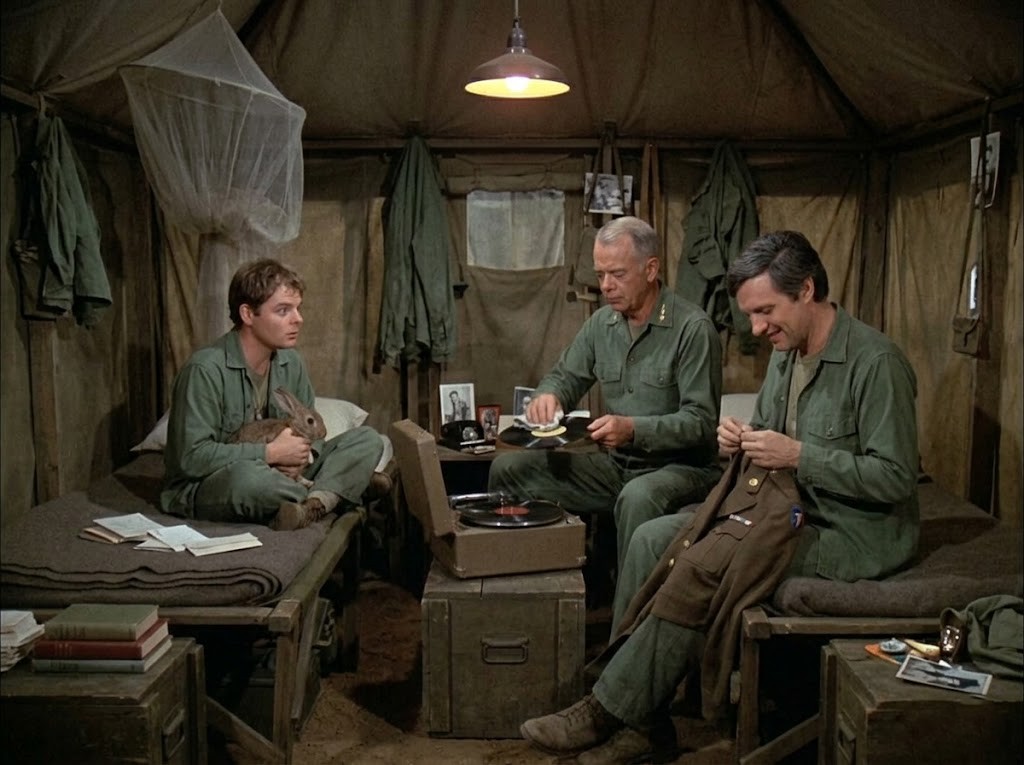
The war had a cruel way of wearing down everything, from the leather soles of your boots to the steady rhythm of your heart. But inside the canvas walls of the Swamp, three different generations always found a quiet way to stitch the frayed edges back together.
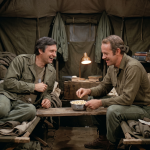
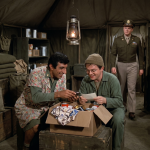
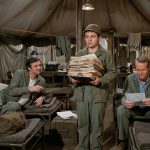
The air inside the tent was thick with the familiar smells of damp canvas, old coffee, and the faint, metallic tang of the operating room they had all left just an hour ago. A single overhead bulb hung from the center pole, casting a warm, amber glow over three exhausted men trying to find their footing after a long shift.
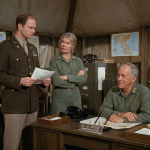
Colonel Potter sat on the edge of a wooden crate in the center of the room, his face etched with a deeper fatigue than usual. In his weathered hands, he held a vintage vinyl record, turning it slowly and wiping the grooved surface with a scrap of clean white cloth. His movements were precise, deliberate, and fiercely protective, as if he were cleaning a piece of delicate cavalry brass from his youth.
Across from him, Radar sat cross-legged on his cot, cradling a small, brown-and-white rabbit against his chest. The little creature was quiet, its long ears twitching occasionally as Radar gently stroked its fur, his innocent eyes locked onto the Colonel with a look of intense, quiet concern.
“You think it’ll still play, Colonel?” Radar asked softly, his voice barely rising above the hum of the distant generator. “The supply truck took that bumpy road by the creek. I tried to keep the box flat, but those potholes are something fierce.”
Potter didn’t look up immediately, his thumb tracing the outer rim of the wax disc. “A little Korean dust and a few bumps can’t kill a melody, Radar,” he said, his voice a dry, reassuring rumble. “Mildred sent this all the way from Hannibal. It’s our anniversary song. We’ve danced to this every year since nineteen-twenty-four, even if it was just in our minds.”
On the adjoining cot, Hawkeye was hunched over a brown military dress uniform, his long fingers carefully navigating a needle and thread through a torn seam near the shoulder patch. For once, his lips weren’t moving with a rapid-fire joke or a cynical remark about the army; he was uncharacteristically quiet, his eyes focused entirely on the fabric.
“You know, Pierce,” Potter murmured, noticing the surgeon’s silence, “I didn’t think I’d ever see the day you voluntarily picked up a needle for something that didn’t require a dose of penicillin first.”
Hawkeye let out a soft, dry chuckle, pulling the thread taut with a gentle tug. “Consider it a localized peace offering to the universe, Colonel. If I can fix this sleeve, maybe the universe will fix the plumbing in the doctors’ mess. Besides, a man’s dress uniform shouldn’t look like it lost a fight with a low-flying mortar.”
He glanced over at the record in Potter’s hands, his sharp eyes softening behind his tired expression. He knew exactly what that piece of plastic meant to the old man, especially tonight, with the artillery echoing faintly in the hills like an unwelcome neighbor.
Potter carefully placed the cleaned record onto the small, portable turntable that rested on a crate between them. He turned the crank, the mechanical gears inside humming alive, and gently lifted the heavy tone arm.
Radar leaned forward, his grip tightening slightly around the rabbit, holding his breath as the needle descended toward the spinning wax. Hawkeye paused his sewing, the needle hovering in mid-air, the entire tent falling into a breathless, expectant silence.
The needle touched down, but instead of the sweet, rolling brass of a 1920s dance band, a harsh, violent scratch erupted from the speaker. The tone arm skipped wildly across the grooves, emitting a sharp, agonizing screech that made the rabbit leap slightly in Radar’s arms.
Potter’s face instantly fell, his shoulders dropping an inch as the needle skated uselessly across the ruined surface of his anniversary song. The stoic, unbreakable frame of the old cavalry officer seemed to shrink for a fraction of a second, revealing the deep, aching loneliness of a man a million miles away from the woman he loved.
The harsh scratching sound continued to hiss from the tiny speaker, cutting through the warm air of the tent like a piece of shrapnel until Potter reached out and lifted the arm with a heavy, trembling sigh. He didn’t say a word; he just stared down at the black disc, his thumb gently smoothing over a deep, jagged scratch that crossed the center tracks.
Radar looked as though he might cry, his earnest face tightening with guilt. “I’m sorry, Colonel. I should’ve wrapped it in my extra blankets. I should’ve carried it on my lap the whole way from Seoul.”
“Don’t be a fool, son,” Potter said quietly, his voice lacking its usual bark, replaced instead by a profound, gentle weariness. “It’s not your fault. The road is rough, the world is rougher. You can’t protect a piece of wax from a war.”
Hawkeye set his sewing down on the blanketed cot, his cynical armor completely melting away. He looked at the older man, recognizing the specific kind of heartbreak that didn’t bleed but hurt just as much. It was the sudden, sharp reminder that they were all prisoners of time and geography.
“Hold on a second, brass hat,” Hawkeye said, sliding off his cot and kneeling down by the wooden crate. “Let a real specialist take a look at the patient. I’ve operated on hearts that were in worse shape than this big band.”
Potter watched with a skeptical but desperate glimmer in his eyes as Hawkeye leaned in close, inspecting the turntable. He didn’t mock the situation; he treated it with the same intense focus he used when searching for a fragment in a dark abdomen.
“The scratch is deep, yeah, but look at the tone arm,” Hawkeye murmured, tapping the metal casing gently. “It’s got no counterweight. The needle is bouncing around like a jeep on a corduroy road. It’s pressing too hard into the wound.”
Radar blinked, adjusting the rabbit in his arms. “Can you fix it, Captain Hawkeye?”
“Radar, my boy, I can fix anything except the draft board,” Hawkeye cracked, though his tone was entirely tender. He reached into his pocket and pulled out a small, worn copper coin—a lucky piece he’d carried since leaving Maine. “We need a precise, highly sophisticated surgical implant. Colonel, may I borrow a small piece of that medical tape from your desk?”
Potter handed it over without a word, watching intensely as the tall surgeon carefully taped the small coin to the top of the tone arm, perfectly adjusting its balance. Then, Hawkeye took a clean cotton swab, dipped it into a small bottle of rubbing alcohol on his bedside table, and meticulously cleaned the scratched groove, smoothing down the tiny burrs of plastic with the back of his thumbnail.
“Alright, Radar, bring the kid over for moral support,” Hawkeye whispered, gesturing to the rabbit. “Colonel, if you please. Do the honors.”
Potter hesitated for a second, then reached out and turned the crank once more. He lowered the needle, his fingers steadier this time, guided by the quiet hope that filled the small canvas room.
The needle met the vinyl with a soft, rhythmic tick-tick-tick, but as it passed over the damaged section, the counterweight held true. The scratch remained as a faint, steady heartbeat in the background, but out of the speaker came the clear, beautiful, soaring notes of a clarinet, followed by the warm swell of a ballroom orchestra.
A slow, brilliant smile broke through Potter’s thick mustache, his eyes crinkling at the corners with an overwhelming wave of relief and nostalgia. He closed his eyes for a brief moment, his head nodding in time with the music, transported far away from the mud of Korea and back into a brightly lit parlor in Missouri.
Radar let out a joyful breath, a grin spreading across his face as he looked up at Hawkeye. “You did it, Captain! It sounds beautiful.”
“It has character now, Radar,” Hawkeye said softly, sitting back on his heels and picking up his needle and thread again. “A little scratch just proves it survived the journey. Like the rest of us.”
Potter looked at Hawkeye, then at Radar, a quiet, paternal warmth shining in his gaze that bypassed all military rank. “Thank you, Pierce. Thank you, Radar. Mildred would appreciate what you boys did tonight. She always did say music sounds better when you have to work for it.”
The three of them sat in the dim tent as the old record spun, the music drifting through the canvas seams and out into the cold Korean night. Hawkeye quietly resumed mending his jacket, humming low under his breath; Radar kept stroking his rabbit, completely at peace; and Colonel Potter leaned back, his heart momentarily mended by the sweetest sound in the world—the sound of home, kept alive by the family he had found in the mud.
Sometimes, the best medicine at the 4077th didn’t come from a bottle, but from a scratched old record and the friends who refused to let the music stop.