The Taste of Home, Served with a Side of Mystery
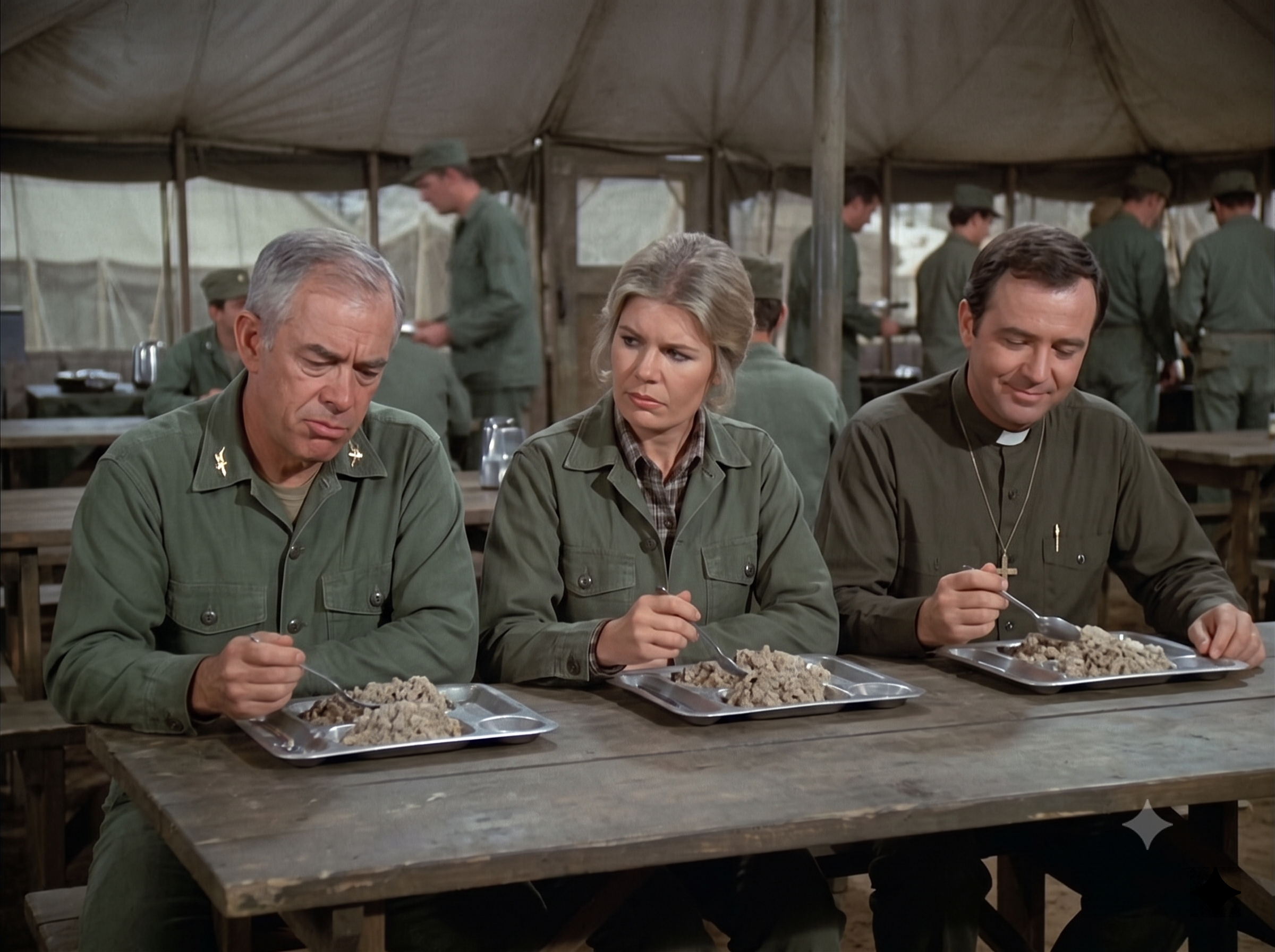
The mess tent at the 4077th wasn’t just a place to eat; it was the only theater in Korea where the performance never stopped, and the reviews were always terrible.
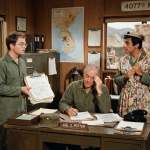
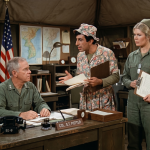
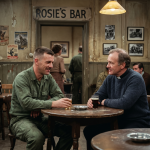
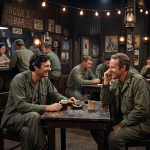
Colonel Potter, Major Houlihan, and Father Mulcahy sat at their usual scarred wooden table, their faces illuminated by the harsh, flat light filtering through the canvas overhead.
It was a quiet afternoon, a rare, golden lull between the chaotic influxes of ambulances.
Potter stared down at the gray, nondescript mound on his metal tray, his expression one of deep, philosophical suspicion.
“I’ve spent forty years in the Army,” Potter grumbled, prodding the substance with his fork, “and I’ve eaten everything from C-rations to boot leather. But I’ll be damned if I can identify the genus or species of this particular offering.”
Margaret, usually sharp and ready to defend the logistics of the camp, was uncharacteristically silent, her gaze fixed on the same mysterious heap.
Her brow was furrowed, not in anger, but in a weary, contemplative sort of confusion.
Father Mulcahy, ever the diplomat, offered a small, hopeful smile, though his grip on his own fork was tentative, as if he were preparing to face a moral dilemma.
“It could be anything, Colonel,” the Chaplain said gently, his eyes twinkling with a soft, quiet amusement.
“Perhaps it’s a regional specialty,” Margaret added, though her voice lacked its usual snap, sounding instead like someone who had spent one too many hours in triage.
Suddenly, Potter took a tentative bite, his face freezing in mid-chew as he looked at his companions.
“Margaret,” he whispered, his voice dangerously low, “I think I just found something in this stew that I’m fairly certain is still wearing a collar.”
Margaret let out a short, stifled laugh that quickly dissolved into a cough, the tension of the long week finally breaking in the dim light of the tent.
Father Mulcahy shifted, his eyes widening as he looked at the plate, then back to the Colonel, who was now carefully dissecting his meal with the precision of a surgeon.
“Good heavens,” the Chaplain breathed, his hand hovering over his own tray. “Are you quite certain?”
“It’s not a dog, Father,” Potter sighed, his shoulders dropping as the brief spike of mock-alarm faded into a tired, familiar resignation. “It’s just… mystery. Pure, unadulterated, military-grade mystery.”
Margaret finally took a bite, chewing slowly, her eyes drifting toward the entrance of the tent where the late afternoon sun cast long, dusty shadows.
She looked at the Colonel, then at the Chaplain, and for a fleeting moment, the professional veneer that protected her from the world dropped away entirely.
“It tastes like Monday,” she said softly, a ghost of a smile playing on her lips. “It tastes like every bad decision I’ve ever made, served with a side of gravy.”
Father Mulcahy laughed then, a genuine, warm sound that filled the small space between them and seemed to push back the ghosts of the day.
“I suppose,” the Father said, “that we should be grateful for the surprise. If we knew exactly what we were eating, we might have to actually complain.”
Potter chuckled, a dry, raspy sound, and reached over to tap the table with his knuckles.
“You’re a good man, Father. And Margaret, you’re the only person I know who can make a tragedy sound like a Sunday school lesson.”
They sat there for a while longer, three people who had seen more than their fair share of the world’s edges, finding a strange, quiet comfort in the shared absurdity of the moment.
The food was still terrible, the tent was still drafty, and the war was still waiting just outside the canvas flaps.
But in that small, wooden-table sanctuary, there was a sense of profound, unspoken loyalty—a realization that as long as they were sitting together, the mystery didn’t really matter.
It was enough to be in the company of friends who knew exactly what you were feeling, even when you weren’t saying a word.
They finished their meal in a companionable silence, the weight of the day slowly lifting as the evening light softened the harsh lines of the camp.
It wasn’t a feast, and it certainly wasn’t a home-cooked meal, but in the heart of Korea, it was as close to family as they were going to get.
Sometimes, the best part of the day is just surviving it with the people you’ve learned to call your own.