The Sunday Afternoon Bowl at the 4077th
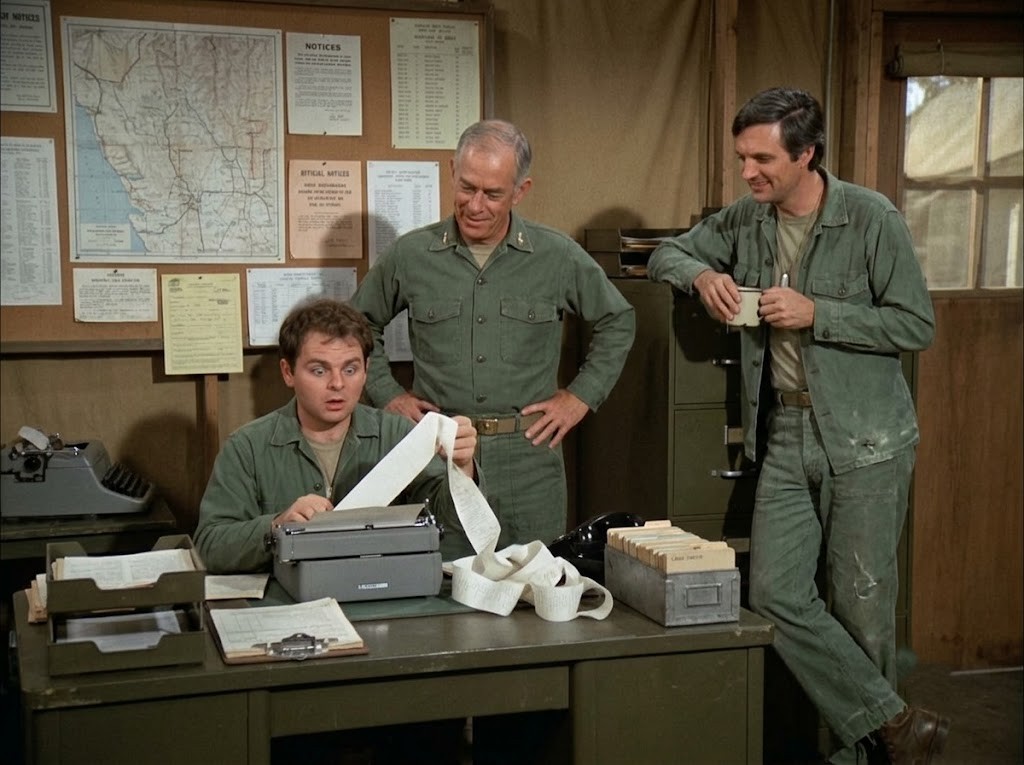
The dust of Korea never really settles; it just waits for a reason to kick up again.
On this particular afternoon, the air at the 4077th was heavy with that familiar, stifling stillness that only comes between a chopper flight and a fresh influx of patients. The camp felt fragile, held together by nothing more than plywood, canvas, and a shared, desperate need to believe that life was still happening somewhere else.
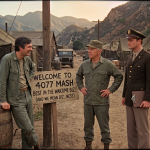
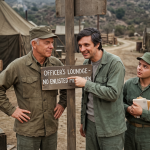
Radar O’Reilly stood near the supply tent, looking for all the world like a man holding the weight of the entire world on a piece of painted plywood. He held the sign for the “Tokyo Bowl – 4077th Open” with a protective, almost sacred grip, his brow furrowed in deep, earnest concentration.
Hawkeye and B.J. had wandered over, nursing their ubiquitous tin mugs of questionable coffee, their expressions caught in that delicate balance between genuine amusement and the kind of profound fatigue that only a surgeon in a war zone understands.
“Radar,” Hawkeye said, his voice dropping into that familiar, dry cadence that usually preceded a lecture on the futility of human endeavor. “I appreciate the enthusiasm. I really do. But unless this ‘Bowl’ involves a buffet of non-canned meat and a bathtub full of gin, I’m afraid the gridiron might just be a bridge too far for my sanity.”
B.J. leaned in, his smile warm and steady, though his eyes looked tired. He tapped the painted football on the sign with a gentle finger. “It’s a nice touch, Radar. Truly. But look at us. We’re surgeons, not athletes. The last time I tried to run a play, I think I tripped over my own stethoscope.”
Radar looked between them, his eyes wide and pleading, his lower lip trembling just slightly with the pressure of his mission. “But Colonel Potter said it was okay! He said we need… he said we need morale. And Klinger is already scouting out a referee uniform, and if we don’t start the game by three, the whole schedule falls apart!”
Suddenly, a sharp, distant whistle cut through the still air—the sound of an incoming bird. The playfulness vanished from Hawkeye’s face, replaced instantly by the cold, razor-sharp focus of a man who knew exactly what that sound meant.
The three of them froze, the sign still held aloft, as the first rotor blade began to thrum against the mountains, signaling that the afternoon of games was about to be traded for an afternoon of triage.
The chopper banked, kicking up a storm of grit that made everyone instinctively shield their faces. The dream of the Tokyo Bowl didn’t evaporate; it just folded inward, tucked away in the back of their minds, a small, stubborn protest against the reality that was about to land on their doorstep.
“Well,” Hawkeye said, his voice flat and devoid of its usual irony. “So much for the opening kickoff.”
Radar looked devastated, his fingers white-knuckled on the sign. He looked at the medical tents, then back at his friends, his shoulders slumping. “I… I can put it in storage, guys. It doesn’t have to be today.”
B.J. reached out, placing a firm, grounding hand on Radar’s shoulder. He didn’t take the sign away. Instead, he straightened it. “Hold onto it, Radar. Keep it right here. We’re going to need it when we come out the other side.”
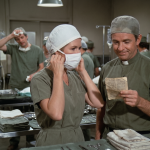
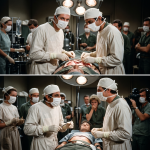
The next few hours were a blur of green scrubs, bright lights, and the steady, rhythmic beeping of monitors—a different kind of contest, one where the score was counted in lives saved and the only trophy was a chance to sleep for three hours.
When the sun finally began to dip behind the jagged hills, painting the sky in shades of bruised purple and fire-orange, the camp was quiet again. The surgeons emerged from the OR, moving like ghosts, their faces etched with the exhaustion that settles into the bone.
Hawkeye walked out into the cool evening air, his scrub shirt stained and his hands shaking slightly as he pulled a cigarette from his pocket. He saw a small crowd gathered near the supply tent.
There, in the fading light, was the sign.
Radar had hammered it into the ground near the center of the camp. B.J., Winchester, and even Colonel Potter were standing around it, holding mugs of something that smelled suspiciously like real scotch. Klinger was there too, wearing a ridiculously oversized whistle around his neck and looking proud.
“Thought we’d get the practice squad together for a walkthrough,” B.J. said softly, nodding at Hawkeye as he approached.
Hawkeye looked at the sign—the “4077th Open”—and the absurdity of it hit him. It was ridiculous. It was childish. It was the most beautiful, human thing he had ever seen.
He didn’t make a joke. He didn’t offer a witty retort about the state of American sports. He just walked over, took the mug B.J. offered him, and stood in the circle of his friends.
“I believe,” Hawkeye said, his voice cracking just a little, “that I’m the starting quarterback. But I’m going to need a very long halftime.”
They stood there for a long time, not talking about the war, not talking about the wounded, just standing in the dirt of a place that should have broken them, holding onto a wooden sign that reminded them they were still, despite everything, just people.
The wind picked up, rustling the canvas of the tents, but for the first time in weeks, the air didn’t feel heavy. It felt like home.
In the end, it wasn’t about the game; it was about the fact that they were all still there, together, waiting for the whistle to blow.