The Sweetness of the Bottom of the Pot
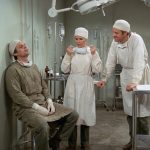
The operating room clock doesn’t tick; it mocks. For eighteen hours straight, the only sound in the 4077th had been the rhythmic, metallic snap of hemostats and the steady, exhausting drone of the generators.
Now, the silence of the aftermath was heavier than the noise.
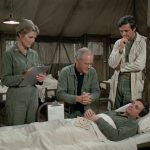
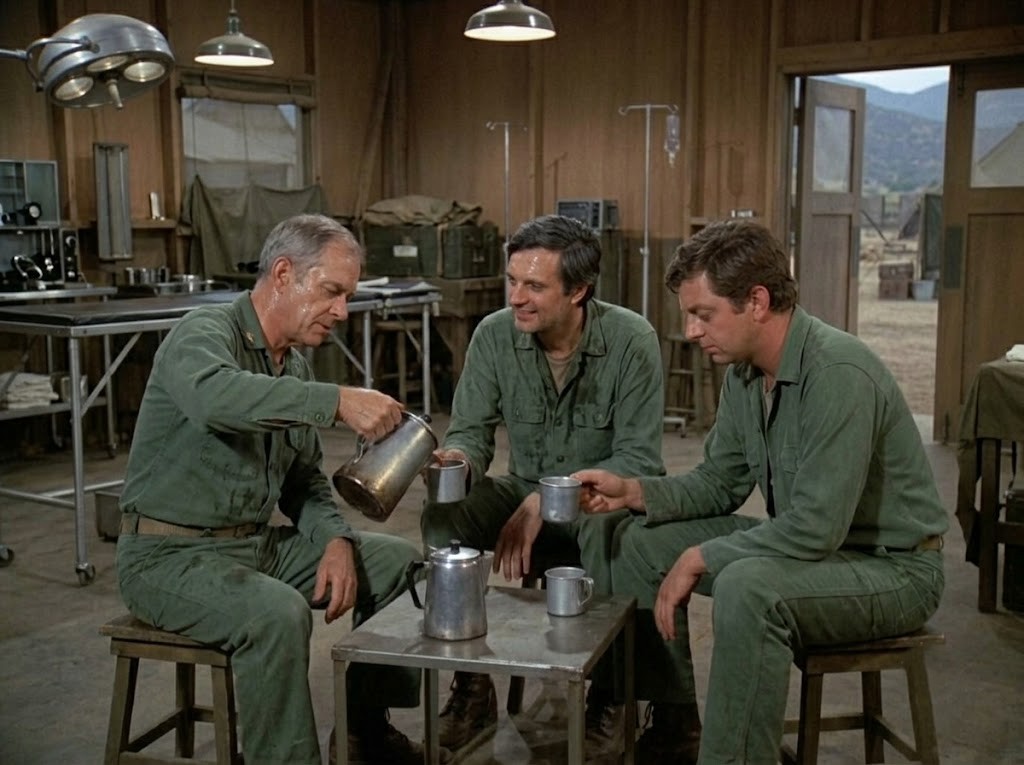
In the corner of the scrub room, three men sat on wooden stools around a small, dented stainless-steel table. They were caked in dried sweat, their green fatigues darkened by the heat of the overhead lights and the sheer physical toll of another endless influx of casualties.
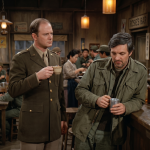
Colonel Potter leaned forward, his hands steady despite a faint tremor born of pure exhaustion. He gripped the handle of a battered, scorched tin coffee pot, carefully tilting it toward the metal cup held by Hawkeye Pierce.
Hawkeye sat in the middle, a weary, almost ghostly smile playing on his lips. Beside him sat B.J. Hunnicutt, staring down at his own empty cup with a gaze that seemed focused on something three thousand miles away.
“Careful, Pierce,” Potter muttered, his voice raspy like gravel turning over in a riverbed. “This stuff has been boiling since yesterday morning. I think it’s developed its own central nervous system.”
“At this point, Colonel, I’d drink battery acid if it had a hint of chicory,” Hawkeye said, his usual rapid-fire wit slowed down to a sluggish crawl. He watched the dark fluid stream into his cup, the steam rising to coat his face in a warm, bitter mist.
“Don’t insult battery acid, Hawk,” B.J. murmured without looking up. His voice was quiet, lacking its usual bouncy resilience. “Battery acid has standards. This stuff tastes like the inside of a jeep tire.”
Potter grunted, shifting the pot to B.J.’s cup. “It builds character, Hunnicutt. In the Cavalry, we used to use the dregs to polish the horseshoes. Keep your cup still.”
B.J. held the cup out, but his grip was loose. His mind wasn’t on the coffee, and it wasn’t on the scrub room.
The day had been a brutal one, even by the 4077th’s standards. A young kid from Iowa—a boy who looked like he belonged behind a tractor, not on a stretcher—had spent four hours on B.J.’s table. They had saved him, barely, but the boy’s quiet, terrified whimpers for his mother had dug deep under B.J.’s skin, waking up the dull, constant ache for a little girl in San Francisco who was growing up without her father.
Hawkeye noticed the distance in his friend’s eyes. He always noticed.
“Hey, Beej,” Hawkeye said softly, nudging B.J.’s knee with his own. “Come back to earth. The coffee’s terrible, but it’s the only ticket out of the twilight zone we’ve got right now.”
B.J. blinked, forcing a small, tight smile that didn’t reach his tired eyes. “Yeah. Sorry. Just thinking.”
“That’s your first mistake,” Potter said, setting the heavy tin pot down on the table with a sharp clink. “Out here, thinking past the next five minutes is a luxury we can’t afford. Drink up.”
But as B.J. lifted the metal mug to his lips, his hand gave a sudden, violent jerk. The accumulated fatigue of thirty-six hours without sleep caught up to him in a single fraction of a second.
The mug slipped from his fingers, clattering against the metal table, sending the scalding, pitch-black coffee splashing across the surface, directly toward the fresh, clean charts Radar had just left behind.
The sudden crash echoed like a gunshot in the quiet room.
For a second, nobody moved. The dark liquid spread rapidly across the stainless steel, a miniature tide of bitter failure, dripping off the edge and splashing onto B.J.’s boots.
B.J. didn’t pull his feet back. He just stared at the mess, his shoulders slumping, his face turning a pale, hollow color under the dirt. He looked completely defeated, pushed right to the absolute edge of his endurance.
“I’ve got it, I’ve got it,” Hawkeye said instantly, his voice stripping away all the sarcasm, replaced entirely by an urgent, protective tenderness.
Before the coffee could ruin the paperwork, Hawkeye snatched the charts off the table with lightning speed. With his other hand, he grabbed a discarded surgical towel from the side bin and threw it over the puddle, soaking up the mess before it could drip any further.
“Look at that,” Hawkeye joked quietly, trying to throw a shield of humor over his friend. “The Hunnicutt style of interior decorating. It really opens up the room, Beej. Very avant-garde.”
B.J. didn’t laugh. He rubbed a hand over his face, his fingers trembling. “I’m sorry. I’m just… I’m sorry, Colonel.”
Colonel Potter looked at the younger surgeon. He didn’t see a captain who had dropped a cup; he saw a son, a father, a good man who was carrying the weight of the world on two shoulders that were tired of bending.
Potter didn’t yell. He didn’t command. He reached out, took the empty, fallen mug, and set it upright.
“Nothing to apologize for, Son,” Potter said, his voice dropping into that deep, fatherly register that always brought an anchor to the storm. “If I had a nickel for every gallon of mud I’ve spilled in my thirty years, the Army would be renting its tanks from me.”
Potter reached for the second, smaller aluminum pot sitting on the table—the one he kept on the back of the stove, containing the last, precious reservoir of hot water. He poured a splash into B.J.’s cup, then picked up the main pot and filled it to the brim with the remaining coffee.
“There,” Potter said gently. “Cut it with a little water. Smooths out the rough edges. Just like life out here.”
Hawkeye leaned back on his stool, watching B.J. carefully. “You know, Beej, back in Maine, my dad used to say that a man who never spills his coffee is a man who isn’t working hard enough. Of course, he also said that anyone who drinks it black is hiding something from the tax man, but that’s another story.”
A tiny, genuine smile finally cracked through B.J.’s exhaustion. He looked up at Hawkeye, then at Potter. The cold, isolating wall of fatigue that had threatened to swallow him whole just a moment ago began to melt under the quiet warmth of the room.
“Thanks, Hawk,” B.J. said quietly. He picked up the refilled mug, using both hands this time to steady it. He took a sip. It was still bitter, still terrible, but it was warm, and it was theirs.
“Don’t thank me,” Hawkeye said, raising his own cup in a silent toast. “Thank the Colonel. He’s the one providing the jet fuel.”
Potter raised his cup too, looking at the two younger doctors with a proud, tired affection. They were thousands of miles from home, surrounded by mud, misery, and the endless drumbeat of war, but in this tiny, cramped scrub room, they had found a strange kind of peace.
“To the 4077th,” Potter said softly. “Where the coffee is bad, the hours are worse, but the company is the best a man could ask for.”
They drank together in silence, the quiet camaraderie of the room a fragile, beautiful shield against the harsh world just outside the door. They knew the choppers would come back eventually. They knew the bell would ring again. But for now, the coffee was hot, the friendship was real, and they were together.
Behind the front lines of the 4077th, hope wasn’t found in grand speeches, but in the quiet warmth of a shared tin cup and the friends who wouldn’t let you fall.