The Day They Almost Broke the Ink Ribbon
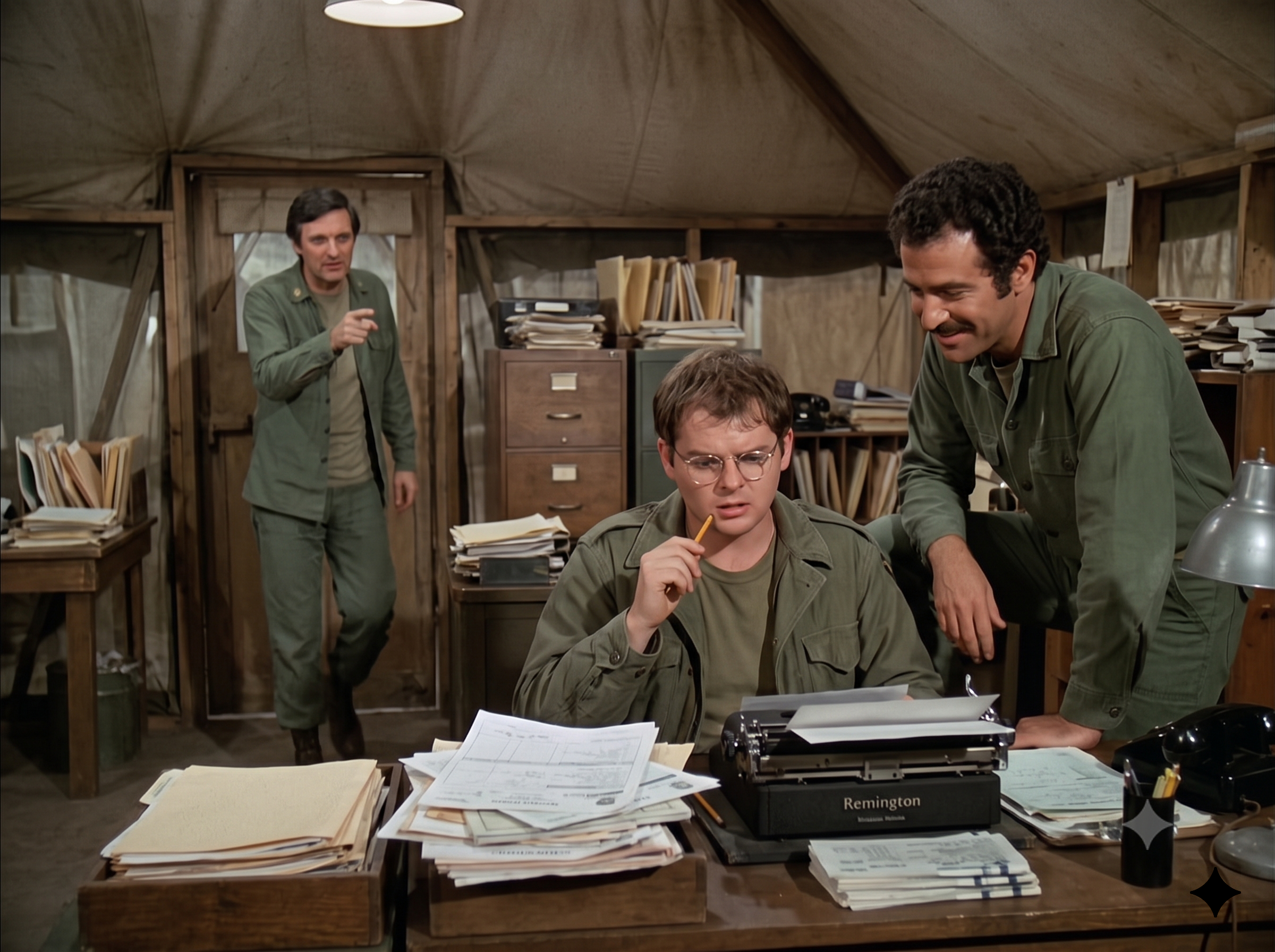
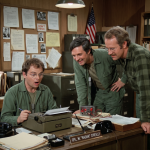
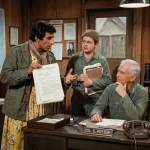
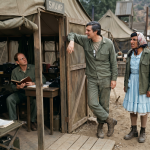
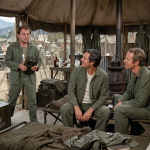
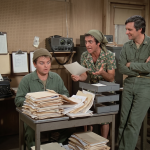
If you had walked into the 4077th’s main office that particular afternoon, you would have seen a scene you could practically set your watch by. Or your calendar. It was the same four canvas walls, the same mountain of mimeograph paper, and the same four men, frozen like statues in the perpetual dance of Army paperwork and human fatigue. Well, except maybe for Hawkeye Pierce, who usually brought his own peculiar kind of perpetual motion.
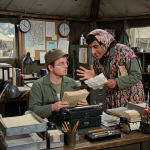
This moment, though, was different. It wasn’t a medical emergency, and it wasn’t a bureaucratic disaster (at least, not *another* one). It was a moment of quiet, focused desperation. Radar O’Reilly sat before his clattering Remington typewriter, his face a perfect picture of earnest worry. The collar of his fatigue jacket was hiked up, and his circular glasses slid slightly down his nose as his finger hovered over the keys. This was the fifth draft he’d attempted that day, and if this one didn’t take, he was sure he was doomed to a lifetime of court-martials.
The subject wasn’t a requisition for more penicillin, or a complaint about the lack of acceptable coffee. It was something far more terrifying: a letter to Colonel Potter. Specifically, a request for a three-day pass for Corporal Klinger to visit his presumably ailing uncle in Toledo. It was a request that every officer, clerk, and goat within a twenty-mile radius knew would be flatly denied, usually with a colorful metaphor involving mule manure.
But Klinger had pleaded. The man had eyes like a kicked puppy, even when they were rimmed with mascara. And Radar, bless his naive heart, couldn’t say no. He felt that perhaps a masterpiece of polite pleading might crack the Colonel’s stony resolve.
So he was stuck. He had the typewriter. He had the paper. He had a pencil clenched between his teeth like a desperate pirate. He just didn’t have the words.
Hovering over his right shoulder was Captain B.J. Hunnicutt, a man whose gentle heart was as reliable as his mustache. B.J. leaned in, his expression a mix of amusement and genuine concern. He was trying to offer subtle suggestions—phrases about familial duty and medical necessity—but he was also enjoying the absurdity. He knew, with absolute certainty, that this letter was a lost cause.
And then there was Hawkeye.
Hawkeye Pierce didn’t walk into a room; he materialized, bringing with him a gust of energy and the faint smell of something illegal being brewed. He had burst through the office door, finger already extended, his mouth open to deliver a witty remark that was at least four steps ahead of the current conversation. He was the perpetual disruptor, the anti-bureaucracy. He’d seen the huddle. He’d seen the typewriter. He knew exactly what was going on.
“Wait!” Hawkeye’s voice cut through the soft rhythm of Radar’s tapping. “Freeze frame! Hold everything, don’t press a single consonant! We are on the precipice of an artistic disaster. I can smell the terrible prose from here, and it smells faintly of mothballs and bad melodrama.”
Radar sighed, his shoulders slumping. He looked over at B.J., who just shrugged. B.J. knew when the show had started.
“Cap’n Pierce,” Radar began, his voice barely a squeak. “I’m just tryin’ to help Klinger. You know how he is about family.”
“I know how he is about dresses, Radar! We all know!” Hawkeye replied, now standing fully in the doorway, pointing with a dramatic flourish. “What you are typing there is not a letter. It is a work of fiction. A Greek tragedy. A three-act play entitled ‘The Uncle Who Cried Wolf,’ starring Max Klinger and featuring a cameo appearance by a very large pile of rejection. You can’t just type this stuff! It requires *inspiration*. Finesse! A soul!”
“But I was just about to write ‘In conclusion, his condition is truly pitiable,'” Radar stammered, tapping his pencil.
“‘Pitiable’?” Hawkeye fake-gagged. “My God, son, that word is so dry it has dandruff! We need life! We need emotion! You can’t just request mercy; you have to *evoke* it. You must paint a picture with your typewriter ribbons!” He stepped further into the room, abandoning the doorway and closing the distance. The energy in the office had shifted from worried silence to theatrical anticipation. The tension, the real worry, was about to break. He leaned in closer to Radar, his voice dropping to a theatrical whisper, his finger now inches from the page. “Okay, Radar, here is what you *must* write. Let your heart be your guide, and let your fingers be my instrument.”
The office held its breath. Even the flies seemed to pause in mid-air. Hawkeye’s voice, a dramatic stage whisper that probably carried all the way to Seoul, filled the small canvas enclosure. Radar’s hand, poised over the keys, trembled slightly.
“Okay, the key is melodrama,” Hawkeye instructed, eyes closed, channeling his inner novelist. “Begin with this: ‘Beloved Commander, it is with a heavy heart and a tear in my eye—and perhaps a smudge of dust from the unforgiving Korean landscape—that I take this battered pencil to hand. My heart… nay, my *soul*… aches for my uncle.’ Start tapping, Radar! Let the tragedy flow!”
Radar, with a pained expression that was half-doubt and half-obedience, started to type. *Tack-tack… tack-tack-tack… tack.* He hit the keys with a frantic desperation, as if the keys themselves were trying to argue back.
B.J. couldn’t take it. He let out a snort that was immediately muffled, but his shoulders shook with silent laughter. “Melodrama, Hawkeye? For Potter? You’re setting Klinger up for a very specific kind of fatherly lecture.”
“Quiet, Hunnicutt! This is art,” Hawkeye retorted without missing a beat, still posed dramatically. “Continue, Radar. ‘For his last wish is not for earthly riches, nor even for a decent serving of potatoes. It is but to see the face of his only remaining relative in uniform—the one relative who brings honor to the family name. The relative who, incidentally, has excellent taste in floral prints.'”
“‘Floral prints’?” Radar asked, his pencil stuck once more in his mouth. “You want me to put that in a letter to Colonel Potter?”
“It’s about showing the whole man, Radar!” Hawkeye said, tapping his nose. “He’s a soldier, but he’s also a visionary in textile fashion. Now, get back to typing before the inspiration fades! ‘This, Commander, is not merely a request for a pass. It is a request for mercy. A plea for human kindness in a world too full of rules and regulations. It is a chance to show that behind the uniform… lies a heart. A human heart, capable of… of…’ Hmm. Okay, give me a word that rhymes with ‘suffering’.”
“Buffering?” B.J. offered innocently.
“No, that’s ridiculous! This is 1951, we don’t even have that technology. Try again.”
“I think we just write ‘Please,’ and hope for the best,” Radar mumbled, his finger hitting the carriage return with finality. He stared at his fourth-draft catastrophe, a chaotic jumble of Hawkeye’s theatrical prose and his own cautious Army boilerplate. He knew, beyond any shadow of a doubt, that this was the single worst piece of official correspondence ever generated by the 4077th, and he had personally typed all of them.
And right then, as if summoned by the sheer, desperate energy of their collective bad prose, the door flap was pulled back again. This time, it wasn’t an artistic entry. It was just gravity and authority.
Colonel Sherman Potter stepped into the office. He didn’t say a word. He just stood there, hands on his hips, his dry gaze sweeping the room. He looked at Hawkeye, frozen mid-gesture. He looked at B.J., still trying to choke back laughter. He looked at Radar, whose face had gone several shades of pale beneath his glasses. And then he looked at the paper, still wrapped around the platen of the Remington.
The silence was heavier than the office stove. Radar instinctively slid a pencil box over the paper, a maneuver as subtle as a tank in a library. Potter simply held up a hand. The tension broke not with a bang, but with a simple, tired sigh. He walked to his desk and sat down without saying another word about the huddle. The moment passed, as moments always did at the 4077th, absorbed back into the endless flow of paperwork and medicine.
“Carry on, Corporal O’Reilly,” Potter said quietly, already opening a different file. Radar slowly pulled his pencil box back. He looked at the sheet of paper and knew he would be typing the same letter, draft number five, all over again. He looked at Hawkeye and B.J., who had already slid back into their comfortable, tired silence. The room was still. The moment of ridiculous, desperate, theatrical hope was gone, but the shared memory of it remained—a small, warm anchor in the storm of their lives, and that was just enough.
In the end, it wasn’t about the letter, but about the people who’d spend all day trying to help you write it.