The Mystery of the Meat-and-Whatever
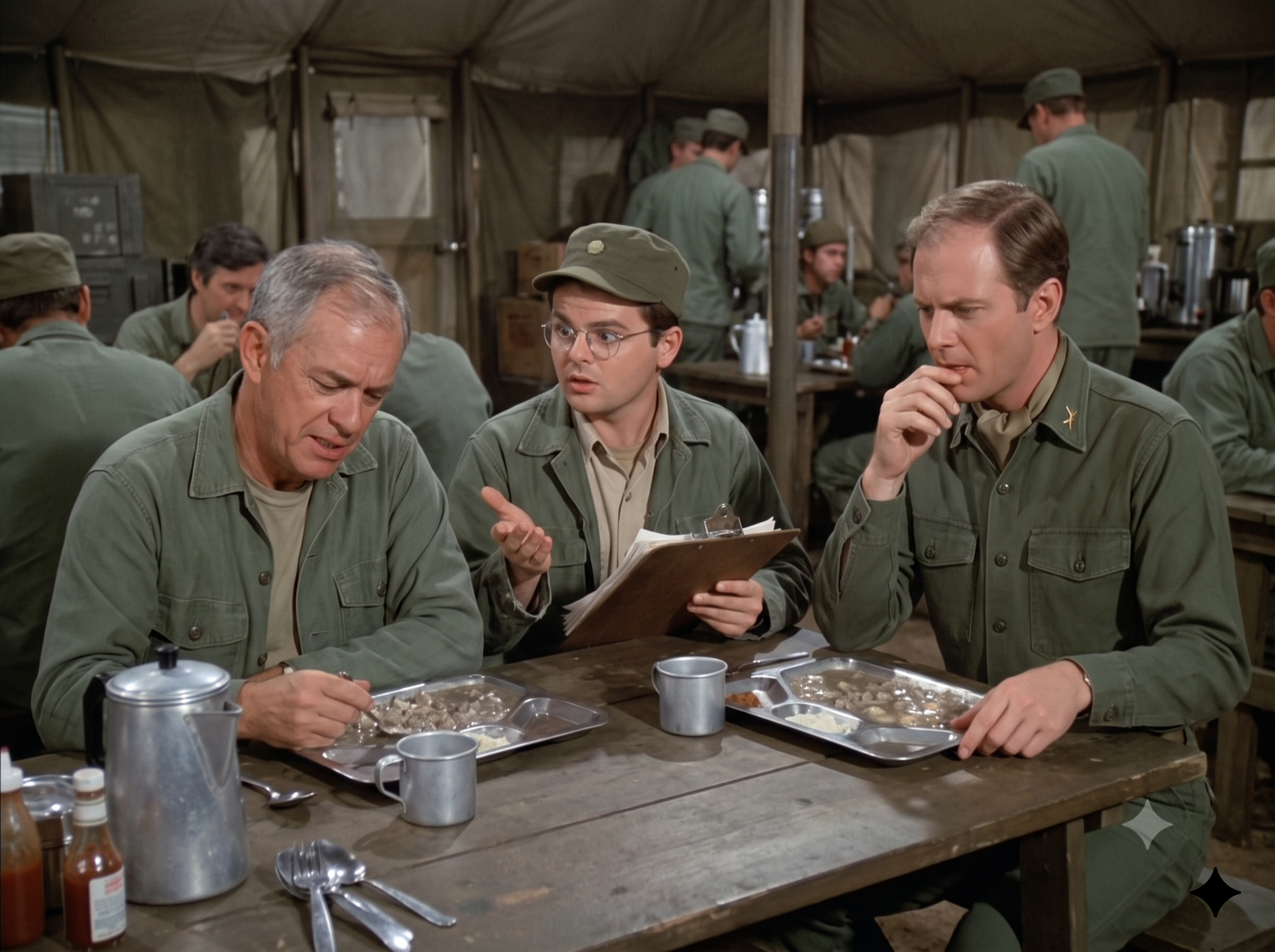
Sometimes, the loudest thing in the 4077th isn’t the incoming choppers; it’s the collective, soul-crushing silence of a mess tent meal that simply refuses to cooperate with the human digestive system.
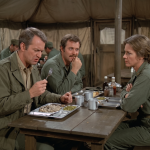
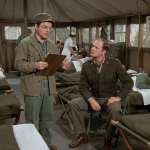
It was a Tuesday, or perhaps a Wednesday—days in Korea had a way of bleeding into one another like watercolor paint on wet canvas. Colonel Potter sat at the head of the table, his weary eyes studying his tray with the same tactical caution he’d once used to survey an enemy position. Beside him, Radar was mid-sentence, his clipboard clutched like a shield, his brow furrowed in that uniquely bewildered way only a man trying to explain the unexplainable can manage. Charles sat opposite, his posture as rigid as if he were dining at the Ritz, though the look of quiet, profound betrayal on his face suggested the “beef” in front of him had just offended his ancestors.
“I’m just saying, sir,” Radar stammered, gesturing with a piece of cutlery that looked entirely too clean for the job at hand. “The supply sergeant swore it was Salisbury steak. He sounded sincere. He even offered a recipe, which I didn’t ask for, involving breadcrumbs and a great deal of prayer.”
Potter didn’t look up, instead poking at a grey, gelatinous lump that seemed to pulse in sympathy with the distant artillery. “Radar, son, if you tell me this is the same ‘steak’ that tried to chew back at us last month, I’m going to have to ask for a formal investigation, or possibly a chaplain.”
The air in the tent felt heavy with the specific, lingering fatigue of a shift that had lasted thirty hours too long. It was the kind of exhaustion that made the mundane seem tragic and the ridiculous feel like a personal insult.
Charles suddenly dropped his fork. It made a sharp, metallic *clack* against the tray that sounded like a gunshot in the quiet tent. He leaned forward, his face pale, his voice a dangerous, trembling whisper of aristocratic fury.
“Colonel,” Charles breathed, staring at his tray as if he were witnessing a crime scene. “I believe… I believe it is looking at me.”
The tent seemed to hold its breath. Radar jumped, his clipboard nearly clattering to the floor, while Potter slowly lifted his head, his face a mask of dry, weather-beaten patience.
“Charles,” Potter muttered, the corner of his mouth twitching with the ghost of a smile, “if the food is alive, it’s only fair we charge it for the meal. Maybe we can get it to pull guard duty.”
“This is not a laughing matter, Colonel,” Charles insisted, his refined features pinched with genuine, existential horror. “I have survived the finest culinary disasters of the Boston elite, but this? This is a biological anomaly. It has the consistency of wet felt and the hue of a rainy day in London.”
Radar leaned in, his eyes wide behind his glasses. “I could check the kitchen log, sir. See if maybe they accidentally opened the crate marked ‘Experimental Adhesives’ instead of the one marked ‘Meat’.”
“Don’t you dare,” Potter grunted, finally pushing his own tray away with a clatter of resignation. “If we find out what it is, we’ll be legally obligated to finish it. Ignorance is the only thing keeping us from mutiny.”
The tension broke as B.J., who had been silent up until this point, leaned back and let out a soft, weary chuckle. He looked at the three of them—the colonel, the major, and the corporal—and saw the absurdity of it all. They were thousands of miles from home, surrounded by chaos, yet here they were, embroiled in a war of attrition with a cafeteria mystery.
“Gentlemen,” B.J. said, his voice warm and steady, cutting through the frustration. “Let’s look at the bright side. It’s warm. It’s on a plate. And for a few minutes, nobody is calling us to surgery.”
Charles looked at B.J., his indignation softening into a reluctant, tired agreement. He picked up his fork again, moving the offending lump with the surgical precision he usually reserved for a shattered tibia. “A fair point, Hunnicutt. Though I shall be writing a very strongly worded letter to the Quartermaster upon my return to civilization. Assuming I survive this lunch.”
Potter chuckled, a low, rumbling sound that seemed to chase away some of the shadows in the tent. He leaned over, patted Radar on the shoulder, and reached into his pocket, pulling out a hidden, slightly crumpled bar of chocolate—his secret stash for emergencies.
“Forget the steak,” Potter said, breaking the chocolate into four uneven pieces and sliding them across the wooden table. “Let’s eat dessert first. It’s the only way to stay ahead of the game.”
As they sat there, chewing on the bitter, wonderful sweetness of a small reprieve, the world outside the tent continued its relentless turning. But for that moment, there was no war, no operating room, and no mystery meat. There was just the quiet hum of a friendship that had been forged in the crucible of too many long nights and too many bad meals. They sat in the dim light of the mess tent, four tired men in green fatigues, finding the grace to laugh at the nonsense of their lives. In the middle of nowhere, they had somehow managed to find a home.
Sometimes, the only thing stronger than the war is the quiet comfort of sharing a meal with the people who keep you sane.