The Art of the Hangover
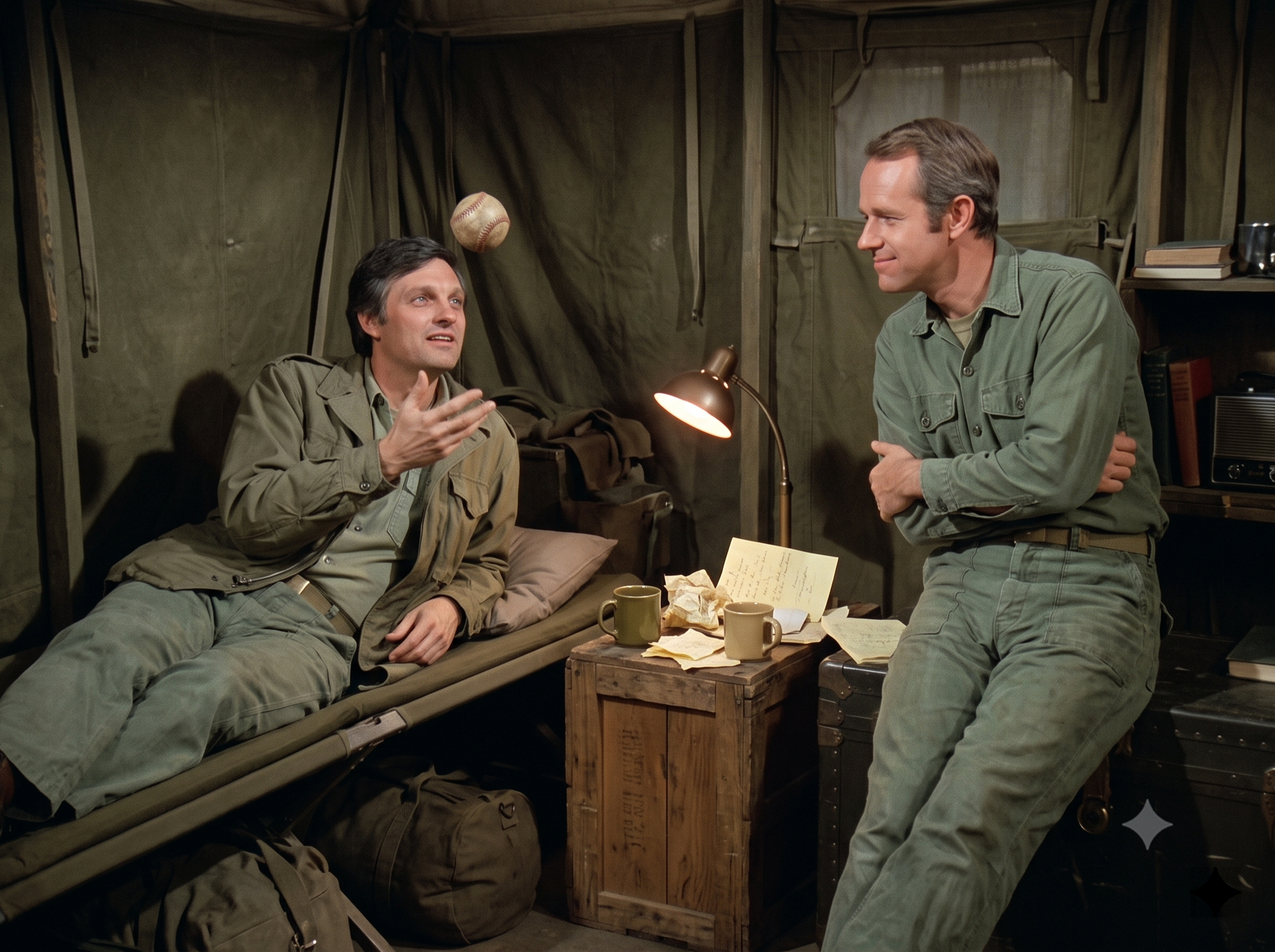
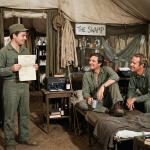
The air in the Swamp was thick enough to chew, a familiar mixture of damp canvas, stale coffee, and the lingering, unspoken exhaustion that only the 4077th knew intimately. Outside, the world was a cacophony of choppers and distant thunder, but inside, Hawkeye and B.J. had carved out a sliver of sanity.
Hawkeye lay back on his cot, staring at the ceiling with the vacant, wide-eyed look of a man who had spent the last thirty-six hours elbow-deep in trauma. Beside him, B.J. sat on his own bunk, his arms crossed, watching his friend with a mixture of amusement and genuine concern.
Between them, a baseball floated in the air—a tiny, suspended moment of defiance against the gravity of their situation.
It wasn’t a trick. Hawkeye was holding his hand up, mid-gaze, having tossed the ball just high enough to catch it in his peripheral vision. He was in the middle of a monologue, one of those rambling, frantic riffs he only performed when his brain was trying to outrun his heart.
“You see, Beej, the beauty of the curveball is that it’s a lie,” Hawkeye murmured, his voice raspy. “It’s a graceful, aerodynamic deception. You tell the batter, ‘Here I come, right down the middle,’ and then, just when he’s ready to swing, you change your mind. It’s like life, really. Just when you think you’ve got a handle on the trajectory—”
“You lose the ball, Hawk,” B.J. interrupted softly, a small, knowing smile tugging at the corners of his mouth.
Hawkeye didn’t move. He kept his hand hovering, his eyes locked on the baseball as if it were the most important thing in Korea.
“I haven’t lost it yet,” Hawkeye whispered, the humor leaving his voice as his hand began to tremble just slightly.
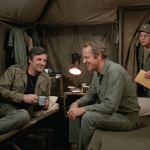
The ball hung in the air for a fraction of a second longer than physics should have allowed. It felt like the entire war was holding its breath. The lampshade cast a warm, golden glow over the wooden crate between them, illuminating the messy stack of letters and cold mugs, but the light couldn’t reach the tension tightening in Hawkeye’s shoulders.
Then, the ball began to drop, and with it, the shaky, fragile composure Hawkeye had been holding together for the better part of a week finally snapped.
The ball hit the floor with a dull thud, rolling toward B.J.’s boot. The silence that followed was heavy, no longer punctuated by the steady rhythm of Hawkeye’s voice. Hawkeye let his arm flop down, his hand dangling off the side of the cot, his fingers twitching in the empty air.
B.J. didn’t reach for the ball. He didn’t offer a joke, or a drink, or a sarcastic remark to bridge the gap. He simply watched the rise and fall of Hawkeye’s chest. He knew that look—the look of a man who had seen just one too many broken things today.
“I can’t fix it this time,” Hawkeye said, staring at the canvas walls. “I can’t just catch the ball, call a timeout, and start over.”
B.J. stood up slowly, the floorboards creaking under his weight. He walked over to the wooden crate, picked up the lukewarm coffee mug, and set it aside to make space. He sat down on the edge of Hawkeye’s cot, his presence a grounding wire in the storm.
“You don’t have to catch it, Hawk,” B.J. said, his voice as steady as a heartbeat. “Sometimes you just have to let it drop. You have to let it hit the floor and realize the world didn’t end.”
Hawkeye turned his head, his eyes scanning B.J.’s face, looking for the usual glint of irony. He didn’t find it. He only found a quiet, immovable affection.
“My hand,” Hawkeye muttered, trying to smile and failing. “It just… it forgot how to grip.”
“Your hand is tired,” B.J. replied, reaching out to pat Hawkeye’s shoulder. “Your heart is tired. And that’s allowed. We don’t have to be superheroes. We just have to be here, together, until the next shift starts.”
A long moment passed. The distant *thwup-thwup* of a medevac chopper cut through the air, vibrating the thin walls of the tent. They both instinctively stiffened, their ears tracking the sound, their minds already preparing to return to the fray. It was an involuntary reaction—a reflex built into their bones—but they didn’t stand up yet.
B.J. leaned back against the support pole, relaxing his posture intentionally. Hawkeye followed suit, the tension in his shoulders easing just a fraction of an inch. They were exhausted, battered, and miles away from anyone they had ever loved, but they were not alone.
Hawkeye looked at the baseball on the floor, then back at B.J. He let out a long, ragged breath, a sound that seemed to carry away some of the weight of the day.
“Next time,” Hawkeye said quietly, “we’re playing catch with a marshmallow. Less gravity.”
B.J. chuckled, a low, warm sound. “Deal.”
They sat in the quiet of the Swamp, surrounded by the debris of their shared life, listening to the war rage on outside while they held onto the fragile, beautiful normalcy of a Tuesday afternoon. They weren’t heroes. They were just two tired men, holding onto each other in the dark, waiting for the light.
In the heart of the 4077th, the greatest medicine was never in a vial—it was just the person sitting next to you.