The Quietest Moments in the 4077th
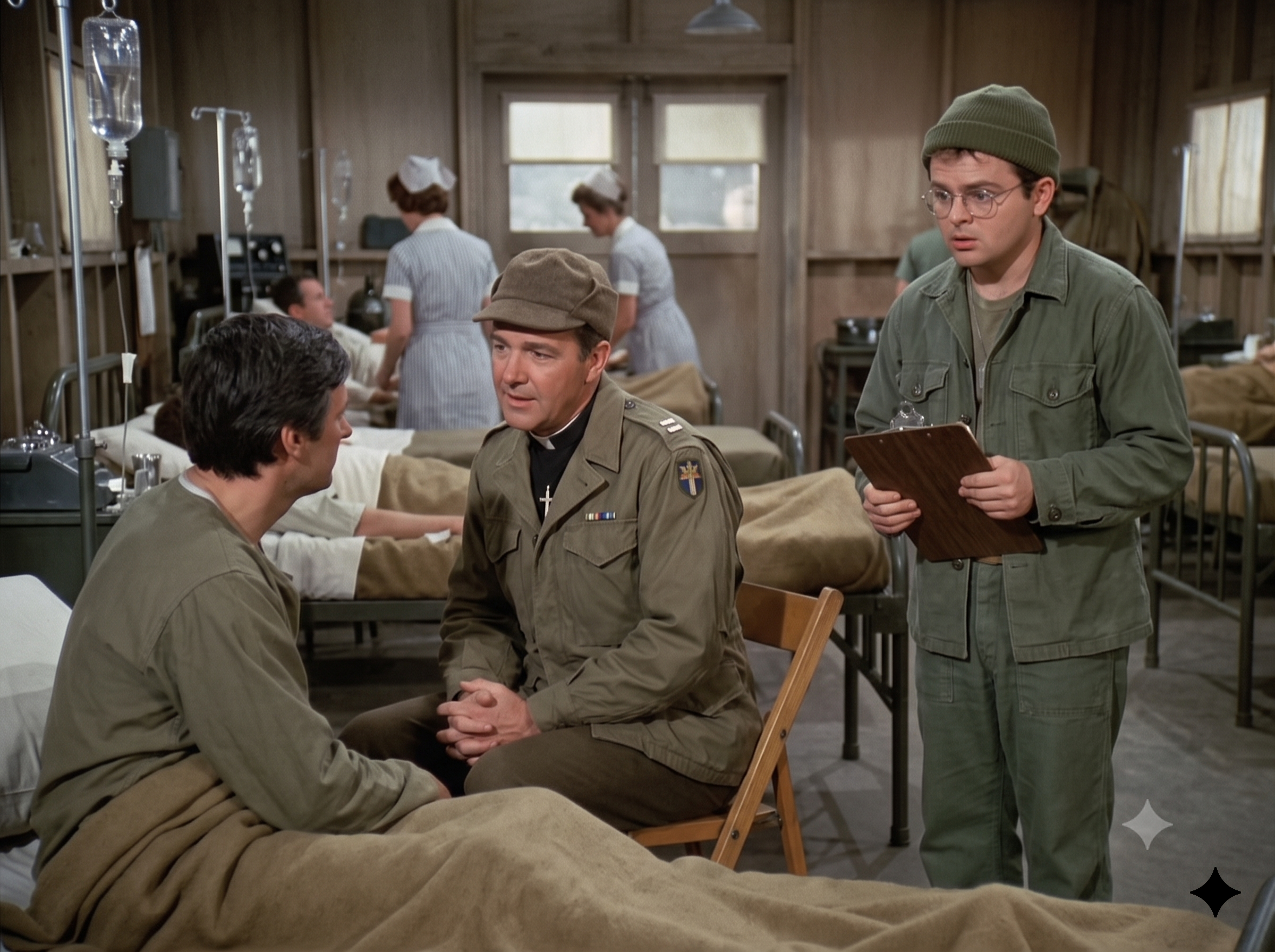
The hum of the generator outside the recovery ward was the soundtrack to our lives—a steady, rhythmic drone that usually meant we were either between incoming wounded or just catching our breath before the next wave.
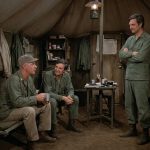
In this corner of the tent, the world felt smaller, contained by the canvas walls and the scent of antiseptic and stale coffee.
Hawkeye sat on the edge of the cot, his posture slumped, the familiar sharp edge of his wit momentarily dulled by a exhaustion that went deeper than his bones.
Father Mulcahy sat opposite him in a simple wooden folding chair, leaning in with his hands clasped, a picture of quiet, unyielding pastoral patience.
There was a profound stillness in the way they looked at each other, the kind of silence that only exists between two men who have seen too much and have run out of ways to talk about it.
Then, there was Radar, standing just a few feet away, clutching a clipboard to his chest like a shield.
He was wearing that familiar knit cap, looking less like a soldier and more like a boy who had wandered into the wrong place at the wrong time, his eyes wide and searching.
He was holding a status report, but his attention wasn’t on the paper; it was anchored entirely to the exchange between the surgeon and the chaplain.
“I don’t think I have another one in me, Father,” Hawkeye whispered, his voice cracking just enough to betray the calm facade he usually wore like armor.
He looked away, staring past the Father’s shoulder at the rows of empty beds that felt like they were waiting for ghosts.
Radar tightened his grip on the clipboard, his knuckles turning white, caught in the suffocating weight of the admission.
Mulcahy didn’t offer a platitude, didn’t quote scripture, and didn’t try to fix it.
He simply nodded, his expression softening into a heartbreaking mirror of Hawkeye’s own hidden despair.
At that moment, the entire war seemed to condense into that single, fragile connection, threatening to break both of them right there in the middle of the ward.
Radar took a half-step forward, his voice barely a murmur.
“The supplies came in, Captain,” he said, his voice hitching as he tried to bridge the gap between his duty and his worry.
“And I… I think we’ve got enough of the good coffee left for two more pots. Maybe three.”
Hawkeye looked up then, meeting Radar’s anxious gaze.
He saw the boy’s genuine fear—not of the war, but of seeing his friends lose their way.
A small, sad smile tugged at the corner of Hawkeye’s mouth, a ghost of the man who usually laughed in the face of madness.
He reached out and patted the mattress, a silent gesture that shifted the mood from the brink of collapse back toward the solid ground of their shared reality.
Father Mulcahy unclasped his hands and rested them on his knees, his shoulders dropping from the tense position they had held for ten minutes.
“Three pots might just be a miracle, Radar,” the chaplain said gently, his voice light and warm.
“I believe that calls for a celebration of sorts. Or at least a very long, very hot cup of gratitude.”
The tension in the room didn’t vanish—it was never that simple in the 4077th—but it transformed.
It became something manageable, something they could carry together for a few more hours.
Hawkeye let out a long, shuddering breath, the kind that finally allowed him to sit up a little straighter.
He looked at the clipboard in Radar’s arms, then back at the Father, the dark cloud in his eyes receding just enough to let a sliver of his old, stubborn humanity peek through.
“Three pots, huh?” Hawkeye asked, his tone regaining that familiar, dry lilt. “Well, I suppose that’s enough to keep us upright until the next batch of misery arrives.”
Radar let out a nervous, relieved laugh, his grip on the clipboard finally relaxing.
He stepped a bit closer, feeling the shift in the air, the way the brothers-in-arms were knitting themselves back together, one small, mundane promise at a time.
There were no grand declarations, no heroic speeches about the greater good—just the quiet acknowledgment that they were still there, still helping, and still refusing to let the chaos win.
As they sat in that dim, canvas-walled room, the fatigue was still heavy, but it was no longer isolating.
They were a family forged in the most unlikely circumstances, holding each other up with nothing but shared coffee, weary jokes, and the quiet, steady grace of simply being present for one another.
The war would continue, and the beds would likely fill again before the sun went down, but for this one afternoon, they were anchored by the simple, beautiful fact that they weren’t doing it alone.
We keep the coffee hot and each other close, because that’s the only way we make it through to the other side.