The Quiet Hour Between Shifts
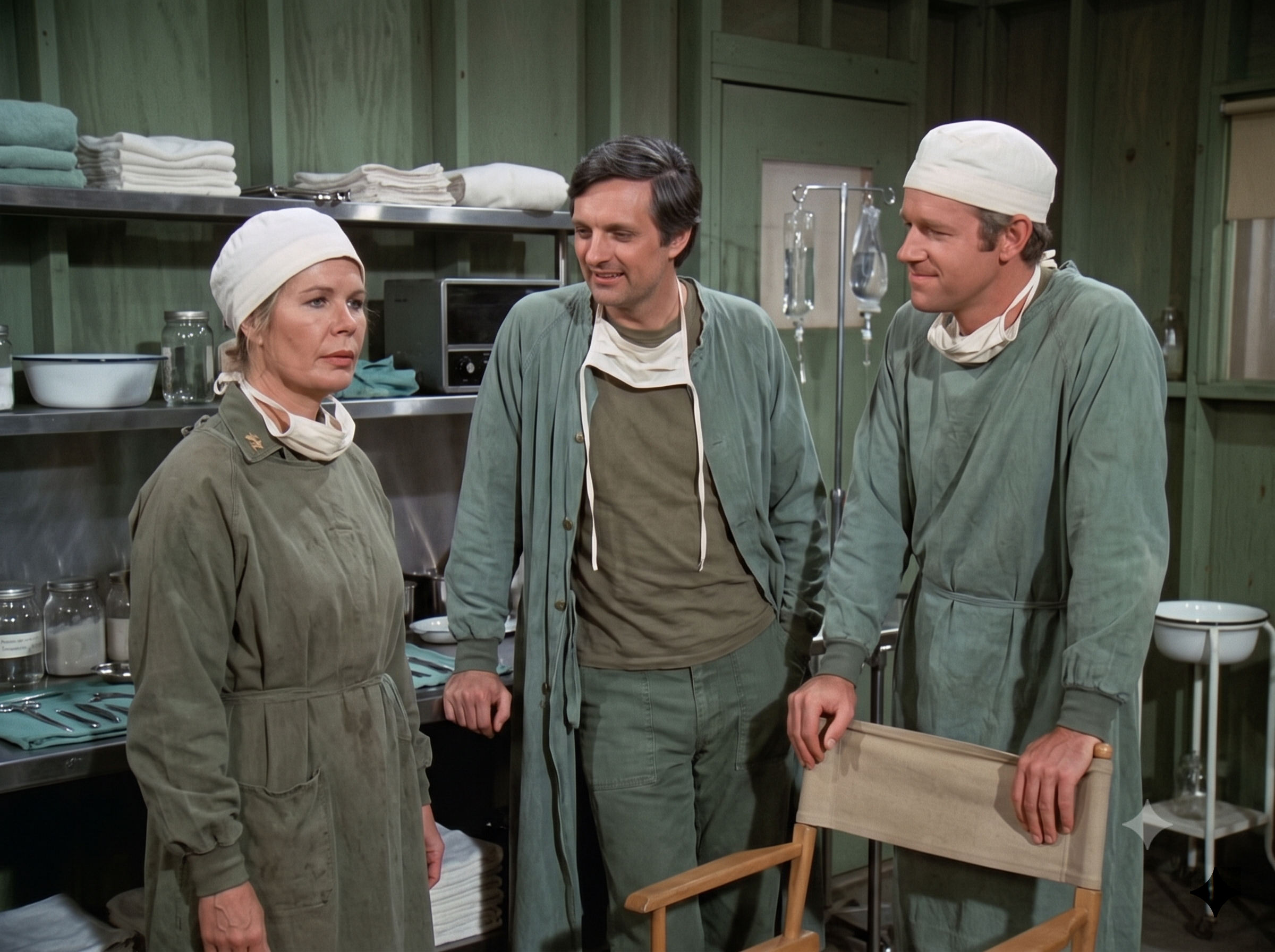
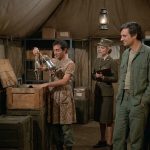
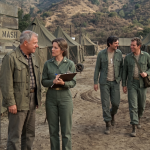
The surgical lights were finally off, and for the first time in eighteen hours, the post-op ward felt like something other than a waiting room for the exhausted. Margaret stood by the supply shelves, her arms crossed tight, her cap slightly askew. She wasn’t looking at the supplies; she was staring at the floor, lost in that heavy, hollow silence that follows the roar of the chopper blades.
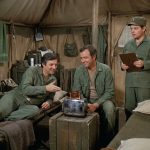
Hawkeye and B.J. leaned against the counter, a few feet apart but sharing the same invisible weight of the day. Hawkeye had his hands jammed into his pockets, his usual quick smile replaced by a look of profound, weary contemplation. B.J. leaned a hand on the back of a wooden stool, his posture sagging just enough to betray how much he needed to sit down.
The air in the tent was thick with the scent of antiseptic and damp canvas, a smell that had become the perfume of their lives. It was one of those rare, fleeting moments at the 4077th where the war seemed to pause just long enough for them to realize they were still human.
“You know,” Hawkeye said, his voice raspy and devoid of its usual sharp edge, “if I have to look at another tray of sutures, I’m going to start knitting sweaters for the local wildlife.”
Margaret didn’t snap back. She didn’t offer a sharp retort about decorum or duty. She simply let out a long, shuddering sigh and looked up, meeting Hawkeye’s gaze. There was something in her expression—a crack in the armor, a sudden, raw vulnerability—that stopped the banter dead in its tracks.
The tent felt suddenly very small, the silence between them turning heavy, charged with all the things they had done and all the things they hadn’t been able to do. Hawkeye opened his mouth to say something witty, but the words withered before he could speak them. He saw the tremor in Margaret’s hands, and for a heartbeat, the fragility of their entire world seemed to hang suspended in the dim light.
B.J. noticed it too. He moved slightly, his hand shifting from the back of the chair to offer a gentle, grounding presence. He didn’t make a joke. He just shifted his weight and gave a small, almost imperceptible nod of acknowledgment—the kind that said, *I know, I’m here, we’re all still standing.*
“It’s not just the sutures, Major,” B.J. said quietly, his voice a steady anchor in the dim room. “It’s the fact that no matter how many sweaters we knit, the wind just keeps blowing through the holes.”
Margaret blinked, a moisture gathering in her eyes that she fought to suppress with a fierce, professional blink. She looked from B.J. back to Hawkeye, and the mask of the Major finally fell away completely. She wasn’t a ranking officer in this moment; she was just someone who had been holding the world together with sheer willpower, and that willpower was finally running thin.
“I just wanted one day,” she whispered, her voice barely audible over the distant drone of a jeep engine outside. “Just one day where I didn’t feel like I was racing against a clock that was already broken.”
Hawkeye finally pulled his hands from his pockets. He didn’t offer a lecture or a quip. He walked over to the supply shelf, picked up a clean, folded towel, and handed it to her. It was a simple, mundane gesture, but in the context of their lives, it was a profound act of care.
“We’re all running that same race, Maggie,” Hawkeye said softly. “But you’re the only one who actually remembers to check the finish line.”
Margaret took the towel, gripping it tightly. She looked at them—the two men who had seen her at her best and her absolute worst, and who were still standing there, waiting for her to catch her breath. The tension that had been radiating off her shoulders began to dissolve, replaced by a quiet, shared exhaustion that was almost a relief to admit to.
B.J. pulled the wooden chair out further, motioning for her to sit. “The war isn’t going anywhere, Major. But for the next ten minutes, the surgery is done. That’s an order from someone who hasn’t slept since Tuesday.”
A ghost of a smile finally touched Margaret’s lips. She sat down, letting her back rest against the wooden frame of the chair. It wasn’t comfort, not really—not in the way they remembered from home—but it was companionship. They stayed like that for a long while, three tired people in a canvas tent, surrounded by the remnants of a day that had taken too much, yet hadn’t been able to take everything.
Outside, the sun was beginning to dip behind the mountains, casting long, orange shadows across the mud of the compound. They didn’t talk about tomorrow. They didn’t talk about the next chopper. They just existed in that narrow window of peace, bound by the strange, unbreakable thread of a friendship forged in the absolute center of a storm. They knew the siren would wail soon enough, and they knew they would go back out there because that was who they were. But for now, they were just friends, leaning against the walls of their temporary home, finding enough strength in each other to face the coming night.
In the heart of the storm, the quietest moments are the ones that keep us whole.