The Finest Dining in Korea
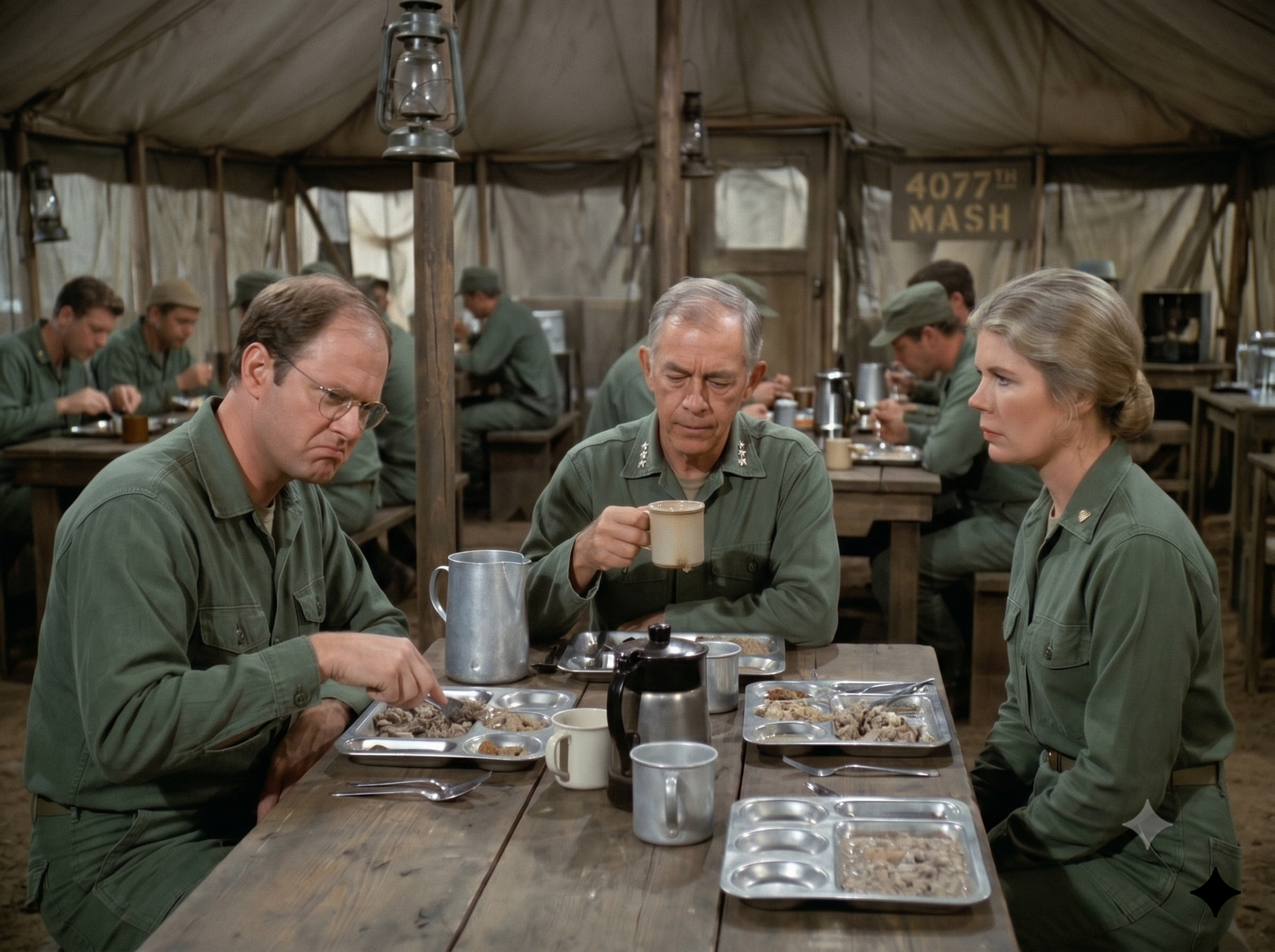
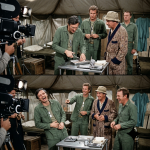
The squeak of wet boots on wooden floorboards and the heavy smell of scorched coffee meant only one thing: breakfast at the 4077th.
It was a Tuesday, though the days had long since bled into one endless, olive-drab smear.
The morning light filtered through the canvas tent walls, casting a dull, flat glow over the rows of simple wooden tables.
They had just come off an eighteen-hour shift in the operating room.
The ether was still clinging to their skin, a ghost they couldn’t quite scrub away with cold water and yellow lye soap.
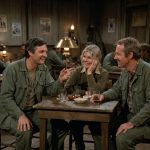
At the center table, three officers sat shoulder to shoulder, united in exhaustion and absolute culinary despair.
Major Charles Emerson Winchester III sat on the left, his fork suspended like a surgeon’s scalpel over a tragedy.
Before him, resting on a dull metal tray, lay a mound of something gray, lumpy, and entirely unidentifiable.
Charles poked it. The mound did not yield; it simply moved as a single, terrifying tectonic plate.
“This,” Charles announced to the empty air, his voice dripping with aristocratic Bostonian venom, “is not a meal. It is a war crime.”
Beside him, Colonel Sherman T. Potter did not flinch.
The commanding officer sat with his shoulders slightly hunched, the weight of the entire camp resting heavily upon them.
He gripped a chipped ceramic mug with both hands, staring down into the dark, murky liquid as if hoping to find a fish swimming in it.
He looked profoundly weary, his eyes bearing the dry, quiet wisdom of a man who had seen too much and slept far too little.
“Drink your coffee, Winchester,” Potter muttered, his voice barely a gravelly whisper. “It builds character.”
“It builds gallstones, Colonel,” Charles retorted, his face a mask of restrained irritation. “I am reasonably certain this… substance… was repurposed from the motor pool’s patching compound.”
On Potter’s right, Major Margaret Houlihan sat with terrifyingly perfect posture.
Her back was straight, her hands resting near her tray, her uniform impeccably neat despite the grueling hours they had just survived.
But her face told a different story.
Margaret’s expression was strictly composed, yet there was a sharp, brittle edge to her stare.
She wasn’t looking at the food. She was looking past it, fighting a silent battle against the overwhelming wave of fatigue threatening to pull her under.
She was the Head Nurse. She had to hold it together. She had to be the rock for her nurses.
But the sheer, comical indignity of the breakfast sitting in front of her was chipping away at her iron resolve.
“Can we please,” Margaret said, her voice tight and clipped, “just eat in peace? For five minutes?”
“Peace?” Charles scoffed, finally dropping his utensils onto the metal tray with a loud, ringing clatter. “How can one find peace when one’s digestive tract is under direct artillery fire?”
He pushed the tray away by exactly one inch, crossing his arms in a display of supreme, dry superiority.
“I demand to know what this is. I demand to see the man who perpetrated this culinary sabotage!”
Margaret’s jaw tightened, and her eyes suddenly shone with unshed, exhausted tears.
She wasn’t crying over the food. She was crying over the young boy from Iowa they had lost on the table two hours ago.
The terrible breakfast was just the final, unfair insult of a terrible night.
“Shut up, Charles,” she whispered, her voice cracking, the professional mask slipping just a fraction.
Charles opened his mouth to deliver a blistering retort, blind to the trembling of her shoulders.
Potter’s grip tightened on his mug, his knuckles turning white, the steady air of the fatherly commander suddenly shifting into something dangerously taut.
Potter slowly lowered his coffee mug to the beige wooden tabletop.
The dull thud echoed quietly in their small corner of the mess tent, cutting through the ambient clatter of the camp.
He didn’t yell. He didn’t pull rank.
Instead, he turned his head slowly, looking at Winchester with a gaze so deeply exhausted it instantly pierced the Major’s bluster.
“Charles,” Potter said softly. “The food is terrible. We know.”
Winchester blinked, the wind suddenly taken out of his rhetorical sails.
He looked from Potter’s weary face to Margaret, finally noticing the rigid, trembling tension in her upright posture.
The refined outsider from Boston, who so often hid his own fear and homesickness behind a wall of arrogance, suddenly saw the cracks in his colleagues.
He saw Margaret biting the inside of her cheek to maintain her dignity.
He saw Potter, a career military man, just trying to hold his makeshift family together through one more morning.
The sharp, sarcastic retort died completely in Winchester’s throat.
For a long, heavy moment, the only sound was the distant hum of a jeep engine outside the canvas walls.
Charles looked down at his metal tray, a flicker of genuine regret crossing his features.
It wasn’t about the food. It was never really about the food.
It was about being thousands of miles from home, wearing worn olive drab, and feeling utterly powerless to fix the broken things around them.
With a slow, deliberate motion, Charles picked his fork back up.
“I suppose,” Charles murmured, his tone shifting from dry superiority to a quiet, forced gentle humor, “if one closes one’s eyes… and entirely abandons one’s sense of smell…”
He carefully poked the gray matter again, this time with a theatrical gentleness.
“One could almost pretend this is… a terribly misguided attempt at a rustic French pâté.”
Margaret let out a short, sudden sound that was half-sob, half-laugh.
She quickly brought a hand to her mouth, composing herself, but the rigid, military posture softened just a fraction.
“Pâté, huh?” Potter said, the ghost of a warm smile finally touching the corners of his tired eyes.
He picked his mug back up, the fatherly commander returning to his gentle post.
“Well, my compliments to the chef in Paris. Though I think his sauce needs a little more motor oil.”
Margaret finally looked down at her own tray, the sharp edges of her disappointment melting into a tired, shared humanity.
“It’s liver,” she said quietly, her voice returning to its normal, steady cadence. “Or at least, I think it was once.”
“Fascinating,” Charles replied dryly, not taking a bite, but no longer pushing the tray away in disgust.
He reached out and adjusted the metal pitcher of water between them, a small, subtle gesture of service to the table.
“A truly fascinating study in the degradation of organic matter.”
Potter took a slow sip of his coffee, wincing slightly at the bitterness, but feeling the warmth finally settle in his chest.
He looked at the two of them. His finest surgeon. His finest nurse.
They were cranky, they were battered, and they were sitting in a drafty tent in the middle of a war they didn’t want to be in.
But they were together.
The terrible food remained untouched on their plates, a testament to the daily indignities of the 4077th.
Yet, the heavy, suffocating weight of the morning had lifted, replaced by the quiet, unbreakable bond of shared survival.
Margaret picked up her fork, absentmindedly tracing a line in the beige table.
Charles sat with his restrained posture, silently offering his steady presence as a bulwark against the despair of the camp.
And Potter just sat with his weary wisdom, anchoring them both to the earth.
They didn’t need to speak about the OR. They didn’t need to talk about the war outside the canvas walls.
They just needed this ordinary, cluttered table.
They sat together in the soft, even studio light, a silent portrait of endurance and found family.
Tomorrow, the food would be just as bad, the coffee just as bitter, and the hours just as impossibly long.
But they would face it exactly like this: side by side, armed with dry wit, deep care, and a quiet, stubborn grace.
Some meals at the 4077th didn’t fill the stomach, but they somehow always managed to feed the soul.