The Longest List
The afternoon sun was doing its best to turn the 4077th’s command tent into a sauna, but inside, the atmosphere felt strangely brittle.
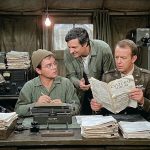
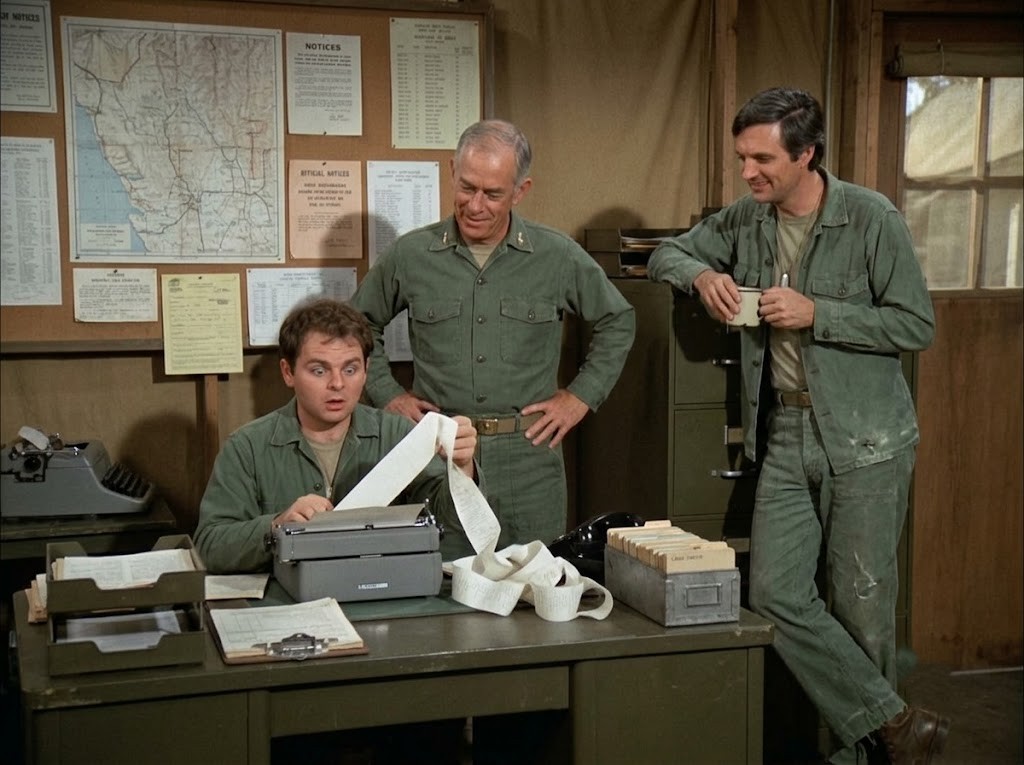
Radar O’Reilly sat hunched over his typewriter, his brow furrowed so deeply it looked like he was trying to solve a quadratic equation with his forehead. He wasn’t typing words, though. He was feeding a seemingly endless ribbon of paper out of the carriage, his eyes wide with a mixture of disbelief and genuine alarm.
Colonel Potter stood directly behind him, hands pressed firmly against his hips, staring down at the growing white mountain of ticker tape as if it were a tactical blunder.
Hawkeye leaned against the filing cabinet nearby, a mug of lukewarm coffee in his hand. He wasn’t saying much, but the way he was watching Radar—with that lopsided, weary half-smile—spoke volumes. It was the look of a man who had seen too many wars and was currently finding comfort in the absolute absurdity of a supply requisition gone wrong.
“Radar,” Potter muttered, his voice gravelly but lacking its usual bark. “Tell me that’s not what I think it is. Tell me that’s not a request for ten thousand boxes of rubber bands.”
Radar stopped typing, his fingers hovering over the keys like trembling birds. He looked up at the Colonel, his face pale and eyes glistening with the terror of a man who realized he’d accidentally ordered the entire contents of the U.S. Army’s logistics department to a tiny patch of dirt in Korea.
“It’s not just rubber bands, sir,” Radar whispered, his voice cracking. “It’s… it’s everything. The requisition form got stuck in the roller. I think I might have accidentally typed ‘yes’ to every single item in the catalogue.”
The silence in the tent grew heavy. Hawkeye took a slow, deliberate sip of his coffee, his eyes darting from the endless trail of paper to the Colonel’s slowly reddening face. Then, the realization hit—not just the weight of the supply error, but the sheer, crushing exhaustion of their current rotation. If they didn’t fix this, the inevitable visit from a supply officer would be the final straw for a camp that was already hanging by a thread.
Potter let out a long, wheezing sigh, the kind that seemed to drain the years right out of him. He didn’t explode. He didn’t throw his hat. Instead, he reached down, picked up the leading edge of the paper, and let it cascade through his fingers like sand.
“Well,” Potter said, his voice dropping to a low rumble. “I suppose if we run out of gauze, we can just bandage the boys in rubber bands.”
Hawkeye chuckled, a dry, rasping sound. “Very resourceful, Colonel. I hear the fashion trend in Seoul this spring is ‘elastic chic’.”
B.J. Hunnicutt, who had been quiet until now, stepped into the frame, shaking his head. He looked at the mess, then at Radar’s terrified expression, and his shoulders dropped. He reached over and gently placed a hand on Radar’s shoulder.
“Take a breath, kid,” B.J. said softly. “It’s just paper. We’ve fought bigger dragons than a clerical error.”
The tension began to bleed out of the room, replaced by that familiar, quiet camaraderie that kept them all sane. Hawkeye pushed off the cabinet, moving over to help Radar peel the miles of paper away from the typewriter. They worked in tandem, not with efficiency, but with a kind of clumsy, affectionate rhythm—unspooling the mistake, laughing at the sheer, ridiculous volume of it all.
Potter watched them, his expression softening into something almost paternal. The anger was gone, washed away by the sight of three men—friends—simply trying to navigate another day in a place that made no sense. He knew they were tired. He knew they were all carrying invisible weights that had nothing to do with army requisitions.
“We’ll burn it,” Potter decided, gesturing toward the scrap heap of paper. “We’ll hold a ceremony. Maybe we can invite the chaplain to say a few words over the rubber bands.”
Radar let out a small, breathless giggle, the relief washing over him so completely he almost slumped over. “Yes, sir. Thank you, sir.”
Hawkeye looked at the pile of paper, then back at his friends. For a moment, the war outside didn’t exist. There was only the heat of the tent, the scent of stale coffee, and the quiet comfort of knowing that, no matter how long the list got or how many mistakes were made, they weren’t doing it alone.
They stood there for a beat longer than necessary, sharing a look that held no words—only the silent acknowledgment of a day survived, and the quiet promise of tomorrow.
In the heart of the 4077th, even a catastrophe was just another way of finding each other again.