A Quiet Hand in the Eye of the Storm
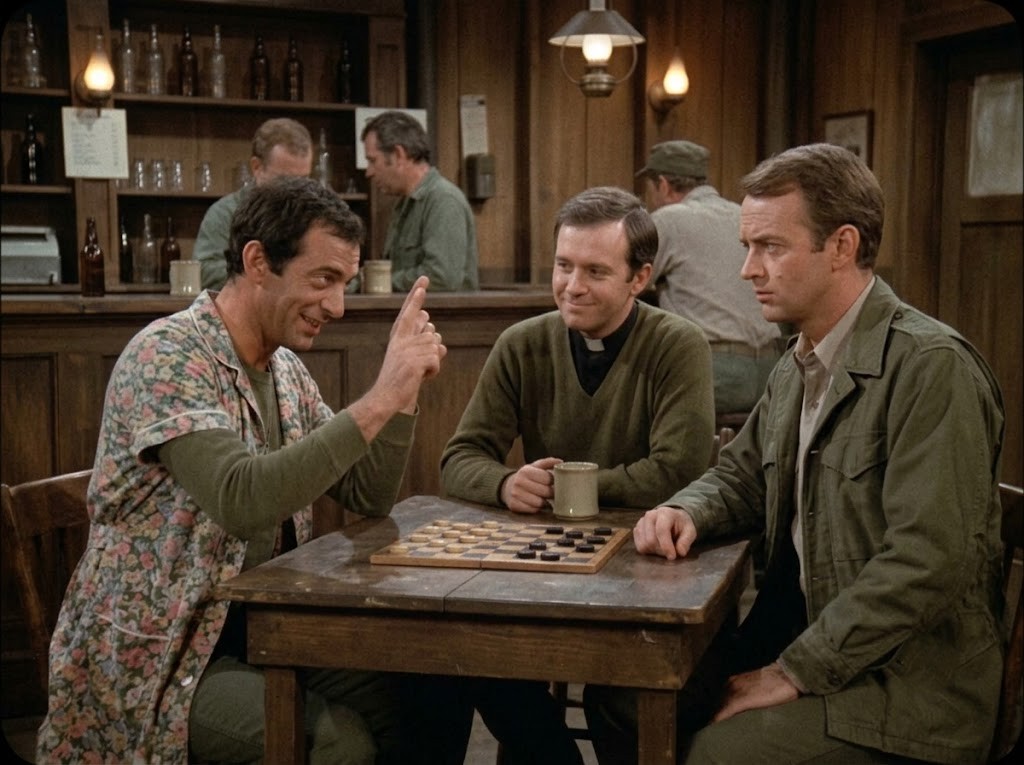
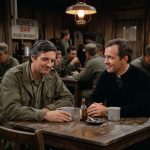
The rain had finally stopped, leaving the camp in a damp, heavy silence that felt louder than the shelling ever did. Inside the mess tent, the air was thick with the scent of lukewarm coffee and the lingering exhaustion of a shift that had lasted far too long.
Hawkeye sat hunched over the scarred wooden table, his floral robe a bizarre, vibrant splash of color against the drab olive-drab reality of Korea. He looked tired—that bone-deep, hollow-eyed exhaustion that no amount of sleep could ever truly fix. But his eyes were dancing with a manic, desperate kind of energy, the kind that usually preceded one of his more elaborate schemes.
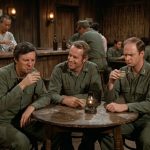
Across from him, Father Mulcahy watched the chessboard with the gentle, furrowed brow of a man who was trying to find moral clarity in a game of checkers. Beside them, B.J. leaned back, his uniform wrinkled, his expression a mixture of weary affection and patient resignation.
“You’re overthinking it, Padre,” Hawkeye said, his voice raspy, holding one finger up in a dramatic, theatrical point. “It’s not just a move. It’s a philosophy. You’re playing to win the board, but I’m playing to liberate the pieces.”
B.J. let out a soft, dry chuckle, rubbing his tired face. “He’s been at this for twenty minutes, Father. I think he’s trying to psych you out so you won’t notice he’s actually setting up a trap for his own checkers.”
“I am merely providing a distraction,” Hawkeye countered, a small, sad smile tugging at the corners of his mouth. “The world is on fire, we’re knee-deep in mud, and I have decided that for the next ten minutes, the only thing that matters is the strategic advancement of this black disk.”
He leaned in, his finger still hovering, his face suddenly turning serious, almost brittle. It was a game, yes, but it was also a shield. They were all holding their breath, waiting for the next siren, waiting for the next chopper, waiting for the war to remember they were still there.
“Make your move, Hawkeye,” Mulcahy whispered, his voice barely audible over the hum of the generator outside. “Before the silence gets too loud.”
Hawkeye’s finger trembled, just for a second. He looked at B.J., then at the Father, and for a fleeting, terrifying moment, the humor fell away, leaving behind the raw, naked fear of men who had seen too much.
The tension stretched, thin as a wire, across the tabletop. B.J. didn’t say anything. He didn’t make a joke. He just reached out, his hand steady and warm, and placed it gently over Hawkeye’s hand, still hovering in the air.
It was a small, grounding gesture, a reminder that they were three human beings in a wooden box, trying to stay anchored to the earth.
“It’s just a game, Hawk,” B.J. said quietly. “Nobody’s keeping score anymore.”
Hawkeye looked down at their joined hands. The manic glint in his eyes faded, replaced by a sudden, sharp clarity. He let out a long, shuddering breath, the kind that seemed to pull all the tension out of his shoulders, and finally lowered his hand.
Father Mulcahy moved a piece, not to win, but to keep the game going, to keep the rhythm of their friendship steady. “There,” the priest said softly. “The board is still balanced. And so, I think, are we.”
Hawkeye leaned back in his chair, the floral robe shifting as he slumped. He looked around the tent—at the men in the background, the dimmed lights, the familiar, cramped intimacy of their makeshift home. They were a ragtag family forged in the most impossible of circumstances, held together by nothing more than shared coffee, bad jokes, and a fierce, unspoken promise to look out for one another until the madness ended.
“You know,” Hawkeye murmured, his voice finally losing its edge, settling into a tone of genuine, quiet peace. “If we ever do get out of here, I’m going to miss this table. I’m going to miss how it feels to know exactly who is sitting on the other side of it.”
B.J. smiled, a tired, genuine expression that reached his eyes. “We’ll find a table, Hawk. Somewhere with better lighting and a lot less mud.”
The mess tent felt warmer then. The war hadn’t ended, and the morning would surely bring another round of sirens, but for this brief, suspended moment, the 4077th was just a group of friends sharing a quiet space. They were tired, they were frayed, and they were far from home, but they weren’t alone.
As they sat there, the checkers waiting for the next move, a sense of belonging settled over the table, thicker and more enduring than the cold Korean night outside. They didn’t need to say it—the gratitude, the love, the sheer survival of their spirits—it was all there, carved into the wood of the table and held in the quiet, steady gaze they shared.
In the heart of the madness, the greatest victory was simply being together.