The Quietest Hour at the 4077th
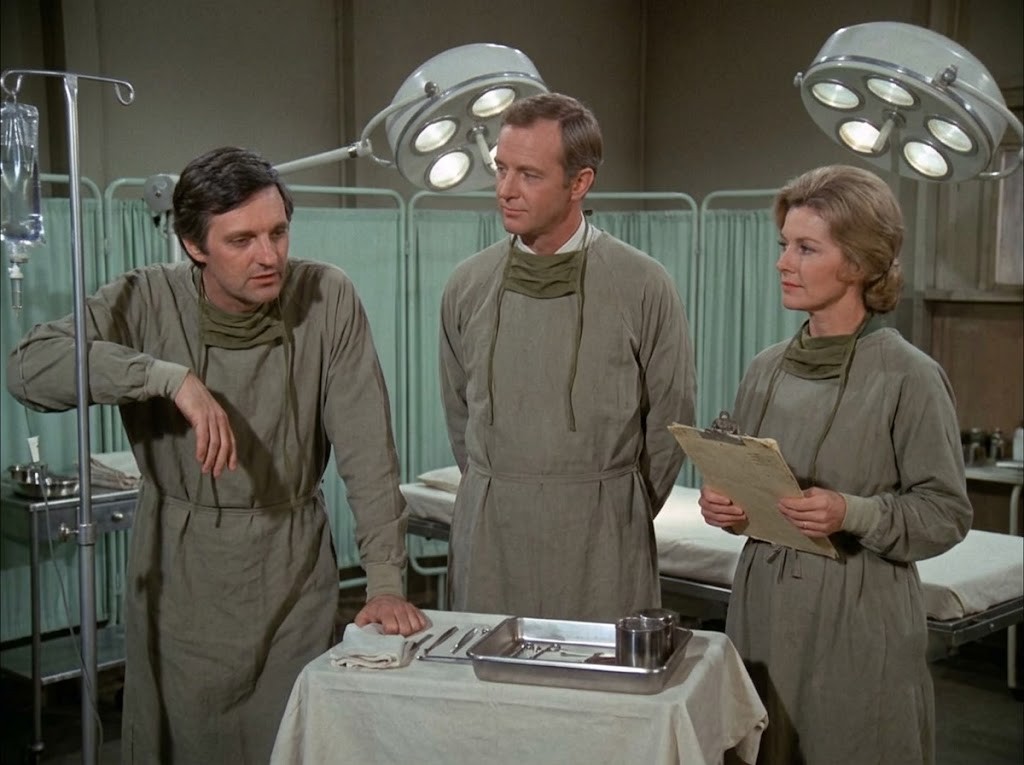
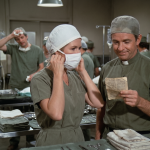
The OR was finally silent, save for the rhythmic, lonely hum of the generator echoing against the corrugated metal walls. It was one of those rare, suspended moments in Korea where the screaming had stopped and the choppers had finally quit their incessant drumming.
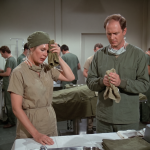
Hawkeye Pierce leaned heavily against the IV stand, his shoulders slumped under the weight of a fatigue so deep it felt like it had seeped into his bones. He looked across the small, stainless-steel instrument table at B.J. Hunnicutt and Margaret Houlihan.
The air in the tent was heavy with the smell of soap, antiseptic, and the lingering, metallic tang of a long day that had started yesterday.
“I’ve seen better looking collections of hardware in a junk drawer in Crabapple Cove,” Hawkeye murmured, his voice raspy and stripped of its usual razor-sharp bite. He nodded toward the tray of instruments.
Margaret, still clutching her clipboard like a shield against the exhaustion threatening to take her down, didn’t offer her usual retort about his lack of professionalism. She just stood there, her eyes fixed on a point somewhere between Hawkeye and B.J., her face a mask of iron-willed composure.
B.J. was watching them both, his expression uncharacteristically soft, a quiet flicker of concern dancing behind his eyes. He wasn’t smiling, and he wasn’t making a joke. He was just present, anchored to the spot, holding a space for the two of them.
Hawkeye took a shaky breath and reached for the clipboard in Margaret’s hand, his fingers brushing against hers. For a split second, the professional distance evaporated, and they were just three people who had seen too much and weren’t sure how to say any of it.
“Margaret,” he started, his voice suddenly thick, “that last kid… the one from Ohio…”
He stopped, unable to find the words that could bridge the gap between what they had just done and what they were expected to feel. The silence that followed wasn’t just quiet; it was deafening.
Margaret gripped the clipboard tighter, her knuckles turning white, and for the first time in years, her composure began to fracture, the ghost of a tear welling in the corner of her eye. The atmosphere snapped. It was the breaking point, the moment where the dam they had all built to keep the horror out finally, irrevocably, gave way.
B.J. didn’t rush in. He didn’t offer a platitude or a pat on the back. He simply stepped closer, closing the distance between them as if to physically bolster the fragile architecture of their resolve.
“He’s going to make it, Hawkeye,” B.J. said, his voice low, steady, and certain. It was the kind of anchor he always provided, a grounding wire in a storm of uncertainty. “The surgeon did good work. You did good work.”
Margaret let out a long, shuddering breath, her shoulders finally dropping from their rigid perch. She looked down at the chart, then back up at them, her gaze softening from a commander’s stare into something much more human, much more vulnerable.
“I know,” she whispered, the edge of steel in her voice replaced by a quiet, weary grace. “It’s just… sometimes, even when the work is good, the day feels awfully long.”
Hawkeye looked at her—really looked at her—and the cynicism that usually armored him fell away. He saw the woman beneath the rank, the person who hurt just as much as they did, hidden behind the clipboard and the starch.
He didn’t make a joke about her hair or her regulations. He just nodded, a slow, solemn motion of acknowledgment.
“Yeah,” he replied softly. “Long doesn’t even begin to cover it.”
B.J. reached over and gently took the clipboard from Margaret, setting it aside on the table with a quiet clatter. He gestured toward the tent flap where the moonlight was filtering through the mesh, casting long, silver shadows across the floor.
“How about a drink?” B.J. asked, looking at them with a tired, genuine smile. “I believe I have a bottle of something hidden in my footlocker that tastes remarkably like turpentine, but goes down like heaven.”
Margaret let out a faint, genuine laugh, the tension finally leaving her frame. She looked at the tray of instruments one last time, then back at the two men who had become her unlikely, makeshift family in the middle of a war-torn nowhere.
“Make it a double, Beej,” she said, smoothing her apron. “I think we’ve earned the right to forget what year it is for at least an hour.”
As they turned to leave the silent OR, the harsh glare of the overhead lamps seemed to dim, leaving behind the quiet camaraderie of three people who had survived another day together. They walked out into the cool night air, leaving the ghosts of the day behind, bound by the invisible threads of a friendship that only those who have shared the trenches could truly understand.
The 4077th would go on, the war would rumble in the distance, but for this one moment, there was just the quiet comfort of being understood.
In the end, it was never the war they remembered; it was the people who helped them survive it.