The Small Victories of the 4077th
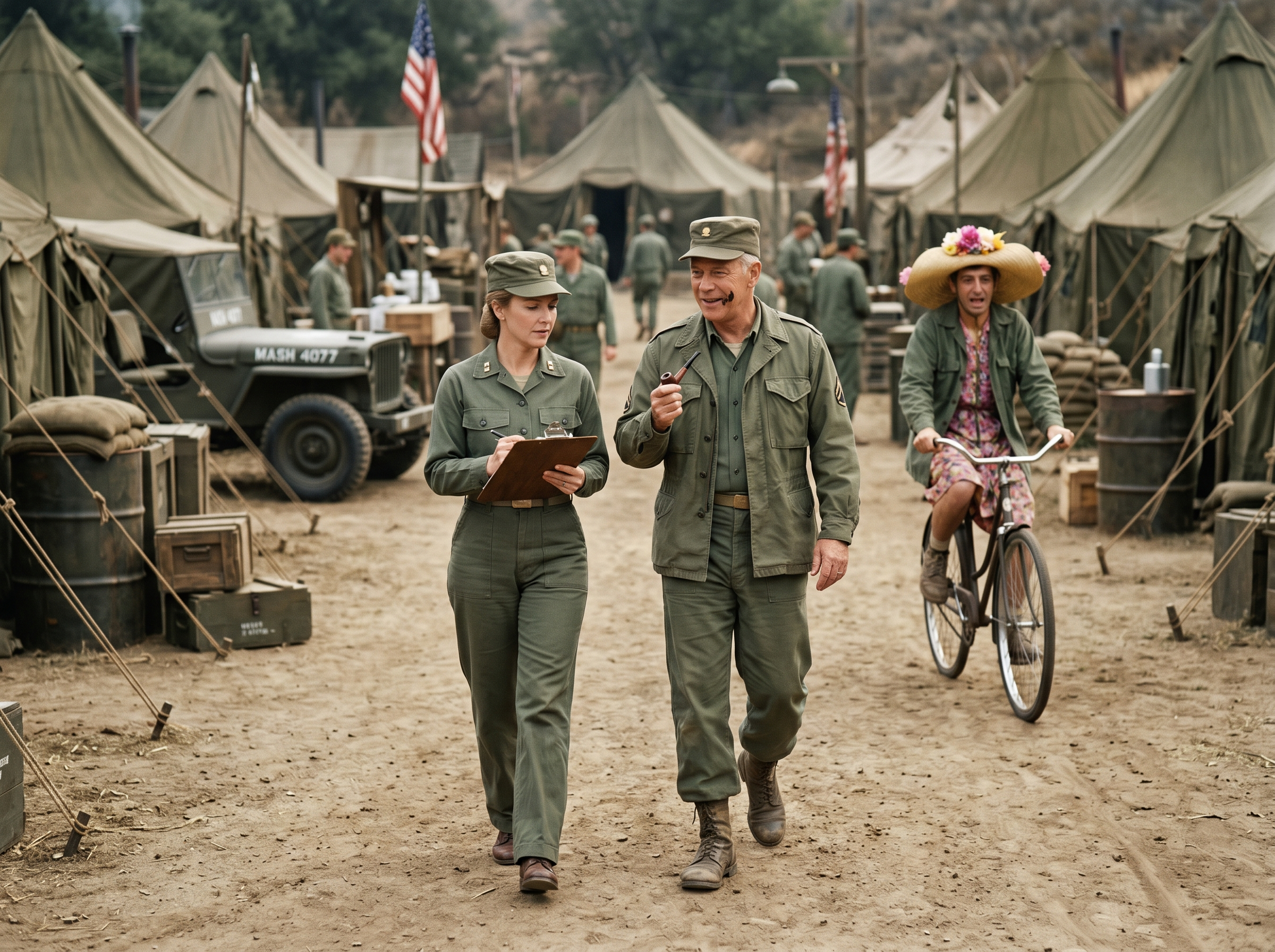
The mud of Uijeongbu had a way of clinging to everything—your boots, your uniform, and eventually, your very soul. It was just another afternoon at the 4077th, the kind where the silence between the choppers felt heavier than the noise of the incoming wounded.
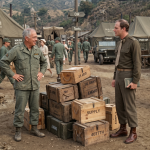
Margaret Houlihan walked with a stiff, practiced precision, her clipboard held against her chest like a shield. Beside her, Colonel Potter strolled with that familiar, rolling gait, his unlit pipe clenched firmly in his teeth. It was a rare, quiet moment of administrative necessity, a break in the relentless rhythm of the operating room.
“The supply requisition for the new sutures is stalled in Seoul again, Colonel,” Margaret noted, her voice clipped but laced with the specific, weary frustration that only a head nurse in a war zone could possess.
Potter sighed, a gravelly sound that seemed to vibrate through his shoulders. “Margaret, at this point, if they don’t send them, I’m half-inclined to start using fishing line and a prayer.”
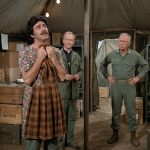
Just as a soft chuckle escaped Margaret, the sound of a rattling bicycle chain punctured the quiet air of the compound. Klinger cruised into view, pedal-pushing with a chaotic, unbothered grace. He was sporting a massive, floral-adorned sun hat that looked less like military issue and more like an enthusiastic garden party gone horribly wrong.
He tipped the brim of that absurd hat toward them, a wide, theatrical grin plastered on his face. But as he steered past them, the front tire hit a deep, hidden rut in the parched earth. The bike wobbled violently. Klinger jerked the handlebars, the front wheel caught the edge of a supply crate, and in a slow-motion cascade of floral fabric and desperation, he pitched sideways.
He didn’t quite fall, but he was pinned, one leg trapped beneath the frame, the bike canted at an impossible angle. The silence that followed was absolute, until Klinger looked up, his hat askew, and let out a dramatic, high-pitched gasp.
“Colonel!” he wailed, his eyes wide with mock terror. “I’ve been ambushed by a piece of farm machinery! This is surely a violation of the Geneva Convention!”
Potter didn’t even break his stride, though the corner of his mouth twitched upward. “Save the dramatics for the MPs, Klinger. You’re holding up the mail.”
Margaret, however, stopped dead in her tracks. Her professional mask slipped for just a fraction of a second, and a genuine, reluctant smile bloomed on her face. She stepped forward to help, but stopped, her eyes catching something that made her breath hitch. Behind Klinger, near the edge of the tent line, she saw the shadow of someone approaching, holding a letter that had been marked ‘URGENT’—a letter that she had been waiting for since the sun rose.
The sight of that envelope turned the moment from a minor comedy of errors into something much sharper. Margaret’s hand, usually steady enough to assist in the most delicate surgery, betrayed her with a slight tremor as she reached for her clipboard.
Klinger, sensing the sudden shift in the atmosphere, stopped his theatrics. He untangled himself from the bicycle, his expression softening instantly from jester to witness. He saw the way Margaret’s gaze had locked onto the approaching courier, and he quietly righted his bike, stepping aside without a word.
Colonel Potter noticed it, too. He took the pipe out of his mouth, his eyes crinkling at the corners. He had seen that look a hundred times before—the terrifying, wonderful vulnerability of someone waiting for a word from home.
“Go on, Major,” Potter murmured, his voice stripped of all its military gruffness. “The sutures can wait ten minutes. The world won’t end if we take a breath.”
Margaret hesitated, looking from the Colonel to the courier, then back to the mud-caked compound. The humor of Klinger’s tumble was still hanging in the air, a fragile bit of normalcy they were all clinging to. She realized that she wasn’t just waiting for a letter; she was waiting for a reminder that there was a life waiting for her on the other side of this madness.
She nodded at the Colonel, a gesture of profound, silent thanks, and walked toward the courier. As she took the letter, her fingers brushing the paper, she felt the eyes of her friends on her. Klinger had leaned his bike against a crate and was busying himself with adjusting his floral hat, giving her a small, respectful sliver of privacy. Potter had turned back toward his office, his hands clasped behind his back, pretending to be very interested in the state of the tent ropes.
It wasn’t a grand victory. They hadn’t ended the war, they hadn’t saved a life, and the supply shipment was still late. But in that dusty, sun-drenched intersection of their temporary home, a tired nurse had been given a moment of peace, and a frantic orderly had been allowed to be human.
Margaret stood there for a long moment, the envelope clutched in her hand. She didn’t open it yet. She just held it, grounding herself in the presence of the people who had become her family by default, by tragedy, and by choice.
The sun began to dip behind the hills, casting long, golden shadows across the camp. The distant, rhythmic thumping of a chopper began to build in the air, signaling that the lull was over and the work was about to begin again. But for those few heartbeats, under the watchful eyes of their commander and the silent grace of a friend, they were just people standing in the dust, grateful for the pause.
She looked at Klinger, who offered a small, sincere nod, and then at the Colonel, who tipped his cap. It was a scene as messy and beautiful as the war itself—a brief, quiet truce with the exhaustion of it all. As she finally turned to walk toward her tent, the letter held safely against her heart, the weight of the world felt, if only for an evening, just a little bit lighter.
It is the small, quiet moments that carry us through the long, loud ones.