The Midnight Truce at the 4077th
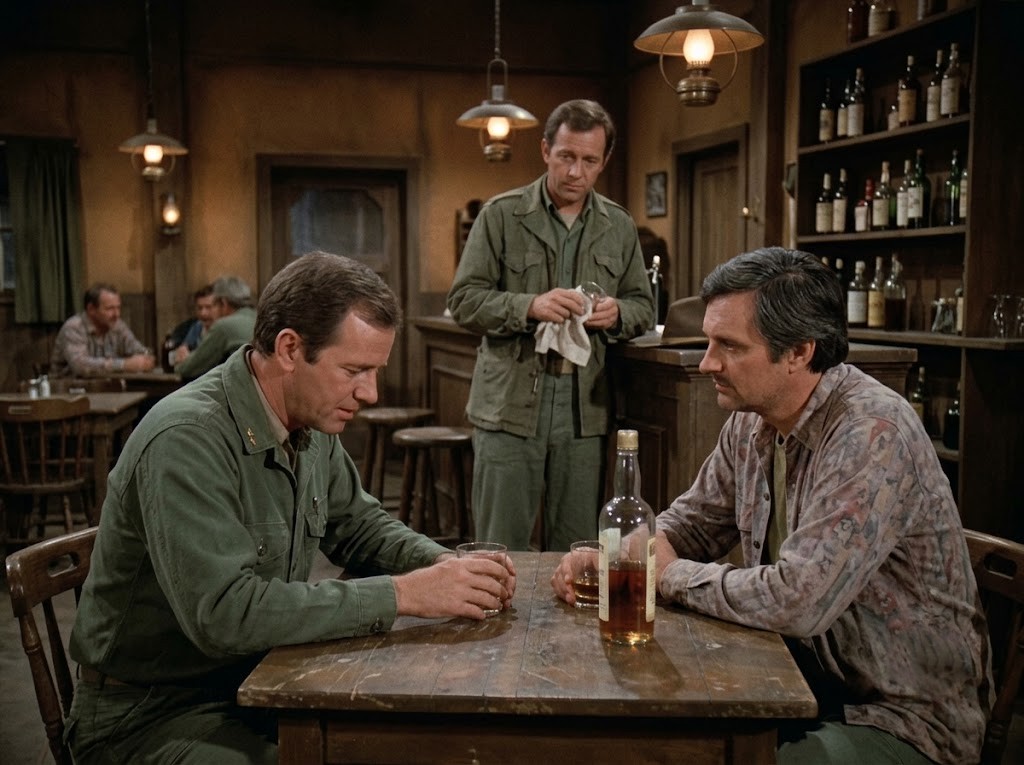
The Officer’s Club was dead quiet, save for the dull, rhythmic hum of the camp generator and the hollow squeak of a rag against glass.
It was a little past three in the morning, and the air inside the tent was thick and stale. It smelled of cheap gin, old cigarette smoke, pine needles, and the lingering, metallic scent of iodine that never truly washed off their skin.
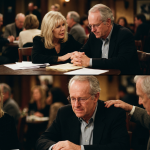
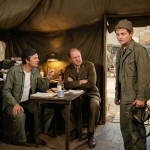
Hawkeye Pierce sat slumped at a scratched wooden table, staring into the middle distance.
He was wearing a faded, brightly patterned shirt that he usually wore to feel like a civilian again. Tonight, however, the loud fabric just felt like a heavy, absurd costume. His shoulders were curled inward, and his eyes burned with that unique, gritty ache that only came from standing for eighteen unbroken hours over an operating table.
Across from him sat the absolute last person in the world he wanted to share a drink with, yet the only person who happened to still be awake.
Major Frank Burns.
Between them, precisely in the center of the sticky table, sat a bottle of generic whiskey. It acted as a glass border, a demilitarized zone separating their usual opposing territories.
Hawkeye stared at Frank through half-closed, bloodshot eyes. He was far too tired to muster up a sarcastic remark, too emotionally drained to launch into a theatrical monologue, and frankly, too hollowed out to even care.
Usually, Frank would be sitting stiffly at attention, loudly complaining to anyone who would listen. He would be whining about army regulations, the disrespectful length of Hawkeye’s hair, or the general moral decay of the camp’s enlisted personnel.
But tonight, Frank was silent. He was slumped forward, his olive drab uniform looking uncharacteristically rumpled and stained with sweat.
His hands were clasped tightly around a half-filled tumbler. His gaze was locked downward, staring at the amber liquid as if trying to read a grim, terrible fortune at the bottom of the glass.
Behind them, an exhausted officer covering the late bar shift mechanically wiped the inside of a highball glass. The man stared blankly at the wall, lost in his own fatigue.
Hawkeye blinked hard. His vision was swimming so badly from sleep deprivation that, for a surreal, dizzying second, the man standing behind the bar looked exactly like Frank. It was a terrifying trick of the light and a tired mind, a testament to how deeply this unending war was scrambling his brain.
Hawkeye rubbed his tired face and focused back on the real Frank sitting across from him. The silence between them was thick, heavy, and oppressive. It stretched out for what felt like hours.
They had just lost a kid in the OR.
He was a nineteen-year-old corporal with a picture of a girl from Iowa in his pocket, and a jagged piece of shrapnel that had simply done too much damage before he even reached the chopper pad.
Hawkeye waited. He waited for Frank to break the silence with something foolish, petty, or cruel.
He braced himself for Frank to blame the corpsmen, or the bumpy ambulance ride, or the poor lighting in the surgical tent. Hawkeye was ready to snap back, ready to use his biting anger to keep the crushing weight of the loss at a safe distance.
Instead, Frank slowly lifted his head.
His eyes were red-rimmed, exhausted, and completely stripped of their usual arrogant bluster.
Frank stared right into Hawkeye’s eyes and, in a voice barely above a broken whisper, said, “I thought I had the bleeder clamped, Pierce. I really thought I had it.”
The words hung in the stale air, terribly heavy and completely raw.
Hawkeye sat frozen in his chair. The sharp, witty comeback he always kept loaded in the chamber simply vanished from his mind.
He looked at the man across the table. For the first time in months, he didn’t see ‘Ferret Face,’ the pompous, rule-obsessed hypocrite who drove him absolutely crazy on a daily basis.
He just saw another drafted doctor, three thousand miles away from home, drowning in the exact same miserable ocean of blood, mud, and guilt.
Hawkeye let out a long, slow breath, letting his defenses drop. He reached forward, his hand trembling slightly from the inevitable adrenaline crash, and grabbed the neck of the whiskey bottle.
“It was a shredded artery, Frank,” Hawkeye said quietly, his voice raspy and devoid of any mocking tone. “It retracted deep. Nobody could have found it in time. Not you, not me, not the Mayo brothers.”
Frank didn’t look up, but his grip on the glass tightened until his knuckles turned white. “I was right there. I had the clamps in my hand. If I was just a second faster…”
“Stop,” Hawkeye interrupted, his tone surprisingly gentle but firm. “Just stop. You can’t play the ‘what if’ game tonight. It’ll eat you alive, and there’s nothing left of us to eat.”
Frank finally raised his eyes. There was a desperate kind of pleading in them, a silent, agonizing request for absolution that Hawkeye never expected to be on the receiving end of. It was unsettling to see a man so thoroughly defeated.
“He was only nineteen, Pierce,” Frank muttered, his voice cracking just a fraction. “He looked like he should be worrying about a high school dance.”
“I know,” Hawkeye replied softly, the reality of the war pressing down on his chest like a physical weight.
Hawkeye uncorked the bottle and tipped it over Frank’s glass, splashing a generous, fresh measure of whiskey over the remaining drops. He then poured a heavy pour for himself.
The officer behind the bar set down his polished glass, turned off the small overhead lamp, and quietly slipped out the back door. He left the two surgeons entirely alone in the dim, yellow glow of the corner bulbs.
They sat in the quiet, listening to the distant, rhythmic thumping of chopper blades fading off into the dark mountains. The war was still out there, waiting for them, indifferent to their exhaustion. But inside this small wooden room, a temporary, unspoken armistice had been called.
Hawkeye picked up his glass. “To the nineteen-year-olds,” he said softly, raising the glass an inch off the scratched wood.
Frank looked at his own drink for a long moment. Then, with a trembling hand, he slowly raised it to meet Hawkeye’s.
The faint *clink* of cheap glass against cheap glass was the loudest, most profound sound in the room.
“To the nineteen-year-olds,” Frank echoed, his voice steadying just a bit as he took a sip.
They drank in silence. The cheap whiskey burned fiercely on the way down, a harsh, grounding reminder that they were still alive, still breathing, and still trapped in the unending cycle of triage and surgery.
Hawkeye set his glass down and leaned back in his chair, feeling the rigid, painful tension in his neck finally start to loosen. He watched Frank out of the corner of his eye.
The major was sitting a little taller now. The familiar, rigid stiffness was slowly returning to his posture as the terrifying moment of vulnerability safely passed. The walls were being rebuilt, brick by brick.
Hawkeye knew it was time to let things go back to normal. It was safer that way.
“You know, Frank,” Hawkeye said, a faint, tired smirk touching the corner of his mouth. “If you ever tell anyone in this camp that I was actually decent to you, I’ll completely deny it. I have a terrible reputation as a degenerate to uphold.”
Frank sniffed loudly, adjusting the collar of his uniform with a practiced, defensive twitch. “Don’t worry, Pierce. I certainly wouldn’t want anyone to think I associate with insubordinate, undisciplined draftees outside of working hours.”
Hawkeye chuckled softly, a quiet, genuine sound that briefly chased away the shadows in the room.
The truce was officially over. The emotional armor was back in place, and tomorrow morning they would undoubtedly be back to shouting at each other across the scrub sink over something entirely trivial.
But for tonight, in the quiet, lonely shadows of the Officer’s Club, they had shared something incredibly real. They had shared the burden.
Hawkeye pushed himself up from the table, his knees and joints popping in loud protest. He paused next to Frank’s chair and gave him two firm pats on the shoulder—a brief, unspoken acknowledgment of their mutual survival.
He didn’t look back as he walked out the door and stepped into the cool, dark Korean morning, pulling his thin patterned shirt tighter against the biting chill.
In a place designed entirely for breaking bodies, sometimes the only thing holding them together was the quiet, reluctant understanding of a shared, unspoken grief.