The Coffee Pot Protocol
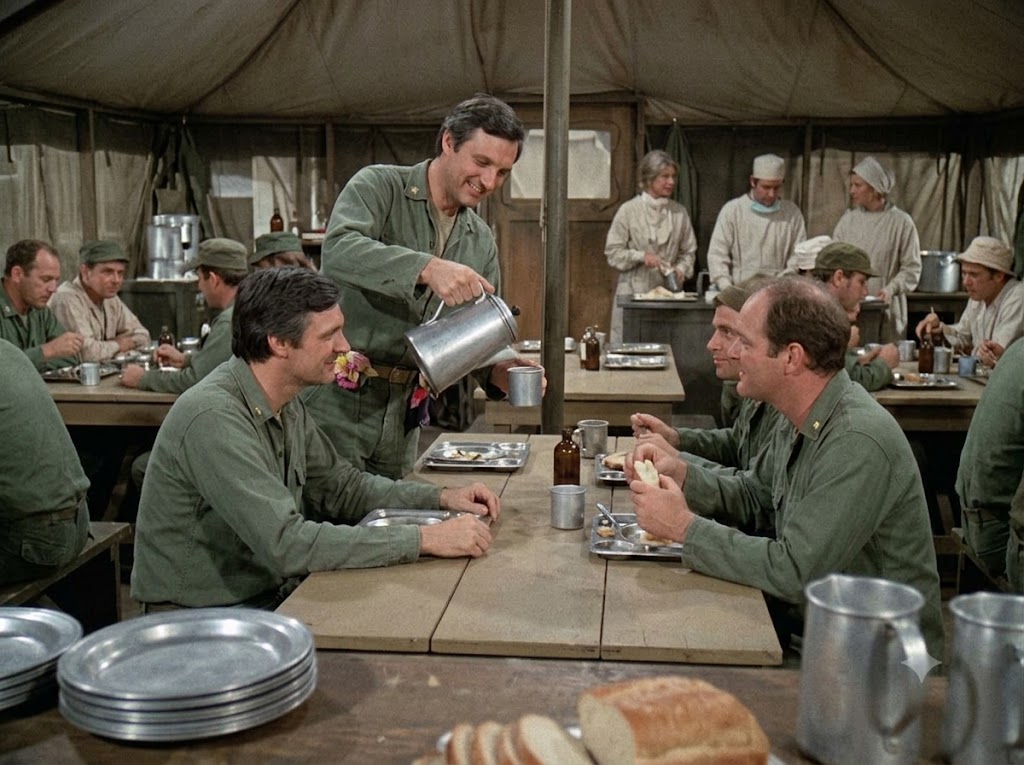
The mess tent always smelled the same after a thirty-six-hour shift in O.R.
It was a heavy, inescapable mixture of boiled cabbage, damp canvas, powdered eggs, and the sharp, metallic tang of sterilized instruments that seemed to cling to everyone’s skin.
Outside, the Korean wind rattled the tent flaps, a constant reminder of the miles separating the 4077th from anything resembling home. Inside, the silence was thick, broken only by the rhythmic scraping of metal forks against tin trays.
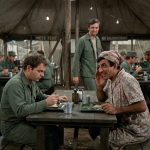
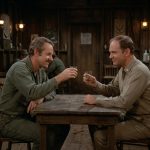
Hawkeye Pierce stood by the wooden table, his face etched with lines of pure exhaustion that no amount of wisecracking could quite erase. Yet, as he tilted the heavy aluminum pitcher, pouring a stream of lukewarm, muddy coffee into B.J. Hunnicutt’s tin cup, a genuine smile broke through the fatigue.
“Drink up, Beej,” Hawkeye murmured, his voice a gravelly rasp. “It’s a vintage blend. Late Tuesday morning, with just a hint of rust and a delicate note of despair.”
B.J. looked up from his tray, his eyes crinkling at the corners with that steady, grounded warmth that had kept Hawkeye sane through more nights than either of them cared to count.
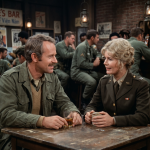
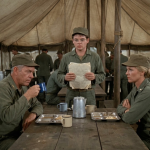
Sitting directly across from B.J., Charles Emerson Winchester III stared at his piece of bread as if it were a personal insult from the kitchen staff. His collar was slightly rumpled—a rare sign of near-total defeat for Boston’s finest—but he still held himself with a rigid, defiant dignity.
“Pierce, if you bring that vile cauldron of battery acid anywhere near my proximity, I shall be forced to report you to the Geneva Convention for psychological warfare,” Charles muttered, though he didn’t actually move away.
“Oh, come now, Charles,” Hawkeye teased, moving the pitcher just an inch closer. “I thought a man of your refined culture would appreciate a beverage that can simultaneously clean a radiator and strip paint.”
Further down the table, a few enlistees and nurses ate in quiet solidarity, their shoulders slouched, their caps pushed back. In the background, Nurse Abel stood by the serving line, wiping down a counter with slow, methodical strokes, her eyes fixed on the door as if waiting for the next siren to blow.
The humor in the mess tent was always a fragile shield, a way to keep the darkness of the frontline at bay, but today the air felt different. The shift they had just finished had been brutal, a relentless tide of young boys with shattered bodies and terrified eyes.
Hawkeye’s hand trembled slightly as he set the pitcher down, the metal clinking sharply against the worn wooden planks. The smile faded from his lips for a fraction of a second, revealing the raw, aching vulnerability underneath the quick wit.
He looked around the table, from B.J.’s quiet, watchful gaze to Charles’s uncharacteristic silence, and realized that the jokes weren’t working anymore; the exhaustion was simply too deep, the weight of the war too heavy to laugh away.
Just then, the distant, unmistakable whup-whup-whup of incoming choppers began to vibrate through the floorboards, cutting through the tent like a knife.
The sound of the helicopters usually triggered an instant, adrenaline-fueled race to the helipad, a collective snapping-to-attention that erased all weariness.
But in that precise moment, nobody moved.
B.J. froze with a piece of bread halfway to his mouth, his eyes locking onto Hawkeye’s. Charles stopped his quiet grumbling, his hands resting flat on the table, his shoulders tightening under his olive-drab shirt.
For three long heartbeats, the mess tent held its breath, waiting for the PA system to crackle to life with Radar’s urgent, nasal voice summoning them back to the blood and the chaos.
Instead, the sound of the choppers began to fade, passing high over the camp and continuing south toward the evacuation hospital in Seoul. They weren’t stopping here.
A collective, shuddering exhale passed through the room, a silent prayer of thanksgiving that didn’t need to be spoken aloud.
Hawkeye picked the aluminum pitcher back up, his fingers gripping the handle a little tighter, using the motion to steady the sudden tremor in his arm.
“As I was saying,” Hawkeye continued, his voice softer now, stripping away the performative sarcasm to leave only a gentle, protective warmth. “The secret to the 4077th blend is that it’s served by friends who know exactly how many sugars you take when you’re too tired to remember your own middle name.”
He reached over and poured a steady stream into Charles’s cup, ignoring the aristocrat’s initial glare.
Charles looked at the steaming, dark liquid, then up at Hawkeye, and finally at B.J. The sarcasm died in his throat, replaced by a quiet, fleeting look of profound gratitude that he would undoubtedly deny having ever felt by tomorrow morning.
“Thank you, Pierce,” Charles said softly, his voice dropping its usual theatrical pomp. He took a slow sip, wincing slightly, but he didn’t put the cup down.
B.J. broke his bread in half, sliding the larger piece across the table toward Hawkeye, who slid onto the bench beside him with a heavy, grateful sigh.
“Eat something, Hawk,” B.J. said quietly, his hand resting briefly on his partner’s shoulder—a simple, grounding touch that communicated everything that words couldn’t manage in a place like this. “We’ve got another twelve hours before the next scheduled convoy. Let’s just sit here and pretend the rest of the world doesn’t exist for a little while.”
Around them, the rest of the mess tent relaxed, the stiffness leaving the shoulders of the tired nurses and corpsmen as they returned to their meals, comforted by the familiar, low murmur of the doctors’ voices.
They were thousands of miles from home, living in tents in the middle of a mud-soaked valley, surrounded by a conflict that seemed to have no end. They were exhausted, homesick, and deeply scarred by the things they saw every single day.
Yet, as Hawkeye took a sip of his own terrible coffee, looking at the found family gathered around the scarred wooden table, the bitterness of the war seemed to recede, just for a moment, replaced by the enduring warmth of human connection.
They would face the O.R. again, they would cry for the boys they couldn’t save, and they would count the days until their rotation numbers came up. But right now, in the quiet sanctuary of the mess tent, they had each other, a pot of bad coffee, and a friendship that not even the Korean winter could freeze.
Sometimes, the greatest medicine the 4077th ever prescribed was simply being there to pour the next cup.