The Triage of a Quiet Laugh
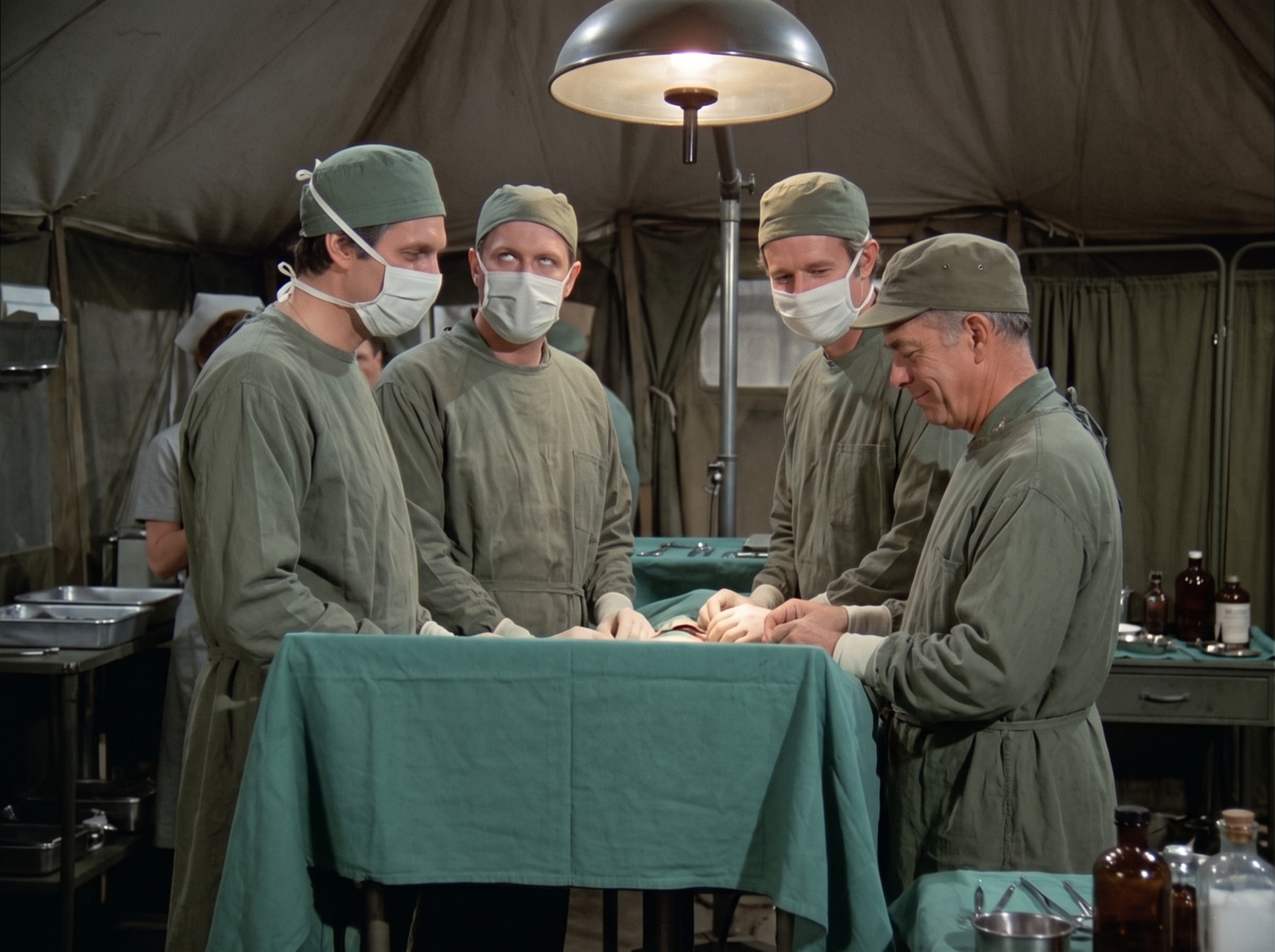
The generator hummed its endless, rattling lullaby, the only sound in the suffocating heat of the O.R. besides the sharp clink of metal on metal.
It was hour fourteen of a session that felt like it had started sometime last month. The 4077th was drowning in a familiar, endless sea of olive drab and muted sterile greens.
Under the harsh, glaring heat of the surgical lamps, four men stood around a modestly framed operating table. They were running on nothing but stale coffee, adrenaline, and sheer, stubborn willpower.
The air in the room was incredibly heavy. It was the kind of thick, pressing silence that only comes when exhaustion is about to break into outright despair.
Colonel Sherman Potter stood at the head of the table. His hands moved with the practiced, steady rhythm of a man who had seen too many wars, though the deep lines of fatigue were etched firmly into his forehead.
Beside him, B.J. Hunnicutt shifted his weight from one aching foot to the other. His shoulders were slumped, his eyes heavy, but his focus remained locked on the task in front of him.
Across the table, Major Charles Emerson Winchester III was operating in a state of rigid, aristocratic misery. His spine was entirely too straight for a man who had been standing on a dirt floor since dawn.
Every breath Charles took through his cotton mask was a sharp, indignant sigh. He was operating perfectly, as always, but his nerves were fraying thin, his patience entirely evaporated by the brutal conditions of the mobile hospital.
And then there was Hawkeye.
Captain Benjamin Franklin Pierce was swaying just slightly on his feet, teetering on the very edge of collapse. His eyes were bloodshot, his surgical gown damp with sweat, and his hands were trembling just a fraction whenever he paused to wait for a clamp.
They had just pulled a young soldier back from the brink. The crisis had passed, the bleeding was stopped, and the vital signs were finally steadying.
But the sudden drop in adrenaline left a vacuum in the room. It was a dangerous, hollow space where the horror of the war usually rushed back in to crush them.
Charles suddenly snapped his forceps down on the tray with a sharp, echoing clatter. His eyes darted up, filled with a sudden, overwhelming irritation, ready to unleash a venomous monologue about the barbaric indignity of their surroundings.
He opened his mouth beneath his mask, drawing in a breath to shout.
Before Charles could say a single word, Hawkeye didn’t even look up from his sutures. He just stared at the canvas wall and delivered a joke.
It wasn’t loud. It wasn’t theatrical. It was an incredibly dry, deadpan observation about the distinct lack of proper room service in this particular corner of purgatory, muttered in a voice rough with fatigue.
The joke hung in the stifling, iodine-scented air.
The entire O.R. went dead silent. The nurses paused. The hum of the generator suddenly seemed deafening.
Hawkeye finally looked up, his bloodshot eyes locking onto Charles.
The moment balanced on a razor’s edge. Everyone waited for the Boston surgeon to explode, for the tension to finally shatter the quiet professionalism of the room into a thousand angry pieces.
For three agonizing seconds, Winchester just stared at Hawkeye. His eyes were narrowed into cold, surgical slits.
Then, slowly, dramatically, Charles rolled his eyes toward the ceiling of the canvas tent.
He let out a long, heavy sigh that fluttered the green fabric of his surgical mask. But as the sigh left his lungs, a miraculous thing happened.
The rigid, angry line of Winchester’s shoulders visibly dropped. The fight drained entirely out of his posture, replaced by a weary, reluctant resignation.
He didn’t yell. He didn’t monologue. He just picked up his forceps again, shaking his head in silent, aristocratic disbelief that he was forced to share a planet with Benjamin Franklin Pierce.
Across the table, Hawkeye’s sharp, tired eyes crinkled into a distinct look of amusement.
He looked over the top of his mask, the exhaustion momentarily pushed back by the sheer, petty triumph of disarming a Winchester. It was a look of sharp wit, perfectly aimed and flawlessly executed.
Hawkeye hadn’t made the joke just to be a clown. He had felt the room breaking. He had seen Charles about to fracture under the weight of the war, and he had thrown a lifeline wrapped in sarcasm.
Beside Hawkeye, B.J. caught the exchange. A soft, grounded smile spread beneath Hunnicutt’s mask.
B.J. didn’t say a word. He didn’t need to. He just offered a quiet, steadying nod to his best friend, a silent acknowledgment of the tiny miracle that had just occurred.
It was the look of a wingman who understood exactly what Hawkeye was doing. They were doctors, yes, but sometimes the most important triage they performed was on each other’s minds.
At the head of the table, Colonel Potter hadn’t stopped working. His hands continued to move with delicate, life-saving grace.
But if you looked closely, you could see the deep lines at the corners of Potter’s eyes crinkling upward.
A gentle, fatherly smirk formed beneath the Colonel’s mask. He kept his gaze firmly fixed on the patient, but he let out a low, gravelly chuckle that barely rose above the hum of the generator.
“Keep your eyes on the road, Pierce,” Potter murmured affectionately, his voice rough but incredibly warm.
The unbearable tension in the room simply vanished. It wasn’t defeated by a grand speech or a dramatic victory; it was chased away by the quiet, shared humanity of tired men leaning on one another.
The weary professionalism of the 4077th settled back over the room like a heavy, comforting blanket.
The surgical lamps still beat down on them with relentless heat. The war was still raging just a few miles down the road, bringing more choppers, more wounded, and more endless nights.
Their feet still ached. Their backs were still screaming in protest. They were still thousands of miles away from everything they loved and held dear.
But as they stood around that modestly framed surgical table, the air felt just a little bit lighter to breathe.
They weren’t just a unit of drafted surgeons forced together by the United States Army. They were a family forged in the most unlikely of places.
Hawkeye went back to his suturing, the sharp amusement fading back into a focused, weary determination.
B.J. passed him a pair of scissors, the quiet, steady rhythm of their partnership completely restored.
Charles asked for a sponge, his voice devoid of its earlier venom, sounding only like a very tired doctor trying to do his best.
And Potter watched over them all, the steady patriarch guiding his flock through another impossible night in the dark.
They would finish this patient. They would strip off their sweat-soaked gowns and stumble out into the freezing Korean night.
They would walk toward the mess tent in silence, too exhausted to speak, too drained to even complain about the powdered eggs.
But they would walk together.
Because in the end, it wasn’t the medicine that kept them alive in this place. It was the absolute certainty that when the pressure became too much to bear, someone across the table would catch them before they fell.
It was the dark humor used as a shield, the quiet smiles used as bandages, and the unbreakable bond of friendship that survived beneath the harsh, unyielding glare of the surgical lights.
Sometimes, the most vital piece of medical equipment in the O.R. was just a perfectly timed smile shared between tired friends.