The Audit of the Heart
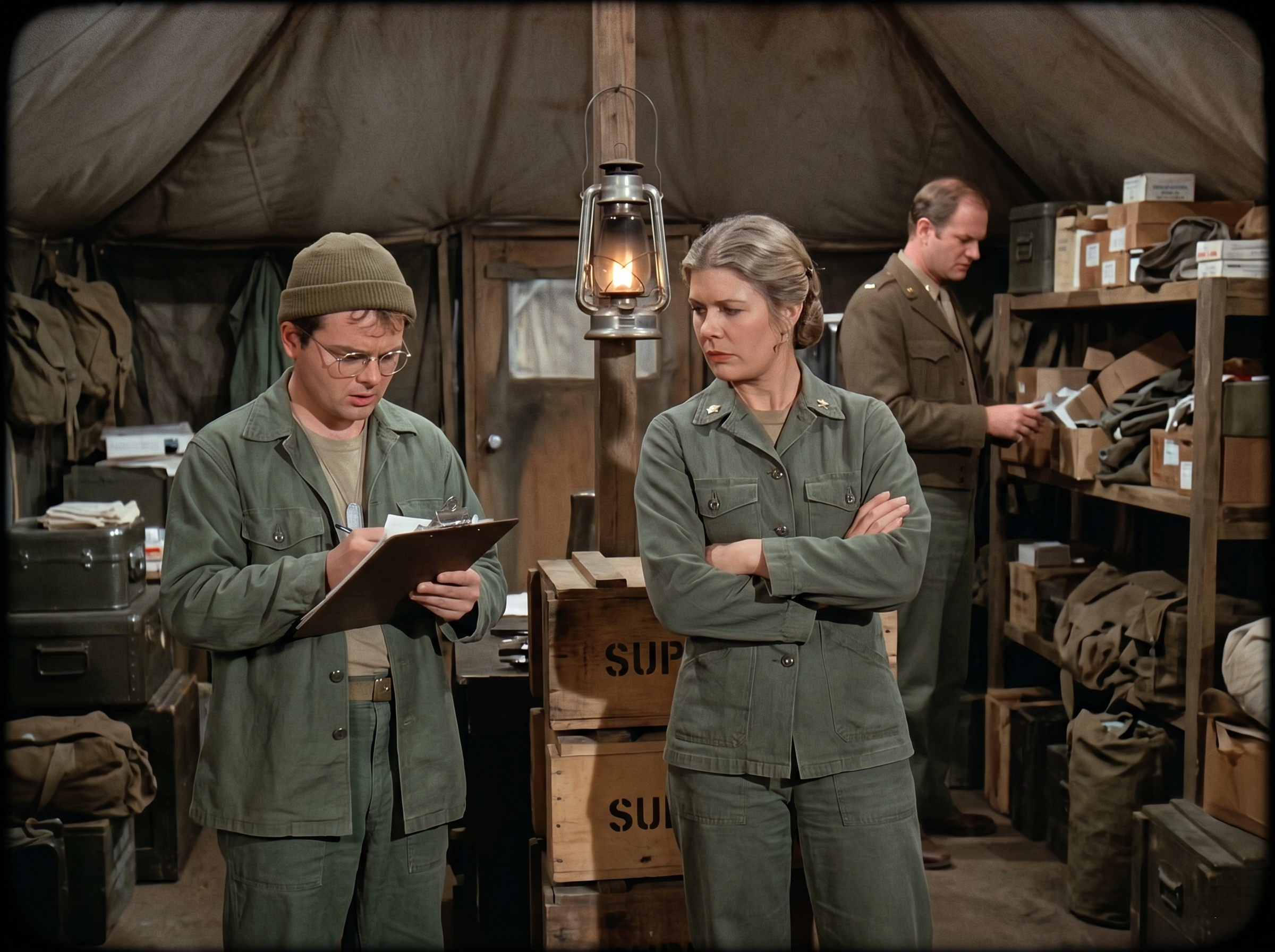
The supply tent always smelled of damp canvas, stale coffee, and the unique, dusty scent of bureaucracy. It was a place where things went to be counted, filed, and occasionally lost to the abyss of Army regulations.
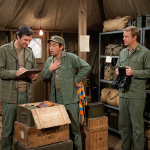
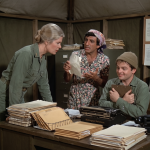
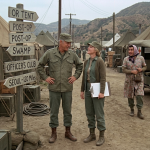
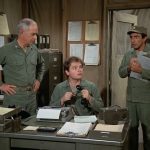
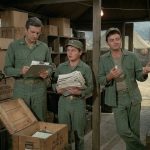
Radar O’Reilly stood under the flickering glow of the lantern, his brow furrowed so deeply it looked like it might leave a permanent mark. He gripped his clipboard like a shield, his pencil poised, while Margaret Houlihan stood just a few feet away, her arms tightly crossed, looking like a statue carved from pure military discipline.
“Corporal,” Margaret said, her voice tight, echoing off the canvas walls. “We need those morphine requisitions by 0800. The chopper won’t wait for your ‘inventory adjustment’.”
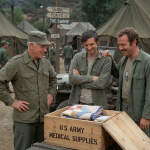
Radar swallowed hard, his eyes darting from his list to her stern, unyielding expression. In the background, Charles Winchester—ever the picture of detached superiority—was busy sorting through a crate of surgical supplies, his back turned, though he was clearly listening to every word.
“I know, Major, I know,” Radar stammered, adjusting his glasses. “It’s just… the numbers don’t match. They never match. I’ve recounted the gauze, the catheters, and the… well, the extra boxes of ‘SUP’ that somehow appeared out of thin air.”
He looked up, his face filled with that frantic, earnest desperation that made it impossible to stay truly angry at him. Margaret sighed, a sound that started as a reprimand but softened into the weary exhale of someone who had seen too many days bleed into too many nights.
She stepped closer, her posture shifting just enough to betray the exhaustion hidden beneath her stiff uniform.
“Radar,” she started, her tone dropping an octave, “this isn’t just paperwork. This is about being ready when the wounded start coming in. If you can’t find those supplies, people suffer.”
“I am trying, Major!” Radar blurted out, his voice cracking just a fraction. “But I think… I think the reason the count is off is because I gave some of the extra supplies to the orphanage in the valley yesterday.”
The silence that filled the tent was sudden and heavy. Margaret stared at him, her lips pressed into a thin line, her eyes wide with a mixture of shock and something far more complicated.
—
The silence stretched, broken only by the crackle of the lantern and the soft thud of a box being set down by Winchester in the shadows. Charles paused, a small, knowing smirk playing on his lips, though he remained pointedly turned away.
Margaret took a slow breath, her arms finally unfolding. She looked at Radar, then down at the clipboard, and then back at his earnest, trembling face. The professional armor she wore began to crack, just a hairline fracture, but enough to let the humanity through.
“You gave medical supplies to the orphanage?” she asked, her voice quieter now, lacking its previous edge. “Without a requisition form?”
“They were sick, Major,” Radar said softly, clutching the clipboard to his chest like a prayer book. “The kids. There was a fever going around, and… I just couldn’t watch them suffer because of a missing signature on a piece of paper.”
Margaret looked away, staring at a stack of crates marked ‘SUP’. She reached out and touched the wood, tracing the letters with her finger. She had spent her career obsessed with the rules, with the idea that the rules were what kept the 4077th from descending into chaos. Yet, here stood a kid who understood that sometimes, the only rule that mattered was the one written on the human heart.
“You know this is a court-martial offense if the wrong person finds out,” she whispered, stepping into his space.
“I know,” Radar replied, looking at her with total, terrifying trust.
Suddenly, a muffled cough came from the back of the tent. Charles turned around, his expression remarkably un-Winchester-like. He walked over, his eyes scanning the supply list on Radar’s board with a practiced, aristocratic detachment.
“Major Houlihan,” Charles began, his voice surprisingly steady, “it appears I miscounted the inventory in crate 4-B. It seems a clerical error on my part—a temporary lapse in judgment—resulted in a discrepancy of several dozen units. I shall note it as an ‘administrative loss’ in the morning log.”
Radar blinked, his mouth slightly agape. Margaret looked at Charles, then back at Radar, and a small, genuine smile tugged at the corners of her mouth—a rare, soft look that took ten years off her face.
“I see,” Margaret said, nodding slowly. “Well, Winchester, make sure you don’t make that mistake again. We wouldn’t want the supply records to be inaccurate.”
“Perish the thought,” Charles replied, adjusting his sleeves with a dismissive flick of his wrists before turning back to his work.
Radar let out a long, shaky breath, his shoulders finally dropping. The tension in the room didn’t disappear—it never truly did in the 4077th—but it transformed. It settled into something warmer, something that felt like a quiet victory against the cold, grinding machinery of the war outside.
They were just a clerk, a head nurse, and a surgeon in a tent full of boxes, surrounded by a world that made little sense. But for that moment, amidst the dust and the fading light of the lantern, they were simply people looking out for one another.
Margaret reached out and adjusted Radar’s hat, a motherly gesture that startled them both. She didn’t say anything, just offered a short nod of approval, and walked toward the tent flap.
“Get some sleep, Radar,” she said over her shoulder. “The world will still be broken tomorrow.”
Radar watched her leave, then looked over at Winchester, who was already whistling a soft, classical tune while reorganizing the shelves. He looked down at his clipboard, scribbled a quick note, and finally allowed himself a small, tired grin.
The war was still there, the casualties were still coming, and the bureaucracy would never be perfect. But tonight, at least, the math worked out just fine.
Some battles are won not with cannons, but with a little bit of grace.