THE LETTER HOME
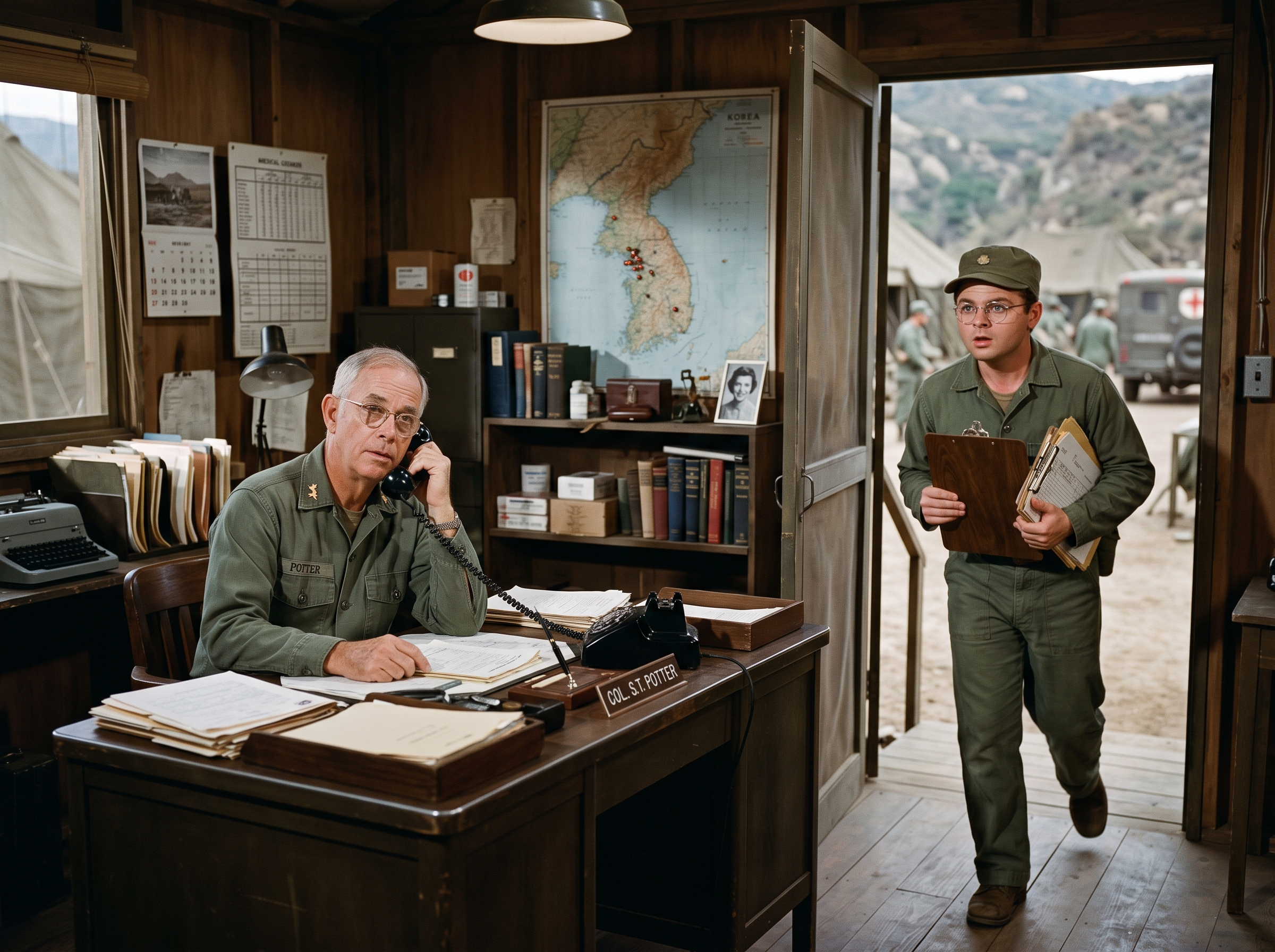
It was another one of those long, dusty afternoons at the 4077th, the kind that seemed to stretch on forever. The intense heat had finally broken, but a sticky humidity hung thick in the air, wrapping itself around the compound. The sound of a lone helicopter had faded into the distance hours ago, leaving behind a heavy silence, only broken by the occasional clatter of pots from the mess tent or the distant, rhythmic thud of artillery fire—a constant reminder of where we were.
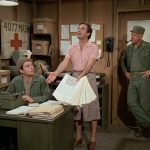
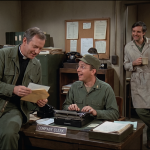
I was finishing up some inventory paperwork in the Supply Tent, my head buzzing from trying to make the numbers match. Colonel Potter had called me into his office to help organize some incoming personnel files, and honestly, the thought of his air-conditioned (or at least, less sweltering) office was a relief. As I walked in, Radar was just leaving, carrying a stack of requisitions and looking slightly flustered, as usual. He shot me a quick nod before disappearing into the main compound.
The Colonel’s office was, as always, a haven of order. He was seated at his desk, the black field phone receiver pressed to his ear. He looked up as I entered, a expression of weary patience on his face. “Be with you in a minute, son,” he muttered, gesturing for me to take a seat. I watched him as he listened, his gaze fixed somewhere on the wall map of Korea. He looked particularly tired today; the fine lines around his eyes seemed etched a bit deeper than usual. “Yes, I understand, General. We’ll make it work. Thank you.” He sighed as he hung up.
“General MacIntosh,” he explained, rubbing his temples. “Seems we’re getting a shipment of medical supplies meant for the 8055th. More paperwork, fewer surgeons. The usual military logic.” He leaned back in his chair, taking a slow sip from a mug of lukewarm coffee. “So, what have we got today, beside the supply mess?“
Before I could answer, the screen door flew open with a bang, and Radar rushed in. He looked completely out of breath, his face unusually pale under the layer of dust. He was holding a crumpled piece of paper in his shaking hand, and his wide eyes were wide with a concern that instantly cut through the room’s sleepy atmosphere. He stopped abruptly in the doorway, staring at the Colonel with an intensity that made me uneasy. “Colonel! Colonel!” he stammered, his voice cracking slightly. “It’s… it’s about Sergeant O’Malley’s mail.“
Potter stared at Radar, his expression shifting from mild annoyance to deep concern. “What about it, son? Slow down.” Radar gulped, trying to catch his breath. “It’s the letter he was writing home. To his wife, Sarah. He… he left it in the mess tent. I found it when I was cleaning up. But, Colonel…” Radar stopped, his voice barely a whisper, a single tear tracing a clean path down his dusty cheek.
“But what, Radar?” Potter asked gently, leaning forward slightly. He gestured toward the open doorway, indicating that perhaps we should step outside. But Radar shook his head, looking terrified. “It isn’t finished,” Radar choked out, his shoulders starting to shake. “He was interrupted… before he could finish it. And I read the beginning. It was so… it was so sweet, Colonel. About how much he missed her, and how he couldn’t wait to come home. He said he was going to tell her a funny story about Klinger and the goat when he finished writing.“
Potter’s face softened instantly. The weary exasperation was gone, replaced by a deep, fatherly sadness. He understood immediately what Radar was telling him, and what that unfinished letter represented. Sergeant O’Malley hadn’t survived the last major casualty influx. Radar looked down at the crumpled paper in his hand as if it were the most fragile thing in the world. He swallowed hard. “I don’t know what to do, Colonel. It’s supposed to be personal. But it’s all she’ll have. How can we send her an unfinished letter? How can we tell her that he was thinking of her, but he just… he ran out of time?“
The Colonel sat back in his chair, his gaze drifting once again to the map on the wall, but this time, he wasn’t seeing military logistics. He was seeing the human cost of the war, measured not in body counts, but in unfinished letters and broken promises. He looked back at Radar, his eyes glistening slightly with his own unshed tears.
“Bring me the letter, son,” he said, his voice steady but thick with emotion. Radar slowly walked forward and placed the crumpled paper on the desk. Potter gently unfolded it, his fingers tracing the shaky handwriting. He sat in silence for a long moment, reading the private words of a man who was no longer with us. The silence in the office was complete, a respectful pause for the life that had been cut short.
Finally, Potter looked up, making eye contact with both of us. His expression was resolute. “We send it, Radar,” he said firmly. “We send it exactly as it is. It’s the last thing he ever wrote to her. Every word, unfinished or not, belongs to her now.” He paused, clearing his throat. “And you, son, will write a letter to go with it. A letter telling her about the funny story he never got to write. About how he made everyone smile, even when things were tough. Tell her about the goat. Make her laugh, if you can. Because that’s what he wanted to do.“
Radar nodded slowly, a small, sad smile touching his lips. “Yes, sir. I can do that. I can tell her all about it.” He picked up the clipboard and the radio message papers he’d dropped, his expression more composed, though still somber. He took the unfinished letter from the desk with infinite care, as if it were sacred text.
The Colonel watched him leave, his gaze lingering on the empty doorway for a long moment after the screen door clicked shut. He then turned back to me, the usual dry humor returning to his eyes, though it was softened by tenderness. “Well, that was certainly not in the files,” he remarked quietly. He picked up his mug of coffee again, but then hesitated, setting it back down without taking a sip. He sat back in his chair and simply stared at the wall map, a man carrying the weight of hundreds of unfinished stories.
In this place, sometimes the most important messages are the ones that never get sent, and the stories that never get finished are the ones we remember the most.