Spit, Baling Wire, and the Heart of the 4077th
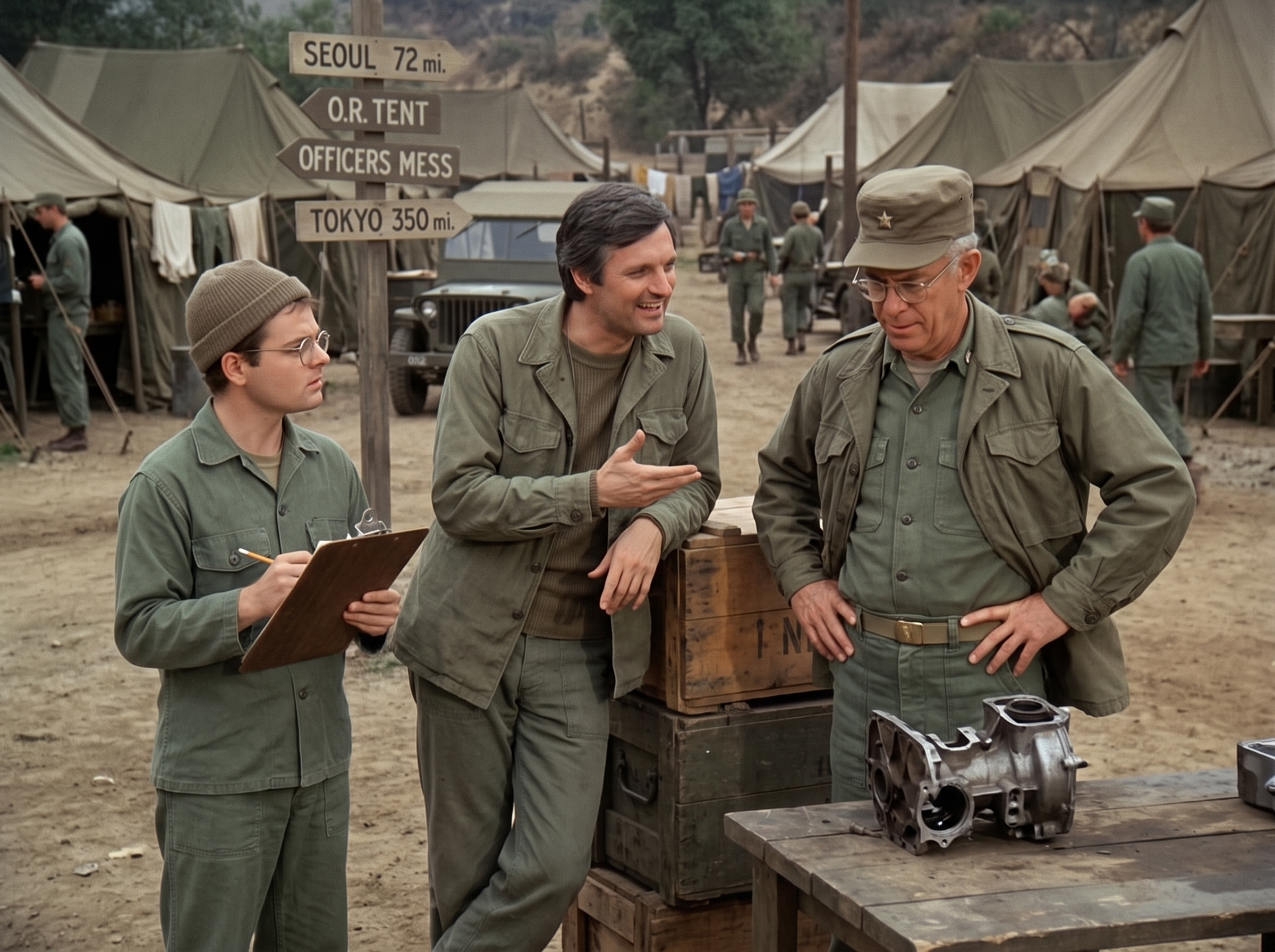
It was the kind of dusty, bone-dry Korean afternoon where even the canvas tents looked like they were ready to surrender to the heat.
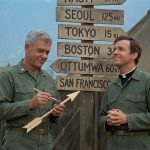
In the open, sun-baked compound of the 4077th MAS*H, a familiar wooden signpost stood like a quiet sentinel, its painted arrows pointing the way to Seoul, Tokyo, and the ever-present O.R. tent. The camp was caught in one of those rare, fragile lulls between the chaos of incoming wounded, a temporary peace wrapped in the smell of faded canvas, dry earth, and motor oil. But peace at the 4077th was never absolute, and today’s crisis was sitting heavy and silent on a weathered wooden table.
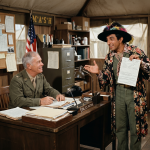
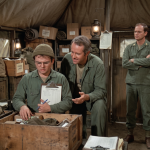
Colonel Sherman Potter stood over the table with his hands firmly planted on his hips, his posture a mixture of seasoned military authority and tired resignation. He was staring down at a heavy, grease-stained metal housing unit—the cracked engine block of the camp’s primary water pump. It was the only thing standing between the surgical staff and washing their hands with freezing, unsterilized river water. Potter’s face was stern, analyzing the broken machinery, but the crinkled corners of his eyes betrayed a soft, reluctant amusement at the sheer absurdity of their situation.
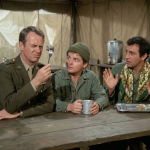
Beside him, Captain Benjamin Franklin “Hawkeye” Pierce leaned casually against a stack of wooden supply crates, refusing to let a little mechanical failure ruin a perfectly good afternoon. Wearing his standard green wool sweater under a faded fatigue shirt, Hawkeye’s face was alive with that familiar, irreverent wit. He gestured openly with his right hand, tossing out a playful observation to fill the quiet air. For Hawkeye, a joke was never just a joke; it was a shield, a way to soften the harsh edges of a war that constantly tried to grind them down.
“Look at the bright side, Colonel,” Hawkeye said, his voice carrying that dry, effortless charm. “We no longer have to pretend the tepid, rust-colored drizzle from the showers is actually refreshing. We can finally embrace our true destiny as a society of unwashed, highly educated cavemen.”
Potter didn’t look up from the fractured metal cylinder. “Horse hockey, Pierce. I’ve survived two world wars, a depression, and Mildred’s cooking, and I am not about to let a chunk of cast iron dictate my personal hygiene.”
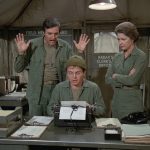
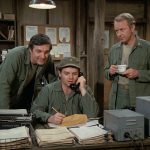
Hovering just a step behind them, Corporal Radar O’Reilly stood at polite, nervous attention. Dressed in his oversized fatigues and signature olive-drab knit cap, Radar clutched his trusty clipboard with an earnest, focused expression, his pencil ready to take notes or orders. He looked like a boy trying very hard to do a man’s job in a world that didn’t make any sense.
“Uh, excuse me, Colonel, sir?” Radar chimed in, his voice carrying that familiar, reedy anxiety. “I just got off the spark with I-Corps supply in Seoul. They said they have a replacement pump.”
Potter finally lifted his head, a glimmer of hope cutting through his fatigue. “Well, that’s the first piece of good news I’ve had all week, son. When can they get it on a truck?”
Radar swallowed hard, his knuckles turning white as he gripped the edges of the clipboard. “Well, sir, that’s the thing. They have it. But they can’t find the proper requisition form to release it. They said if we fill out a Form 412-B in triplicate, they can put it on a transport… sometime next month.”
Hawkeye let out a sharp, cynical laugh, pushing himself slightly off the crate. “Next month? Perfect. By then, we’ll have evolved gills and can just swim back to San Francisco.”
Potter took a deep, steadying breath. He closed his eyes for a fraction of a second, summoning the patience of a man who had spent his entire life dealing with the endless, grinding gears of Army bureaucracy. He opened his mouth to deliver a blistering, colorful critique of the Quartermaster Corps, a speech that would have peeled the paint off a jeep.
But the words never came.
Before Potter could speak, the heavy, dead air of the compound was pierced by a sound that instantly froze the blood in all their veins. It started as a faint, distant hum over the Korean hills, growing rapidly into a rhythmic, violent thwack-thwack-thwack.
Choppers.
The war wasn’t waiting for a broken water pump. It wasn’t waiting for the punchline of Hawkeye’s joke, and it certainly wasn’t waiting for the United States Army to find a requisition form.
The transformation in the compound was instantaneous, a heartbreaking shift from tired domestic comedy to cold, clinical survival.
The teasing light in Hawkeye’s eyes vanished, replaced immediately by a hollow, practiced focus. He pushed off the wooden crate, his body suddenly tense and electric. The playful cynic was gone; the brilliant, desperate surgeon had arrived.
Colonel Potter didn’t flinch. The soft amusement faded entirely from his weathered face, leaving behind only the steel resolve of a commanding officer. He looked down at the broken hunk of metal on the table one last time, recognizing it for what it truly was: a trivial, meaningless inconvenience in the face of what was currently bleeding in the sky above them.
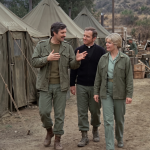
“Alright, people, the party’s over,” Potter said, his voice calm, deep, and cutting through the roar of the approaching rotors. “Radar, forget the requisition forms. Go find Igor and Father Mulcahy. Tell them I want every pot, pan, and bucket in the mess tent filled with water and boiling on the stoves immediately. We’re doing this the old-fashioned way.”
“Yes, sir!” Radar spun on his heel, his innocent anxiety entirely replaced by a fierce, dedicated efficiency. He tucked the clipboard under his arm and sprinted toward the mess tent, his small boots kicking up small clouds of beige dust.
Hawkeye stepped up to the table, standing shoulder-to-shoulder with Potter. They watched the olive-green Bell H-13 helicopters crest the distant ridgeline, looking like angry, fragile insects carrying the tragic weight of the world on their side-litters.
“You know, Sherman,” Hawkeye said quietly, his voice lacking any of its usual sarcastic bite. “Doing twentieth-century meatball surgery with nineteenth-century plumbing is really going to put a cramp in my style.”
Potter reached out and rested a heavy, fatherly hand on Hawkeye’s shoulder. It was a simple gesture, but it held the weight of a thousand unspoken fears and a deep, unshakeable mutual respect.
“We’ll manage, Pierce,” Potter said softly, his eyes fixed on the incoming choppers. “We always do. We run on spit, baling wire, and whatever is left of our sanity. The Army didn’t issue us a working water pump, but they were foolish enough to issue us you. And B.J., and Margaret, and Winchester. We are the machinery here, Hawk. And this machine doesn’t get to break down.”
Hawkeye looked at the older man, absorbing the quiet strength that radiated from the Colonel. In that fleeting moment, surrounded by the dust and the faded canvas tents, the true heart of the 4077th revealed itself. It wasn’t just a military unit. It wasn’t just a hospital. It was a fragile, exhausted, fiercely loyal family clinging to each other in the middle of a nightmare.
They were all broken in their own ways. They were all running on empty, frayed around the edges, and desperate for a reprieve that was never going to come. But when the choppers landed, the fatigue didn’t matter. The broken equipment didn’t matter. The only thing that mattered was the person bleeding on the stretcher, and the friend standing next to you at the operating table.
Hawkeye offered a small, weary smile, the kind that didn’t quite reach his eyes but held a profound, quiet tenderness. “Well, Colonel, if I have to be a piece of broken machinery, I’m glad I’m stationed in your junkyard.”
Potter gave Hawkeye’s shoulder one last, firm squeeze before letting go. “Go scrub up, Captain. The water might be cold, but the coffee will be terrible.”
Together, the two men turned away from the broken pump and the dusty table. They walked side by side toward the O.R. tent, their silhouettes framed by the harsh daylight and the swirling dust kicked up by the landing helicopters. They were just two tired men in faded green shirts, walking back into the madness.
Inside the tent, B.J. Hunnicutt was already tying his mask, his steady, calming presence anchoring the room. Margaret Houlihan was barking precise, professional orders to the nurses, her strength a fortress against the chaos, hiding the deep well of compassion she held for every wounded boy. Charles Emerson Winchester III stood by his scrub sink, his refined aristocratic features set in a mask of rigid control, preparing to use his gifted hands to save lives he would never admit he cared deeply about.
They were all waiting. They were all ready.
The pump was broken, the war was endless, and they were all thousands of miles away from home. But as long as they had each other, the 4077th would keep running.
Some machines run on oil and gears, but the greatest one in Korea ran purely on laughter, tears, and the unbreakable bond of a found family.