The Unwritten Standard Operating Procedure
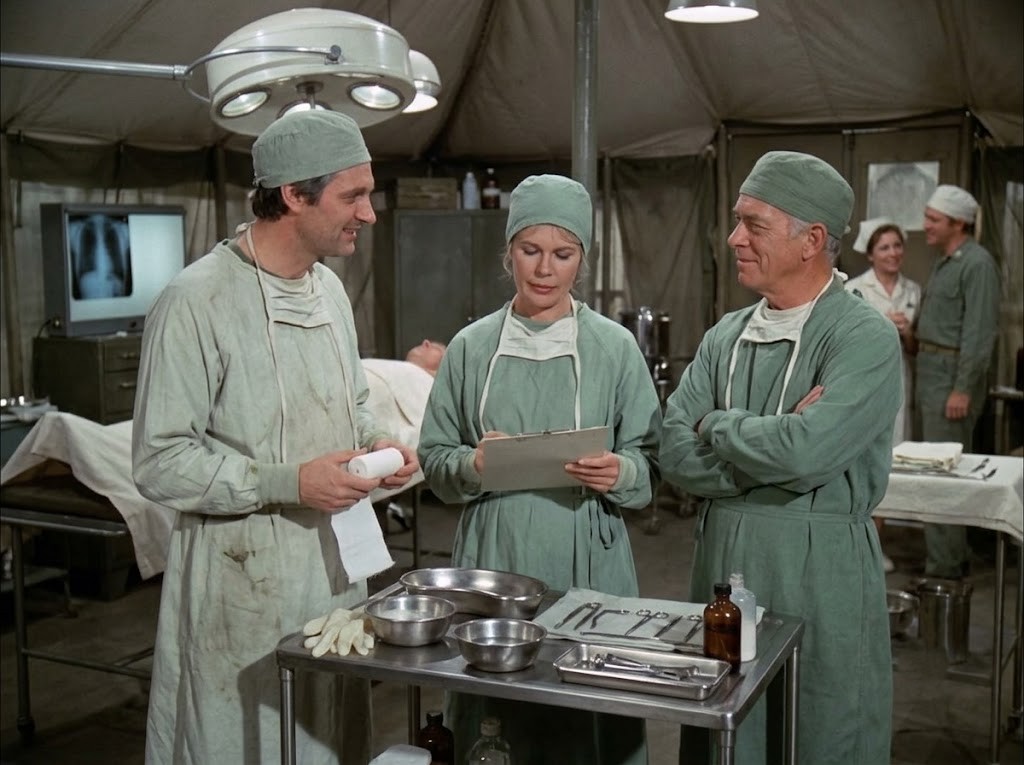
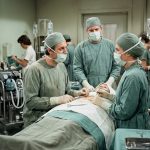
The Operating Room always smelled of the same three things: isopropyl alcohol, stale coffee, and the damp canvas of a tent that had survived one monsoon too many.
Tonight, the silence in the swampy air was almost heavier than the artillery rumbles in the distance.
The last casualty from the afternoon push had just been rolled out to post-op, leaving the tables bare but the exhaustion absolute.
Hawkeye Pierce stood by the instrument tray, a roll of gauze turning lazly between his fingers like a bandage looking for a wound that wasn’t there. His scrub gown was smeared with the gray grime of a twelve-hour shift, his shoulders slumped under the weight of too many sleepless nights, but a tired, boyish grin still tugged at the corner of his mouth.
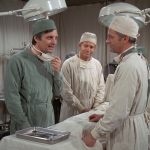
Beside him, Margaret Houlihan held a clipboard tightly against her chest, her eyes fixed on the neat rows of patient charts. Her cap was pinned perfectly, a stark contrast to the chaos of the camp, but her pen hovered above the paper as if she were trying to write something that standard army regulations simply didn’t have a code for.
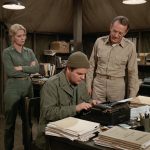
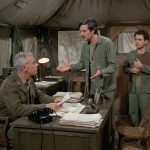
Colonel Potter stood to her left, his arms crossed over his chest, his face etched with the deep lines of a man who had seen three wars and loved the boys in all of them. He was watching Hawkeye with that familiar, dry, fatherly gaze—halfway between a reprimand and a blessing.
“Alright, Pierce,” Potter said, his voice a low, gravelly rumble that anchored the room. “The tables are clean, the generators are actually humming in key for once, and Radar hasn’t burst through that door with another clipboard in twenty minutes. Why are you still standing there looking like a displaced scarecrow?”
Hawkeye let out a soft, breathy laugh, tossing the gauze roll an inch into the air and catching it deftly. “I’m practicing my retirement, Colonel. I figure if I can master the art of standing perfectly still in a green gown, I can get a job as a very expensive hedge in New England after this is all over.”
“You’d look ridiculous next to a birdbath, Pierce,” Potter shot back, though the corner of his mustache twitched.
Margaret didn’t look up from her clipboard, her voice tight with professional discipline, though the tiredness gave it a softer edge. “Doctor, if you’re quite finished planning your horticultural career, we still have the post-op inventory to verify. And I am missing exactly four ounces of sterile saline solution from the north cabinet.”
Hawkeye leaned in, his grin widening just enough to show the mischief behind his bloodshot eyes. “Ah, the missing saline. A tragic tale, Major. I used it to season the swamp’s latest batch of gin. It gives it a very distinct, clinical finish. Tastes like victory, with a hint of penicillin.”
Margaret finally raised her eyes from the chart, giving him a look that was supposed to be sharp but lacked any real sting. “This isn’t a joke, Captain. Everything has to balance. The army runs on accountability. If the charts don’t match the inventory, the whole system falls apart.”
Colonel Potter shifted his weight, his eyes traveling past Hawkeye toward the far corner of the tent, where the soft, rhythmic breathing of a young corporal on a recovery cot broke the quiet. The boy couldn’t have been more than nineteen, his face pale against the white sheet, an X-ray film still glowing faintly on the viewer behind him.
“The Major is right, Hawkeye,” Potter said quietly, the humor fading into something deeper, more grounded. “Everything has to balance. But sometimes the ledger we’re keeping in this tent doesn’t use the army’s ink.”
Hawkeye stopped spinning the gauze. He looked down at the small metal bowl on the tray, then back at the Colonel, the joke dying on his lips as the reality of the room settled back over them like a heavy blanket.
Margaret paused, her pen still frozen over the paper, sensing the sudden shift in the room’s gravity.
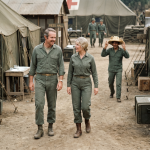
In the background, near the screen doors, a couple of the shift nurses stood quietly, talking in hushed tones with another officer, their voices a distant murmur against the sudden, profound stillness that fell over the three central figures.
“We lost two yesterday, Colonel,” Hawkeye said, his voice dropping an octave, losing its theatrical bounce. “And the kid on table three almost didn’t make it to the sunset. I don’t care about the saline. I care about how we’re supposed to write down that we gave everything we had, and sometimes the cupboard is still empty.”
Margaret looked from Hawkeye to the Colonel, her knuckles whitening slightly against the clipboard as a heavy, unresolved tension filled the space between them.
Colonel Potter didn’t answer right away. He walked over to the instrument tray, his boots clicking softly against the floorboards, and picked up a small pair of surgical forceps, turning them over in his hand before laying them back down with a gentle click.
“You don’t write that part down, Pierce,” Potter said softly. “The army doesn’t have a form for the pieces of yourself you leave in this room. If they did, we’d run out of paper before the end of the month.”
Margaret lowered the clipboard an inch. The rigid posture she maintained so fiercely seemed to soften, just for a second, allowing the tired woman beneath the uniform to show through. She looked at the chart of the young corporal who was sleeping safely across the room.
“He’s going to make it, you know,” she said, her voice unusually gentle, devoid of any military starch. “The boy from the 8th Cavalry. The notes say his chest wound was severe, but the repair was… it was beautiful work, Captain.”
Hawkeye looked at her, surprised by the quiet praise. He offered a small, appreciative nod, the gauze roll finally coming to rest in his palm. “Thanks, Margaret. I had a good nurse keeping the instruments coming faster than I could ask for them.”
Margaret met his gaze, a rare, fleeting moment of total understanding passing between the surgeon and the head nurse. They fought about regulations, they fought about discipline, but when the meat wagon arrived, they were two halves of the same heart.
“Don’t get used to the compliments, Pierce,” she murmured, though a tiny, warm smile touched her lips before she looked back down at her papers. “I’m still writing you up for the missing saline if it doesn’t appear by tomorrow morning.”
“Fair enough,” Hawkeye laughed, the tension in his shoulders finally beginning to dissolve. “I’ll see if Radar can trade a Korean dictionary for a bottle of saltwater.”
Colonel Potter uncrossed his arms and stepped between them, clapping a heavy, reassuring hand on Hawkeye’s shoulder. The touch was brief, but it carried the weight of a father’s pride and a commander’s gratitude.
“You kids did good today,” Potter said, his eyes scanning the quiet OR one last time. “Go get some rest. Both of you. That’s an order. The war will still be here in the morning, unfortunately, but I’d prefer my best surgeons and nurses didn’t look like extras from a ghost story.”
“Heading straight to the land of nod, Colonel,” Hawkeye said, though they all knew he would probably sit up for another hour, staring at the canvas ceiling of the Swamp, listening for the sound of incoming choppers.
Margaret tucked the pen into her pocket and held the clipboard against her side, her posture returning to its professional baseline, but the warmth remained in her eyes. “Goodnight, Colonel. Goodnight, Hawkeye.”
“Goodnight, Margaret,” Hawkeye replied, stepping back from the tray.
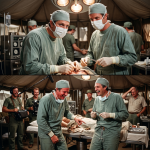
As Margaret turned to walk toward the post-op tent and Potter headed toward his office, Hawkeye stood alone for a brief moment under the harsh overhead surgical lights. He looked at the X-ray on the light box, then at the empty tables where so much pain had been undone, and so much humanity had been preserved.
It was a crazy, muddy, heartbreaking corner of the world, but as he watched his friends walk away into the Korean night, he knew he wouldn’t want to be anywhere else.
Beneath the canvas of the 4077th, the medicine was difficult, but the love was automatic.